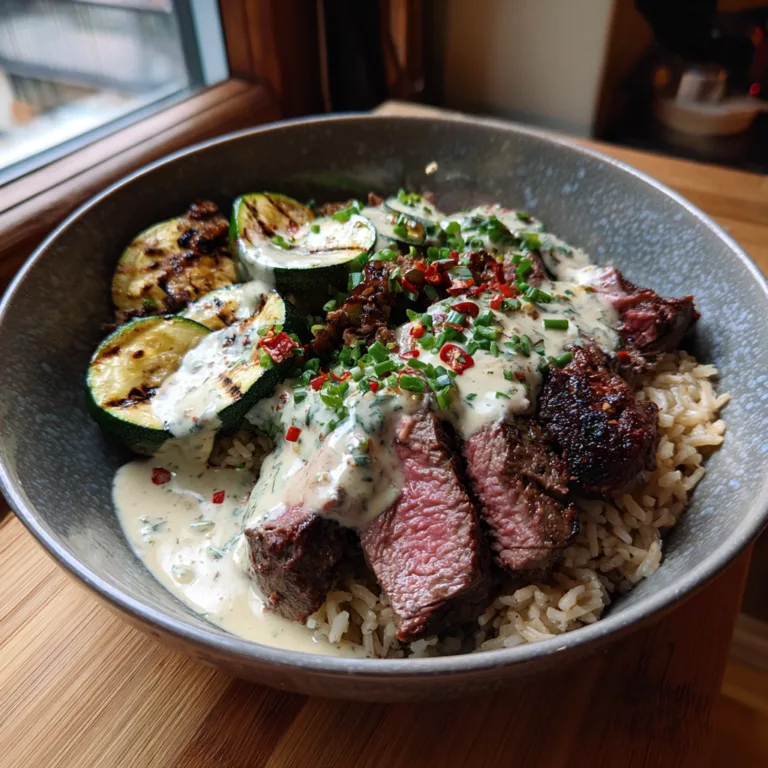
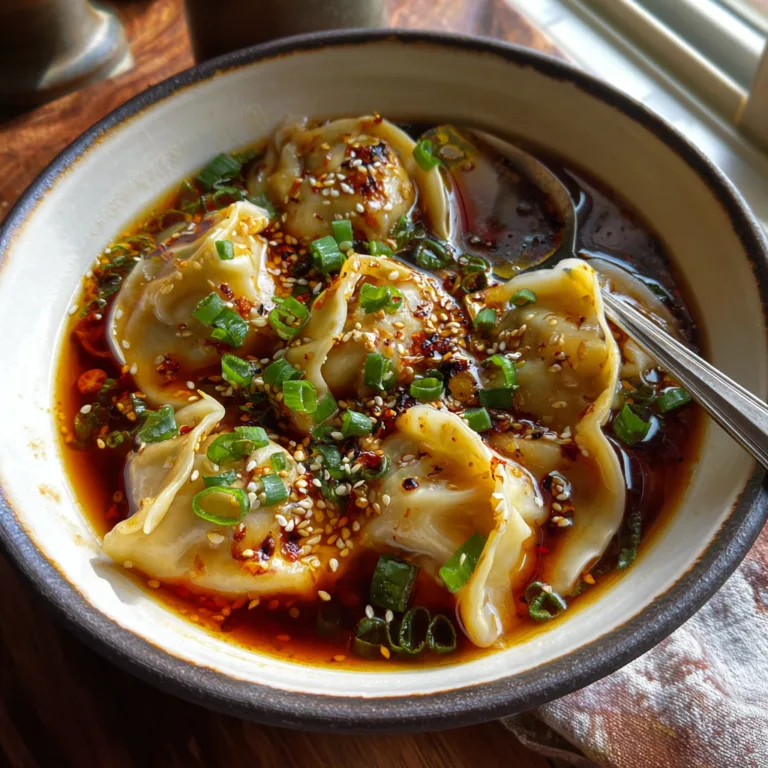
Miso Udon Noodle Soup
Rich & Cozy Miso Udon Noodle Soup: The Ultimate Comfort in a Bowl
There are few things in this world as universally soothing as a steaming bowl of noodle soup. But not just any noodle soup—we are talking about Rich & Cozy Miso Udon. This isn’t the thin, watery broth you might get from a quick takeout spot. This is a luxurious, creamy, umami-packed experience that coats every thick, chewy noodle in a glossy blanket of flavor. It is the kind of meal that wraps you up like a warm hug on a rainy day, yet it comes together so quickly that it fits perfectly into a busy weeknight schedule.
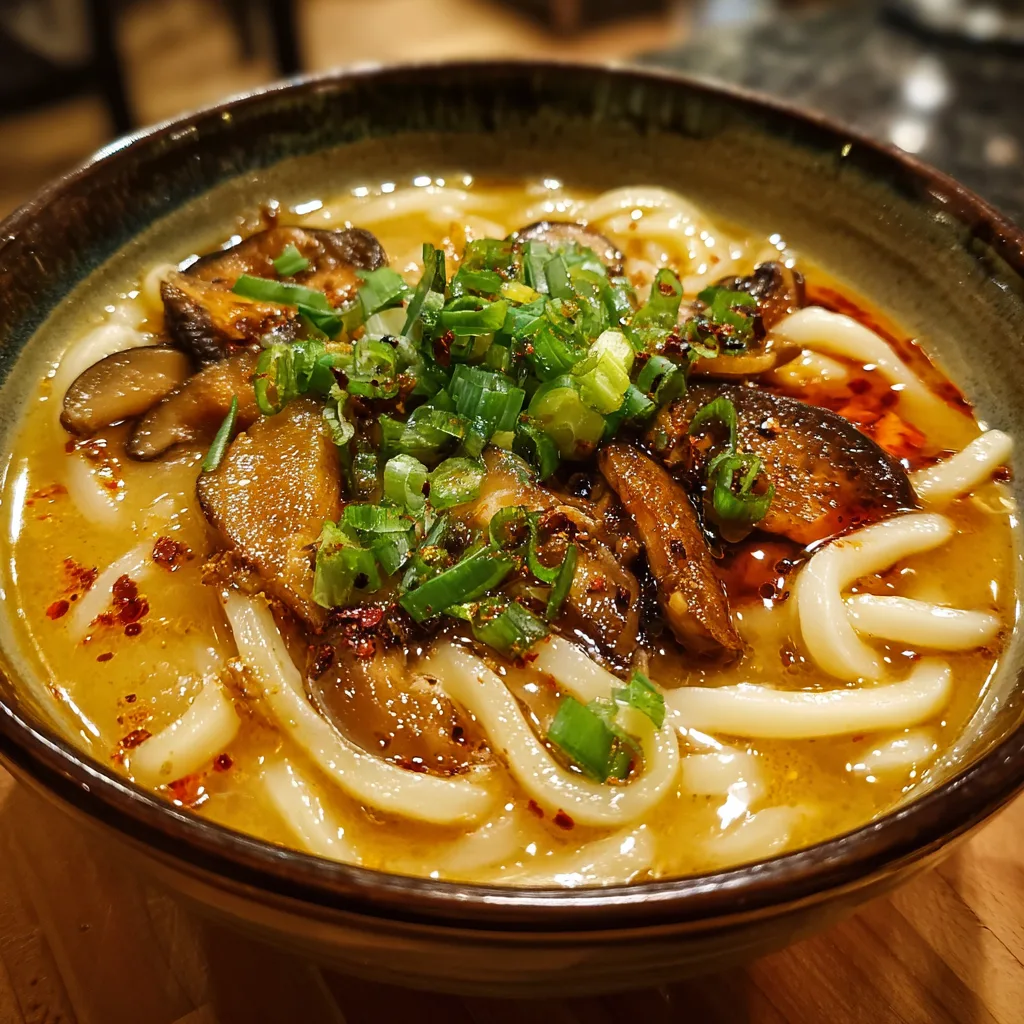
If you have been searching for a dish that balances savory depth with a kick of heat, and satisfying textures with rich aromas, you have arrived. This Miso Udon features plump, slippery noodles swimming in a broth enriched with soy milk and miso paste, topped with meaty sautéed mushrooms and a vibrant drizzle of chili oil. It is a masterpiece of home cooking that looks professional but requires zero professional skills.
Why This Recipe Will Become Your New Obsession
Let’s be honest: we all love ramen. But Udon deserves its own spotlight. The thick, wheat-based noodles offer a “chew” factor that thinner noodles just can’t compete with. When paired with this specific broth, something magical happens. The starch from the noodles helps thicken the liquid slightly, while the miso paste provides a salty, fermented complexity that deepens the flavor profile instantly.
What makes this specific recipe a standout is the creamy factor. By incorporating unsweetened soy milk (or oat milk) into the dashi base, we achieve a tonkotsu-like richness without boiling pork bones for 12 hours. It is rich, it is glossy, and it is undeniably comforting. Plus, the toppings are versatile. While we focus on sautéed shiitake mushrooms for their earthy punch, you can easily adapt this base to whatever vegetables or proteins you have in your fridge.
The Star Ingredients
To create a bowl this flavorful, every ingredient plays a pivotal role. Here is what you need to gather:
For the Broth & Base
- Udon Noodles – Fresh or frozen Sanuki udon is best for that signature bounce and chew. Dried noodles work, but frozen ones are superior in texture.
- Miso Paste – You can use white (Shiro) miso for a sweeter, mellower flavor, or red (Aka) miso for a stronger, saltier kick. A blend (Awase) is often the perfect middle ground.
- Vegetable Broth or Dashi – This forms the foundation. Traditional dashi uses bonito flakes, but a mushroom or kelp (kombu) stock keeps it vegetarian while maintaining high umami.
- Unsweetened Soy Milk – The secret weapon. It adds a milky opacity and richness that turns a simple clear soup into a creamy delight.
- Garlic & Ginger – Freshly minced. These aromatics provide the base notes that cut through the richness.
- Sesame Oil – For sautéing and adding that nutty aroma.
For the Toppings
- Shiitake Mushrooms – Fresh is best. When sliced and seared, they act like little sponges soaking up the soy glaze.
- Scallions (Green Onions) – Essential for a fresh, sharp crunch to contrast the soft noodles.
- Chili Oil (Rayu) – The glossy red finish. It adds heat and a beautiful visual contrast.
- Soy Sauce & Mirin – Used to season the mushrooms and balance the broth.
Step-by-Step Instructions
Follow these simple steps to build your bowl. The key is to have your ingredients prepped before you start, as the cooking process is fast.
1. Prepare the Aromatics and Mushrooms
Start by slicing your shiitake mushrooms and chopping the scallions (separate the white parts from the greens). Grate your ginger and mince the garlic. In a soup pot, heat a tablespoon of sesame oil over medium heat. Add the mushrooms and cook them undisturbed for 2-3 minutes until they get a nice golden sear. Stir, then add the white parts of the scallions, garlic, and ginger. Sauté for another minute until fragrant.
2. Build the Flavor Base
Once the aromatics are smelling incredible, add a splash of mirin and soy sauce to deglaze the pot and season the mushrooms. Remove a few mushroom slices to save for the final garnish if you want it to look extra pretty. Pour in your vegetable broth (or dashi) and bring the mixture to a gentle simmer. Let it bubble for 5 minutes to infuse the flavors.
3. Make it Creamy
Lower the heat to medium-low. Pour in the unsweetened soy milk. Crucial Tip: Do not let the soup come to a rolling boil once the soy milk is added, as it can separate or curdle. Keep it at a gentle steam.
4. The Miso Slurry
Place your miso paste in a ladle or small bowl. Spoon a little bit of the hot broth into the miso and whisk it until it becomes a smooth liquid (slurry). Pour this back into the main pot. This technique ensures you don’t end up with salty clumps of miso paste in your soup. Taste the broth—it should be rich, savory, and creamy. Adjust with more soy sauce if needed.
5. Cook the Noodles
If using frozen udon, you can drop them directly into the simmering broth and cook for 1-2 minutes until they unravel and become bouncy. If using dried noodles, boil them separately in a pot of water according to package instructions, drain, and rinse before adding to your soup bowls.
6. Assemble and Serve
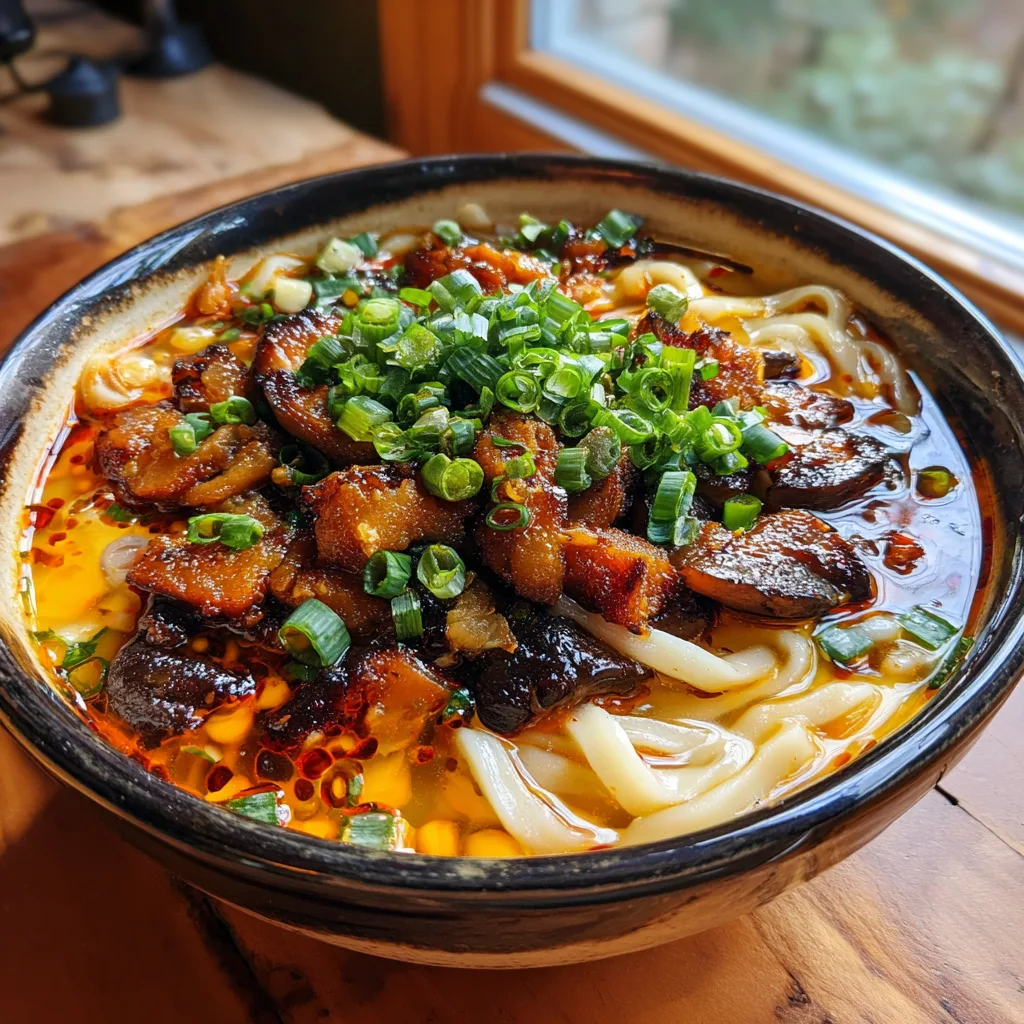
Divide the noodles and broth into deep bowls. Top with the reserved sautéed mushrooms and a generous handful of fresh green scallions. Finally, for that “liquid glass” look, drizzle a significant amount of chili oil over the surface. Serve immediately while steaming hot.
Expert Tips for the Perfect Bowl
- Don’t Overcook the Udon: Udon noodles can go from perfectly chewy to mushy very quickly. If you are using frozen noodles, they are essentially already cooked; they just need reheating. Watch them like a hawk.
- The Milk Matters: Ensure your soy milk is unsweetened and unflavored. Vanilla soy milk will ruin the dish. If you cannot find soy milk, unsweetened oat milk is a great substitute because it is naturally creamy. Avoid almond milk as it is too thin.
- Spiciness Level: The heat in this dish comes primarily from the chili oil garnish. This makes it very family-friendly—you can serve the kids a non-spicy bowl and then load up your own with chili oil or Togarashi spice.
- Umami Boosters: If you feel the broth lacks depth, add a teaspoon of mushroom powder or a splash of Yondu (vegetable essence). A sheet of toasted nori tucked into the side of the bowl adds a nice crispy texture and salty flavor.
Creative Variations
While this recipe is perfection on its own, the beauty of noodle soup is its adaptability. Here are a few ways to mix it up:
Protein Power-Up
Want more protein? Add cubes of soft tofu or fried tofu puffs (aburaage) to the broth; they soak up the liquid beautifully. For non-vegetarians, slices of pork belly or a soft-boiled jammy egg (ajitsuke tamago) are traditional and delicious additions.
Veggie Loaded
Boost the nutritional value by adding baby bok choy, spinach, or corn kernels. Add leafy greens right at the end of cooking so they wilt but stay bright green. Corn adds a lovely sweetness that contrasts with the salty miso.
Curry Miso Udon
For a winter warmer, dissolve a cube of Japanese curry roux into the broth along with the miso. This creates a thicker, stew-like consistency that is incredibly hearty.
Serving Suggestions & Storage
This Miso Udon is a complete meal in a bowl, but if you are serving it for a dinner party, it pairs wonderfully with sides. Consider serving Gyoza (pan-fried dumplings) or a refreshing Sunomono (cucumber salad) to cut through the richness of the soup.
Storage: Noodle soups are best eaten fresh. If you anticipate leftovers, store the broth and the noodles separately. If stored together, the udon will absorb all the broth and become bloated while the soup disappears. The broth can be refrigerated for up to 3 days. Reheat the broth gently on the stove and add fresh noodles when ready to eat.
Cultural Context: The Art of Udon
Udon has been a staple in Japanese cuisine for centuries, often varying by region. The thick, wheat flour noodles are celebrated for their texture, known as “koshi” (elasticity or chewiness). In Japan, slurping your noodles is not considered rude; in fact, it is encouraged! Slurping helps cool the hot noodles as they enter your mouth and aerates the broth, allowing you to taste the full bouquet of flavors. So, when you sit down with this bowl of Cozy Miso Udon, don’t be shy—slurp away!
Whether you are looking for a quick lunch, a cozy dinner, or a remedy for a cold day, this recipe delivers on all fronts. It is visually stunning with its golden broth and ruby-red chili oil, and it tastes even better than it looks. Happy cooking!
Rich & Cozy Miso Udon Noodle Soup
Ingredients
Equipment
Method
- Prep ingredients: Slice mushrooms, chop scallions (keep white and green parts separate), mince garlic, and grate ginger.
- In a pot over medium heat, add sesame oil. Sauté mushrooms for 3 minutes until browned. Add garlic, ginger, and scallion whites; cook for 1 minute.
- Add vegetable broth (or dashi), soy sauce, and mirin. Bring to a simmer.
- Lower heat to medium-low. Stir in soy milk. Do not let it boil vigorously to prevent curdling.
- Dissolve miso paste into the soup by using a ladle and a splash of hot broth to whisk it smooth before adding it to the pot.
- Add udon noodles directly to the broth (if frozen) and cook for 1-2 minutes until chewy and heated through.
- Divide into bowls. Top generously with scallion greens and a heavy drizzle of chili oil.
- Serve immediately while hot.