Mango Strawberry Sorbet
The Ultimate Homemade Mango Strawberry Sorbet: A Refreshing Tropical Escape
When the sun is beating down and the summer heat feels inescapable, nothing revitalizes the body and soul quite like a perfectly crafted, icy-cold fruit dessert. Enter the Mango Strawberry Sorbet. This incredibly vibrant, naturally sweet, and utterly refreshing treat is the quintessential summer indulgence. If you have been searching for a healthy, dairy-free alternative to heavy ice creams, or simply want to celebrate the bright flavors of fresh fruit, this recipe is guaranteed to become a staple in your kitchen. In this comprehensive guide, we will explore the science, techniques, and secrets to making a luxuriously smooth mango strawberry sorbet right at home, even if you don’t own a fancy ice cream machine.
Understanding the Magic of Sorbet
Before we dive into the specific ingredients of this recipe, it is essential to understand what exactly makes a sorbet. Unlike ice cream, which relies on a base of heavy cream, milk, and often egg yolks, or sherbet, which contains a small amount of dairy, a true sorbet is entirely dairy-free. It consists simply of fruit purée or fruit juice, sugar, and water. Historically, sorbets trace their roots back to the ancient Middle East, where sweet fruit syrups called “sharbat” were chilled with snow gathered from the mountains. Today, sorbet is celebrated worldwide as a palate cleanser in fine dining and a vibrant dessert that showcases the pure, unadulterated essence of its core ingredients.
Because there are no fats from dairy to coat the tongue, the flavors in a sorbet are incredibly immediate and intense. The bright acidity of the strawberries and the lush, floral sweetness of the mango hit your taste buds directly. However, the lack of fat also presents a unique culinary challenge: achieving a creamy texture. Without fat or egg yolks to keep the mixture soft, sorbets are prone to becoming icy and rock-hard. Overcoming this hurdle requires a delicate balance of fruit, sugar, and technique, which we will master in the steps below.
The Perfect Pairing: Why Mango and Strawberry?
While a standalone mango sorbet or a single-flavor strawberry sorbet are both delicious in their own right, combining the two creates a dessert that is greater than the sum of its parts. This pairing is a masterclass in flavor balancing.
The Mango: Mangoes are often referred to as the “king of fruits” for good reason. They are incredibly sweet, rich, and tropical, with a complex flavor profile that hints at peach, pineapple, and even vanilla. More importantly for our sorbet, mangoes are naturally high in pectin. Pectin is a natural carbohydrate found in the cell walls of fruits. In the context of frozen desserts, pectin acts as a natural stabilizer and thickener. When pureed, the dense, fleshy texture of a ripe mango mimics the mouthfeel of dairy, yielding a sorbet that feels astonishingly creamy and velvety, despite being 100% vegan.
The Strawberry: While mangoes provide sweetness and a creamy body, they lack sharp acidity. This is where strawberries step in to save the day. Strawberries provide a bright, tart contrast that cuts through the dense sweetness of the mango. They add a refreshing “zing” that makes the sorbet truly thirst-quenching. Furthermore, the brilliant red hues of the strawberries blend with the golden orange of the mango to create a visually stunning, warm coral-pink color that practically screams “summer.”
Selecting the Best Ingredients for Your Sorbet
Because sorbet has so few ingredients, there is nowhere for subpar produce to hide. The quality of your sorbet will be a direct reflection of the quality of the fruit and the sweetener you choose.
Choosing the Right Mangoes
Not all mangoes are created equal, especially when it comes to blending them into a smooth puree. The most common mango found in western supermarkets is the Tommy Atkins variety (large, with green and dark red skin). While acceptable, they are famously fibrous and stringy, which can leave an unpleasant texture in your sorbet. Instead, you want to seek out Ataulfo mangoes (also known as Honey or Champagne mangoes). These are smaller, kidney-shaped, and boast a bright, golden-yellow skin. They are entirely fiber-free and have an incredibly buttery, creamy flesh that is absolutely perfect for sorbets. Whichever variety you choose, ensure they are exceptionally ripe. They should yield slightly to a gentle squeeze and emit a strong, sweet, floral aroma at the stem.
Sourcing the Strawberries
For the best flavor, seek out fresh, locally grown strawberries during their peak season in late spring and early summer. Local berries are allowed to ripen fully on the vine, resulting in a deeper red color and a significantly sweeter, more complex flavor than those bred for long-distance shipping. If fresh, sweet strawberries are out of season, you are actually much better off using high-quality frozen strawberries. Frozen fruit is picked and flash-frozen at peak ripeness, locking in its natural sugars and nutrients.
The Role of Sugar: More Than Just Sweetness
In sorbet making, sugar is a structural ingredient, not just a flavoring agent. Sugar lowers the freezing point of water. If you were to blend fruit and water and freeze it, you would get a solid block of fruit-flavored ice. By incorporating the right amount of sugar, you prevent the water molecules from forming large, solid ice crystals. The sugar gets in the way of the ice structure, keeping the sorbet scoopable and soft. While you can use granulated sugar to make a simple syrup, you can also experiment with liquid sweeteners like agave nectar, maple syrup, or honey (note that honey will alter the flavor profile significantly). Liquid sweeteners contain invert sugars, which are even more effective at preventing crystallization than regular table sugar.
The Secret Weapon: Lemon or Lime Juice
Never skip the citrus! A tablespoon or two of fresh lemon or lime juice acts as a flavor enhancer. It brightens the entire profile, making the mango taste more tropical and the strawberry taste more vibrant. It also helps preserve the beautiful, bright color of the fruit.
Equipment Needed: To Churn or Not to Churn?
The beauty of this recipe is its versatility. You can make it whether you have a fully equipped professional kitchen or just a simple blender.
Method 1: The Ice Cream Maker. If you own an ice cream machine, you will get the absolute best, airiest, and smoothest results. An ice cream maker works by simultaneously freezing the fruit mixture while churning air into it and breaking up ice crystals as they form.
Method 2: The Food Processor/High-Speed Blender (No-Churn). If you don’t have an ice cream maker, do not worry! You can achieve incredible results using the freeze-and-blend method. By freezing your fresh fruit into chunks first, and then blending them with your sweetener in a high-speed blender or food processor, you mechanically break down the ice, creating a smooth, soft-serve consistency that can be eaten immediately or frozen for later.
Ingredients List
- – 3 cups ripe mango chunks (fresh or frozen, about 3 large mangoes)
- – 2 cups strawberries (fresh, hulled, or frozen)
- – 1/2 cup granulated sugar (or agave nectar/maple syrup for a healthier twist)
- – 1/2 cup water
- – 2 tablespoons fresh lemon or lime juice
- – 1 pinch of fine sea salt (enhances the sweetness)
Step-by-Step Instructions
Follow these steps closely to achieve a flawless, scoopable, and intensely flavorful sorbet.
- Create the Simple Syrup: If you are using granulated sugar, you must first dissolve it to prevent graininess. In a small saucepan, combine the 1/2 cup of sugar and 1/2 cup of water. Heat over medium, stirring frequently, just until the sugar is completely dissolved. Remove from heat and let it cool completely to room temperature. (If using a liquid sweetener like agave, you can skip this step and just use 1/2 cup of your liquid sweetener plus a splash of water).
- Prep the Fruit: If using fresh fruit, peel and chop your mangoes into chunks. Wash the strawberries, remove the green hulls, and cut them in half. Place all the fruit into a blender or a large food processor.
- Blend the Base: Pour your cooled simple syrup (or liquid sweetener), the fresh lemon or lime juice, and a tiny pinch of sea salt into the blender with the fruit. Blend on high speed until the mixture is incredibly smooth and completely puréed. This should take about 1 to 2 minutes.
- Strain (Optional but Recommended): For the absolute silkiest texture, pass the purée through a fine-mesh sieve into a large bowl. Use a spatula to push the liquid through. This will remove the tiny strawberry seeds and any lingering mango fibers.
- Chill the Mixture: Cover the bowl of fruit purée and place it in the refrigerator for at least 2 hours, or until completely chilled. A cold base churns much faster and results in smaller ice crystals.
- Churning (Ice Cream Maker Method): Pour the chilled mixture into your ice cream maker and churn according to the manufacturer’s instructions (usually 20 to 25 minutes). It will thicken into a soft-serve consistency. Transfer to an airtight, freezer-safe container and freeze for 3-4 hours until firm enough to scoop.
- No-Churn Method (If you don’t have a machine): Instead of chilling the liquid puree, pour the blended mixture into a shallow baking dish and place it in the freezer. Every 45 minutes, remove the dish and aggressively scrape and mash the mixture with a sturdy fork to break up the ice crystals as they form. Repeat this process 4 or 5 times until the sorbet is thick and frozen. Alternatively, you can freeze the fresh fruit chunks beforehand, and simply blend the frozen fruit with the syrup in a powerful food processor until it reaches a soft-serve consistency, then freeze to firm up.
Pro-Tips for the Perfect Texture
Creating the perfect sorbet texture is a delicate science. If you find your homemade sorbet always freezes rock-solid, try incorporating these professional tricks.
The Alcohol Trick: Alcohol does not freeze under normal home-freezer temperatures. Adding just one to two tablespoons of a neutral spirit, like vodka, or a complementary spirit, like white rum or an orange liqueur (like Cointreau), to your fruit base before churning will dramatically lower the freezing point. This prevents hard ice crystals from forming, ensuring your sorbet stays soft and scoopable even after days in the freezer. Because the amount is so small, it will not make the dessert taste alcoholic.
Corn syrup or Liquid Glucose: Substituting a small portion of your regular sugar with light corn syrup can drastically improve texture. Corn syrup is highly viscous and works wonderfully to keep frozen desserts pliable and smooth.
Exciting Flavor Variations
Once you have mastered the base recipe, the Mango Strawberry Sorbet can serve as a canvas for endless culinary creativity. Here are some sophisticated variations to try:
Spicy Mango Strawberry
Give your sweet dessert an unexpected, complex kick by adding a pinch of cayenne pepper or half a small, seeded jalapeño into the blender with the fruit. The gentle heat contrasts beautifully with the icy, sweet fruit, creating a flavor profile inspired by Mexican fruit carts dusted with Tajín.
Herb-Infused Sorbet
Fresh herbs elevate this sorbet to restaurant-quality status. Try adding a handful of fresh mint leaves or fresh basil leaves to the blender. Basil, in particular, has a sweet, peppery anise flavor that pairs exceptionally well with strawberries, adding a layer of gourmet sophistication.
Coconut Tropical Swirl
For a creamier, more tropical experience, replace the 1/2 cup of water in your simple syrup with 1/2 cup of full-fat coconut milk. This introduces a slight creaminess and a distinct coconut flavor that complements the mango perfectly, leaning slightly toward a sherbet texture.
Serving and Storage Suggestions
To serve, always allow your homemade sorbet to sit at room temperature for about 5 to 10 minutes before attempting to scoop it. Because homemade sorbets lack the commercial chemical stabilizers found in store-bought brands, they tend to freeze a bit harder. Letting it temper slightly ensures perfect, smooth, round scoops.
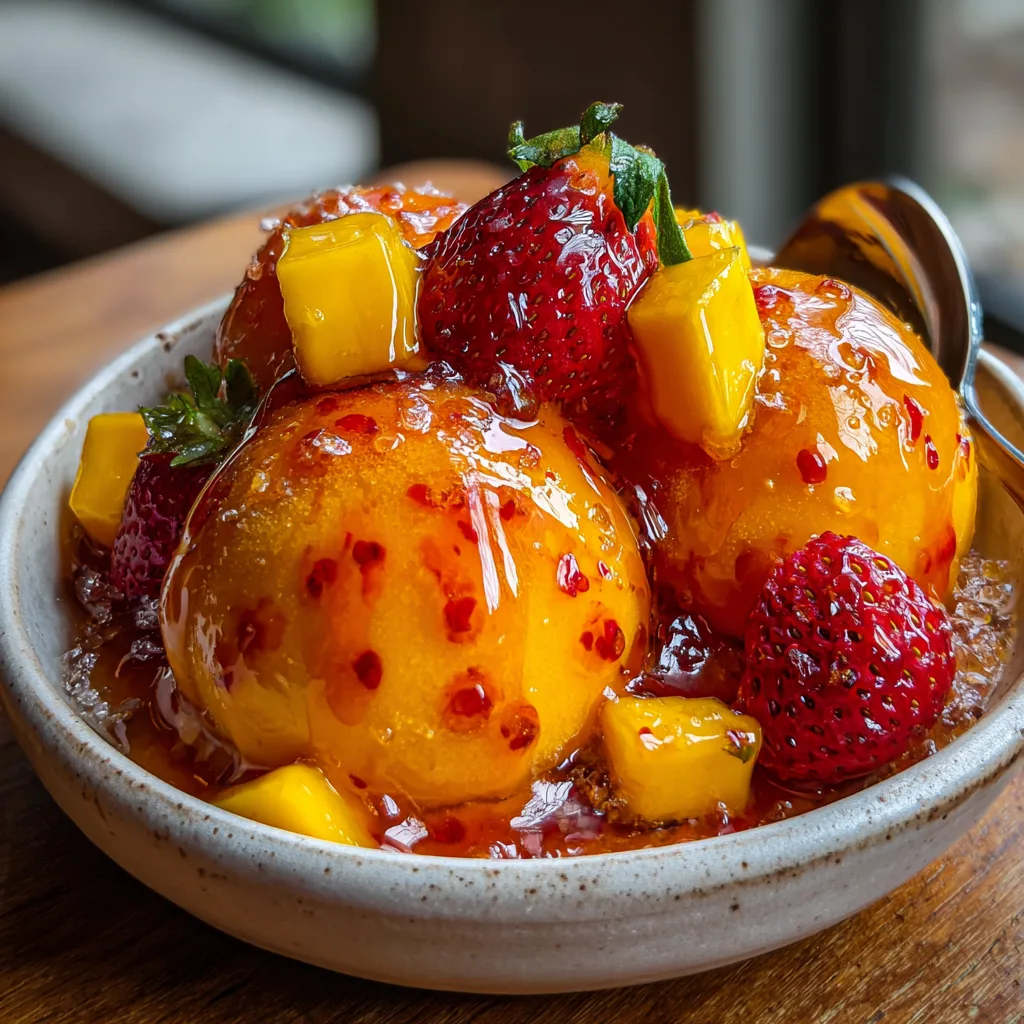
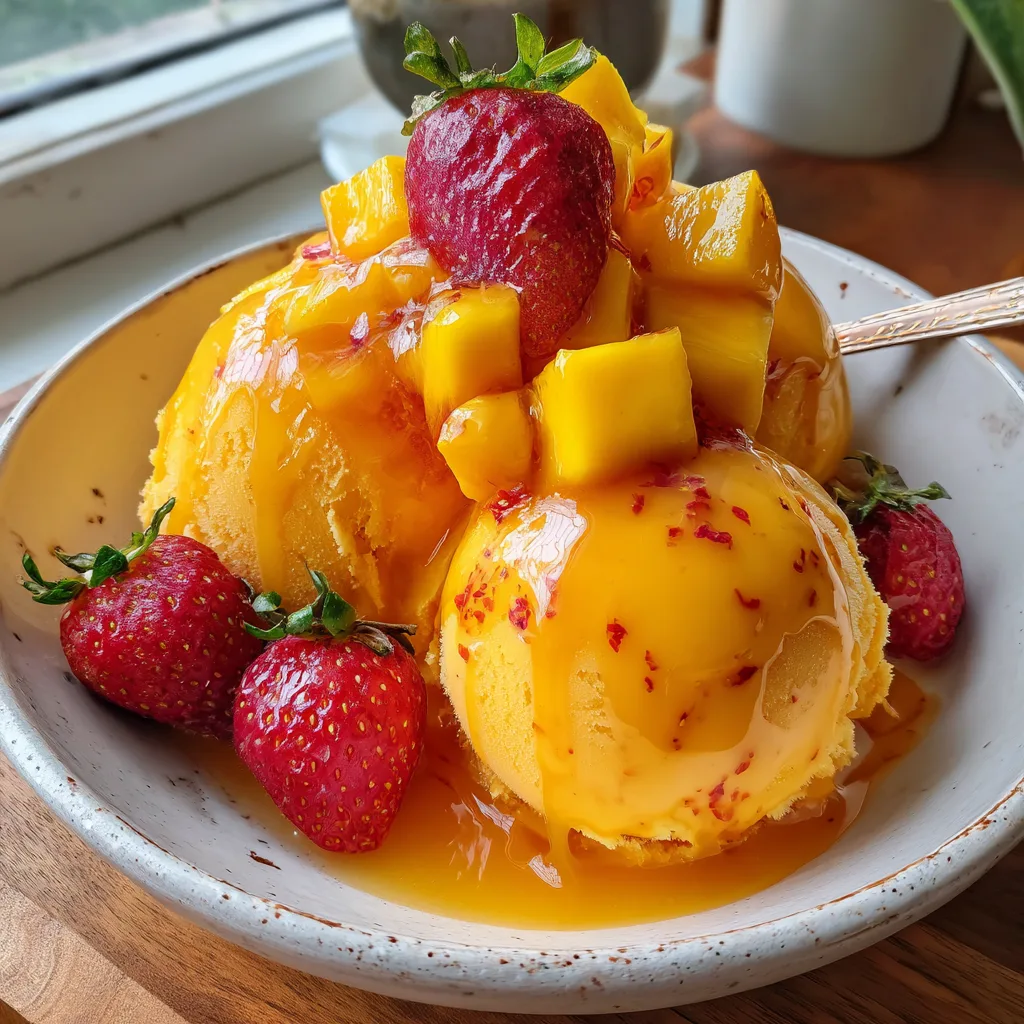
Serve the sorbet in chilled glass bowls to prevent it from melting too quickly. As seen in gorgeous culinary presentations, garnishing the bowl with extra chunks of fresh, glossy mango and whole, bright red strawberries not only hints at the flavors inside but provides a wonderful textural contrast between the melting, frosty sorbet and the firm bite of fresh fruit. It also pairs wonderfully alongside a slice of light angel food cake or a buttery pound cake.
Store your sorbet in an airtight container in the coldest part of your freezer. To prevent freezer burn and the formation of ice crystals on the surface, press a piece of plastic wrap or parchment paper directly against the surface of the sorbet before sealing the lid. Consumed within two to three weeks for the best flavor and texture.
Frequently Asked Questions
Why is my sorbet icy instead of creamy?
Icy sorbet is usually the result of two things: too much water or too little sugar. The water in the fruit naturally wants to crystallize. If there isn’t enough sugar to physically disrupt the formation of those ice crystals, the result will be hard and icy. Ensure you are measuring your fruit and sugar accurately, and consider using the alcohol trick mentioned above.
Can I use artificial sweeteners like Stevia or Monkfruit?
While you can use alternative sweeteners to reduce calories, be aware that sugar plays a structural role in freezing. Artificial sweeteners do not lower the freezing point of water in the same way real sugar does. If you replace all the sugar with Stevia, your sorbet will likely freeze into a rock-hard block. If you must use a sugar substitute, look for one specifically formulated for baking/freezing, or use a blend of real sugar and alternative sweetener.
Is this recipe vegan and gluten-free?
Yes! This Mango Strawberry Sorbet recipe is 100% naturally vegan, dairy-free, and gluten-free, making it the perfect dessert to serve to guests with dietary restrictions or allergies.
Conclusion
Making Mango Strawberry Sorbet at home is an incredibly rewarding culinary endeavor. It allows you to bypass the artificial colors, artificial flavors, and excessive preservatives found in many commercial frozen desserts, leaving you with nothing but the pure, vibrant taste of real fruit. Whether you are enjoying a quiet summer afternoon on the porch or hosting an elegant dinner party, this brilliantly colored, sweet-yet-tart dessert is sure to dazzle the senses and cool you down. Gather your ripest fruit, fire up the blender, and experience the ultimate taste of summer.
Mango Strawberry Sorbet
Ingredients
Equipment
Method
- In a small saucepan, combine the sugar and water. Heat over medium, stirring until the sugar completely dissolves to create a simple syrup. Let cool completely.
- Place the mango chunks, strawberries, cooled simple syrup, lemon juice, and sea salt into a high-speed blender or food processor.
- Blend on high for 1-2 minutes until completely smooth and puréed.
- Optional: Pass the mixture through a fine-mesh sieve to remove strawberry seeds and mango fibers for an ultra-smooth texture.
- Cover the purée and refrigerate for at least 2 hours until thoroughly chilled.
- Pour the chilled mixture into an ice cream maker and churn according to the manufacturer’s directions (usually 20-25 minutes).
- Transfer the churned sorbet to an airtight container. Press plastic wrap directly onto the surface and freeze for 3-4 hours until firm.
- If you don’t have an ice cream maker, pour the blended mixture into a shallow dish, freeze, and vigorously scrape with a fork every 45 minutes until frozen and fluffy.
- Let the sorbet sit at room temperature for 5-10 minutes before scooping. Serve garnished with fresh fruit.