Creamy Salmon Florentine
Easy Creamy Salmon Florentine: A Restaurant-Quality Dinner at Home
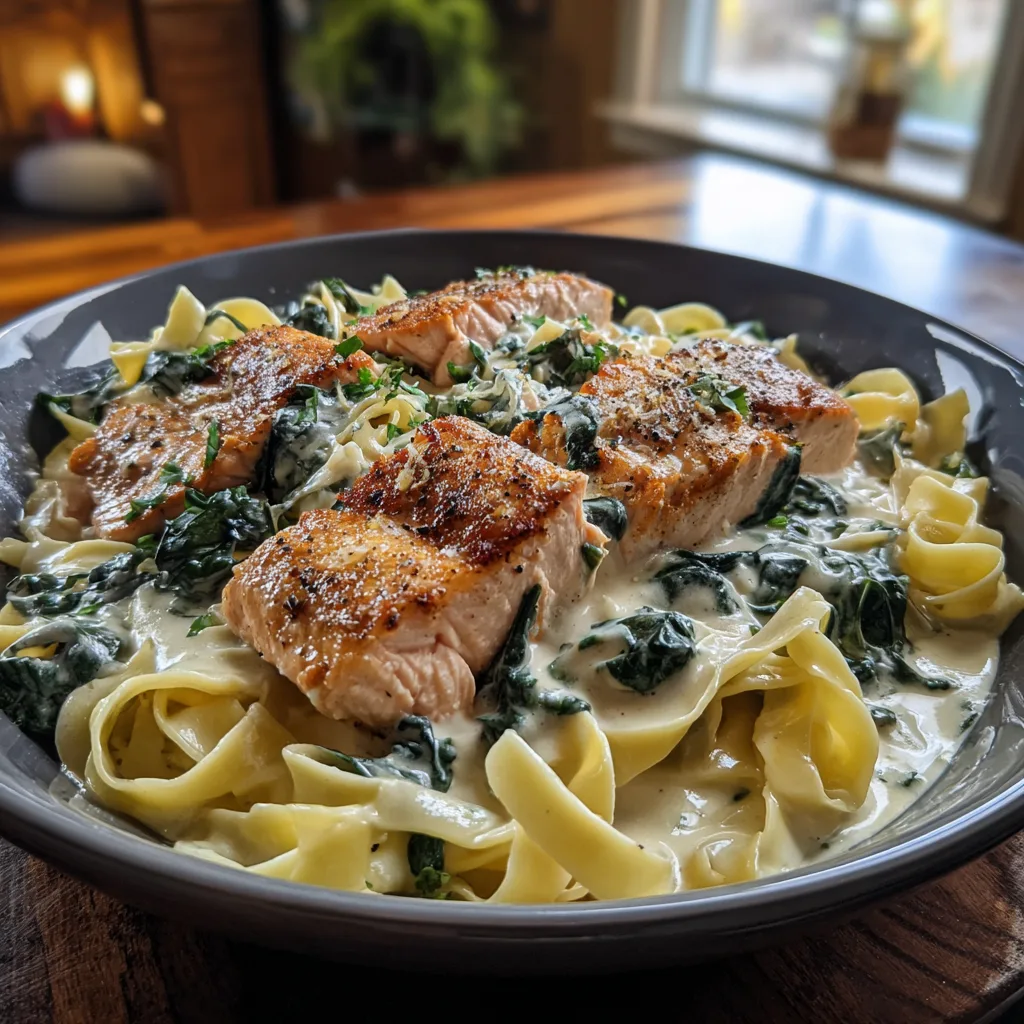
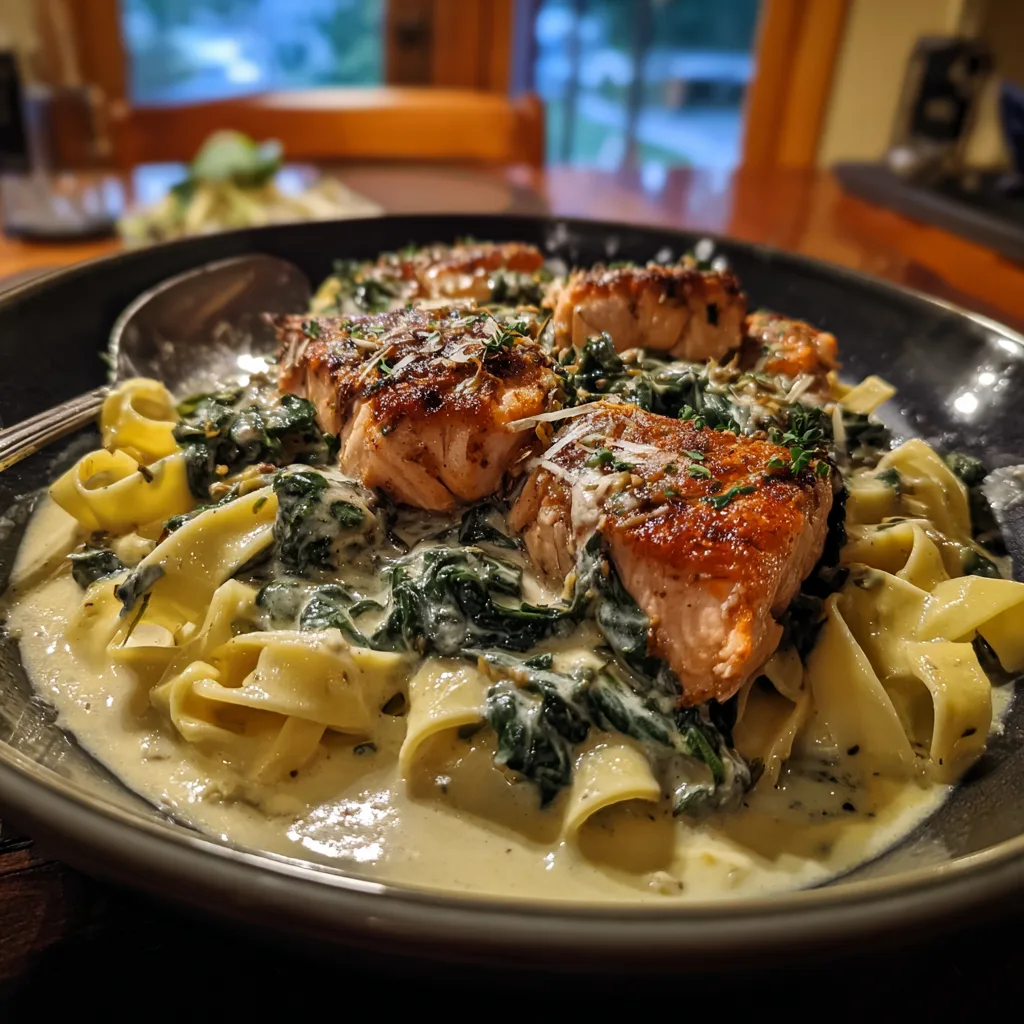
If you are looking for a meal that feels incredibly elegant but comes together with the ease of a simple weeknight dinner, look no further than this Easy Creamy Salmon Florentine. Imagine perfectly pan-seared, flaky salmon fillets resting on a bed of tender pasta, all enveloped in a rich, velvety garlic and Parmesan cream sauce packed with vibrant, wilted spinach. It is a dish that looks and tastes like it took hours of careful preparation in a high-end restaurant kitchen, yet it can be on your dining table in under 30 minutes. Whether you are planning a romantic date night at home, hosting friends for a dinner party, or simply treating yourself to a luxurious weeknight meal, this recipe is guaranteed to impress.
What is Salmon Florentine?
To fully appreciate this dish, it helps to understand its culinary roots. In the world of cooking, the term “Florentine” (or “à la Florentine” in French) refers to a recipe prepared in the style of Florence, Italy. Practically speaking, whenever you see “Florentine” on a menu, you can almost always expect one key ingredient: spinach. The origin of this association dates back to Catherine de’ Medici, a noblewoman from Florence who married the King of France in the 16th century. Legend has it that she brought her own cooks and a deep love for spinach to the French court, forever linking her home city with the leafy green vegetable in classical cuisine.
Traditionally, a classic Florentine dish features a main protein—like chicken, eggs, or fish—served over a bed of simmered spinach and topped with a rich Mornay sauce (a cheese sauce). Our Creamy Salmon Florentine takes this classic concept and modernizes it. We combine the robust flavor of pan-seared salmon with a quick, luscious garlic-Parmesan cream sauce, incorporate the essential fresh spinach, and serve it all over perfectly cooked fettuccine pasta for a complete, satisfying meal.
Why You Will Love This Creamy Salmon Pasta
There are countless salmon recipes available, but this particular preparation stands out for several reasons. Here is why this recipe will quickly earn a permanent spot in your regular dinner rotation:
- Incredible Flavor Balance: Salmon is a rich, fatty fish that can easily stand up to bold flavors. The savory, salty notes of the Parmesan cheese, the aromatic punch of fresh garlic, and the subtle earthy bitterness of the spinach perfectly cut through the richness of the heavy cream and the fish itself.
- Fast and Accessible: Despite its gourmet appearance, this dish requires minimal prep work. The salmon cooks in minutes, and the sauce comes together in the very same pan, capturing all those delicious browned bits left behind by the fish. From start to finish, you are looking at about 30 minutes of active cooking.
- Nutrient-Dense Ingredients: While it boasts an indulgent cream sauce, this meal also packs a nutritional punch. Salmon is renowned for its high levels of omega-3 fatty acids, high-quality protein, and essential B vitamins. Spinach is a superfood loaded with iron, vitamins K and A, and folate.
- Highly Customizable: This recipe is incredibly versatile. You can swap out the pasta for a low-carb alternative, use a different type of leafy green, or even substitute the protein if someone at the table prefers chicken or shrimp.
Key Ingredients for the Perfect Salmon Florentine
The success of this dish relies on using fresh, high-quality ingredients. Because the sauce is so simple, every component needs to shine. Let us break down what you will need and why it matters.
- Salmon Fillets: You will want skinless salmon fillets for this recipe, cut into individual portions (about 4-6 ounces each) or large chunks. Fresh, wild-caught salmon offers the best flavor and color, but high-quality farmed salmon is also perfectly fine. Ensure they are patted completely dry before cooking to guarantee a good sear.
- Fettuccine Pasta: A wide, flat noodle like fettuccine or linguine is ideal for rich cream sauces. The wide surface area allows the velvety sauce to cling to the pasta beautifully.
- Fresh Baby Spinach: Skip the frozen spinach for this recipe. Fresh baby spinach wilts perfectly into the hot sauce in a matter of seconds, maintaining a bright green color and a tender texture without making the sauce watery.
- Heavy Cream: This is the foundation of your sauce. Do not substitute with milk or half-and-half if you want a truly thick, restaurant-quality sauce. Heavy cream resists curdling when boiled and reduces down into a naturally thick, luxurious coating.
- Parmesan Cheese: Always use freshly grated Parmesan cheese from a block. Pre-grated cheeses contain anti-caking agents (like cellulose) that prevent them from melting smoothly, which can result in a grainy sauce.
- Butter and Olive Oil: Using a combination of butter and olive oil to sear the salmon gives you the rich flavor of butter with the higher smoke point of olive oil, preventing the fats from burning.
- Fresh Garlic: Freshly minced garlic is non-negotiable. Garlic powder simply will not provide the aromatic depth required for a proper Florentine sauce.
- Chicken or Vegetable Broth: A splash of broth helps deglaze the pan, lifting up the caramelized flavors from the salmon and adding savory depth to the cream sauce. A dry white wine can also be used here.
Ingredients List
Gather your ingredients before you begin cooking (mise en place). This recipe moves fast once the salmon hits the pan.
- – 4 skinless salmon fillets (about 6 oz each)
- – 8 oz fettuccine pasta
- – 1 tablespoon olive oil
- – 2 tablespoons unsalted butter, divided
- – 4 cloves garlic, finely minced
- – 1/3 cup low-sodium chicken broth (or dry white wine)
- – 1 1/2 cups heavy cream
- – 1/2 cup freshly grated Parmesan cheese
- – 4 cups fresh baby spinach
- – 1 teaspoon Italian seasoning
- – Salt and freshly cracked black pepper, to taste
- – Fresh parsley or basil, for garnish
Step-by-Step Instructions
Follow these steps to achieve perfectly seared salmon and a flawlessly smooth cream sauce.
- Boil the Pasta: Bring a large pot of generously salted water to a rolling boil. Add the fettuccine and cook according to the package directions until al dente. Before draining the pasta, reserve about 1/2 cup of the starchy pasta water. Drain the pasta and set aside.
- Prepare the Salmon: Pat the salmon fillets completely dry with paper towels. This is crucial for achieving a golden crust. Season both sides generously with salt and black pepper.
- Sear the Salmon: Heat a large skillet over medium-high heat. Add the olive oil and 1 tablespoon of butter. Once the butter is melted and bubbling, add the salmon fillets. Cook for about 4-5 minutes on the first side until a golden-brown crust forms. Flip carefully and cook for another 3-4 minutes on the other side, or until cooked to your desired level of doneness. Remove the salmon from the skillet and set aside on a plate. Tent loosely with foil to keep warm.
- Aromatics and Deglaze: Reduce the heat to medium-low. In the same skillet (do not wipe it out!), melt the remaining 1 tablespoon of butter. Add the minced garlic and sauté for about 30 seconds until fragrant, being careful not to let it burn. Pour in the chicken broth (or wine) to deglaze the pan, using a wooden spoon to scrape up all the flavorful browned bits from the bottom. Let the liquid simmer and reduce by half.
- Build the Cream Sauce: Pour in the heavy cream and stir in the Italian seasoning. Bring the mixture to a very gentle simmer. Let it bubble softly for about 3-5 minutes until the sauce begins to thicken slightly.
- Add Cheese and Spinach: Reduce the heat to low. Gradually whisk in the freshly grated Parmesan cheese until it is completely melted and the sauce is smooth. Add the fresh baby spinach to the skillet in handfuls, stirring gently until it is just wilted into the sauce. If the sauce seems too thick, add a splash of the reserved pasta water to thin it out.
- Combine and Serve: Add the cooked fettuccine pasta into the skillet, tossing it well so every noodle is coated in the glossy Florentine sauce. Nestle the cooked salmon fillets back into the skillet, spooning some of the creamy spinach sauce over the top of the fish. Garnish with fresh parsley or basil and extra black pepper. Serve immediately.
Pro Tips for Cooking Salmon and Cream Sauce
To ensure your meal turns out flawlessly, keep these professional kitchen tips in mind:
- Do Not Overcook the Salmon: Salmon can dry out quickly. It is perfectly safe (and often preferred) for salmon to be slightly pink in the very center. It will also continue to cook slightly from residual heat once you remove it from the pan.
- Room Temperature Dairy: If possible, let your heavy cream sit out for 15-20 minutes before adding it to the hot pan. Cold cream hitting a hot pan can sometimes cause the sauce to separate or “break.”
- The Power of Pasta Water: Never pour all your pasta water down the drain! That starchy, salty water is liquid gold. It acts as an emulsifier, helping to bind the rich fats in the cream sauce to the pasta noodles, creating a silky, cohesive dish rather than a greasy one.
Variations and Substitutions
While this recipe is fantastic as written, it is easily adaptable to suit your dietary needs or whatever you happen to have in the fridge.
- Low-Carb/Keto Friendly: Skip the fettuccine and serve the creamy salmon and spinach sauce over zucchini noodles (zoodles), spaghetti squash, or a bed of cauliflower rice.
- Different Greens: If you aren’t a fan of spinach, kale or Swiss chard make excellent substitutes. Just keep in mind that tougher greens like kale will need to simmer in the sauce a few minutes longer than delicate spinach to become tender.
- Add Sun-Dried Tomatoes: For a “Tuscan” twist on the Florentine, add 1/3 cup of chopped, drained sun-dried tomatoes to the skillet at the same time you add the garlic. The tart sweetness of the tomatoes cuts through the rich cream beautifully.
What to Serve with Salmon Florentine
Because this dish is quite rich and filling, you want to pair it with sides that offer a textural contrast or an acidic bite to cleanse the palate. A crisp green side salad with a sharp lemon vinaigrette is a perfect starter. Crusty garlic bread or warm dinner rolls are essential for mopping up any leftover cream sauce in the bottom of your bowl. For wine pairings, a crisp, dry white wine with good acidity, such as a Sauvignon Blanc or a Pinot Grigio, cuts through the heavy cream and complements the seafood perfectly.
Storage and Reheating Instructions
Seafood and cream sauces can be delicate to store and reheat, but it can be done successfully.
Storage: Allow any leftovers to cool completely before transferring them to an airtight container. Store in the refrigerator for up to 2-3 days. Freezing this dish is not recommended, as the heavy cream sauce will likely separate and become grainy upon thawing and reheating.
Reheating: The trick to reheating cream sauces is low and slow. Avoid the microwave if possible, as high heat will cause the fats in the sauce to separate into an oil slick. Instead, place the pasta and salmon in a skillet over medium-low heat. Add a splash of milk or chicken broth to help loosen the sauce. Cover the skillet and heat gently, stirring occasionally, until warmed through.
Frequently Asked Questions (FAQs)
Can I use frozen salmon for this recipe?
Yes, absolutely. Just ensure you thaw the salmon completely in the refrigerator overnight before cooking. Pat it very dry with paper towels; frozen salmon tends to retain more moisture, which can prevent it from getting a good sear if not dried properly.
Can I substitute milk or half-and-half for the heavy cream?
You can, but the result will be quite different. Milk and half-and-half have a lower fat content and a higher water content than heavy cream. They will not thicken as nicely, resulting in a thinner, more watery sauce. Furthermore, lower-fat dairy is much more prone to curdling when heated or mixed with acidic ingredients. If you must use half-and-half, whisk a tablespoon of flour or cornstarch into it before adding it to the pan to help stabilize and thicken the sauce.
Do I have to cook the salmon in the same pan?
While you don’t *have* to, it is highly recommended. Searing the salmon leaves behind “fond” (the browned bits of protein and fat stuck to the bottom of the pan). Deglazing the pan incorporates that incredible savory flavor directly into your cream sauce. If you bake or air-fry the salmon separately, your sauce will lack that deep, developed flavor.
Conclusion
This Easy Creamy Salmon Florentine proves that you don’t need a culinary degree or hours of free time to create a stunning, restaurant-quality meal at home. By combining perfectly seared, flaky salmon with a luscious, garlicky Parmesan cream sauce and nutrient-rich spinach, you create a harmonious dish that is comforting, elegant, and deeply satisfying. Remember to treat your ingredients with care—dry your salmon, use fresh Parmesan, and don’t rush the sauce—and you will be rewarded with a spectacular dinner that your family and friends will request again and again. Grab your skillet and enjoy a little taste of culinary luxury tonight!
Easy Creamy Salmon Florentine
Ingredients
Equipment
Method
- Boil pasta in salted water until al dente. Reserve 1/2 cup pasta water, drain, and set aside.
- Pat salmon fillets completely dry and season both sides with salt and pepper.
- Heat olive oil and 1 tablespoon of butter in a large skillet over medium-high heat. Sear salmon for 4-5 minutes per side until golden and cooked through. Remove and keep warm.
- Reduce heat to medium-low. Add remaining 1 tablespoon of butter and minced garlic to the skillet. Sauté for 30 seconds.
- Pour in chicken broth to deglaze the pan, scraping up browned bits. Reduce slightly.
- Stir in heavy cream and Italian seasoning. Simmer gently for 3-5 minutes until slightly thickened.
- Reduce heat to low. Whisk in Parmesan cheese until smooth. Add spinach and stir until just wilted.
- Toss cooked pasta into the sauce. Add reserved pasta water if the sauce needs thinning. Nestle salmon back into the skillet and serve.