California Roll Sushi Bowls
The Ultimate California Roll Sushi Bowl Guide
There is a unique kind of culinary satisfaction that comes from enjoying the precise, delicate flavors of your favorite restaurant sushi roll right in the comfort of your own home. However, the prospect of purchasing a bamboo rolling mat, sourcing perfect sheets of nori, and attempting to tightly roll a neat, aesthetically pleasing cylinder of rice and filling can be incredibly intimidating for the home cook. This is precisely where the brilliance of the California Roll Sushi Bowl comes into play. By deconstructing the iconic roll into a beautifully arranged, easy-to-eat bowl, you capture all the vibrant flavors and textural contrasts without any of the stress or mess. This comprehensive guide will take you on a deep dive into creating the ultimate California Roll Sushi Bowl, transforming your weeknight dinner routine into an effortless, gourmet experience.
Why Deconstructed Sushi is a Culinary Game Changer
The concept of the “bowl” meal has taken the culinary world by storm over the past decade, and for good reason. Bowls offer an incredibly balanced way to eat, allowing you to get a perfect ratio of carbohydrates, proteins, healthy fats, and fresh vegetables in every single bite. When it comes to sushi, the bowl format is nothing short of revolutionary.
First and foremost, it democratizes the sushi-making process. Traditional sushi making, or *itamae*, is an art form that takes decades to master. The deconstructed bowl bypasses the need for technical rolling skills. Secondly, the bowl allows for maximum customization. If you love avocado, you can add an entire half to your bowl rather than being limited to the thin sliver that fits inside a traditional maki roll. If you prefer a higher ratio of crisp cucumber to rice, you have complete control over the proportions. Finally, it transforms a potentially delicate appetizer into a hearty, satiating main course that is perfect for meal prep, family dinners, or a quick, healthy lunch.
The Fascinating History of the California Roll
Before we dive into the mechanics of building the bowl, it is worth understanding the history of its namesake: the California Roll. While sushi is an ancient Japanese culinary tradition, the California roll is a distinctly North American invention, born out of necessity and cultural adaptation.
In the late 1960s and early 1970s, sushi was still a very foreign concept to the mainstream American palate. The idea of eating raw fish wrapped in dark, chewy seaweed was met with hesitation. Several chefs, notably Ichiro Mashita in Los Angeles and Hidekazu Tojo in Vancouver, are credited with inventing the California roll to bridge this culinary gap. They substituted the intimidating raw tuna with familiar, cooked imitation crab meat (surimi) and added creamy avocado to replicate the rich, fatty mouthfeel of premium toro (tuna belly). To hide the seaweed, which many Westerners found unappetizing to look at, they pioneered the “inside-out” roll (uramaki), hiding the nori inside the rice. This clever, approachable combination became an absolute sensation, acting as the gateway for millions of people to explore and eventually fall in love with traditional Japanese cuisine.
Essential Ingredients for the Perfect Bowl
A deconstructed meal means there is nowhere for subpar ingredients to hide. Because this bowl requires zero cooking beyond the rice, the quality of your fresh components is absolutely paramount. Let us break down the anatomy of the perfect California Roll Sushi Bowl.
The Foundation: Perfectly Seasoned Sushi Rice
The rice is the soul of any sushi dish. You cannot use standard long-grain white rice, jasmine, or basmati for this recipe. You must use short-grain Japanese sushi rice. This specific variety contains a higher ratio of amylopectin, a type of starch that makes the rice sticky and cohesive without becoming mushy. The secret to authentic sushi rice is the seasoning. Once cooked, the hot rice is gently folded with *sushi-zu*—a mixture of rice vinegar, sugar, and salt. This gives the rice that signature glossy sheen and a beautiful balance of sweet, tart, and savory notes that elevates the entire bowl.
The Star: Imitation Crab (Surimi)
Imitation crab, or surimi, is not actually crab at all, but rather a highly processed paste made from mild white fish, typically Alaskan pollock. It is flavored with crab extract, sweetened slightly, and formed to mimic the texture of real crab leg meat. It is a staple in the California roll due to its sweet, mild flavor, firm texture, and affordability. For this bowl, you can buy it in stick form and chop it, or buy the flake style. While you could certainly splurge on real lump crab meat, surimi provides that nostalgic, authentic California roll flavor profile that most people are seeking.
The Fresh Crunch: Cucumber and Avocado
Texture is everything in a sushi bowl. The cucumber provides a vital, refreshing crunch that cuts through the richness of the other ingredients. An English cucumber or Persian cucumbers are preferred, as they have fewer seeds and thinner skins, meaning you do not have to peel them. The avocado is the creamy counterbalance. It provides healthy monounsaturated fats and a luxurious mouthfeel. It is imperative to use an avocado that is perfectly ripe—it should yield to gentle pressure but not feel mushy or hollow.
The Crown Jewel: Spicy Mayo
While a traditional California roll is often eaten with just soy sauce and wasabi, the modern sushi bowl is incomplete without a generous drizzle of spicy mayo. This magical condiment binds all the loose ingredients together. It is incredibly simple to make: a blend of high-quality mayonnaise (preferably Japanese Kewpie mayo, which is richer and made with only egg yolks) and Sriracha chili sauce. A dash of sesame oil or lime juice can be added to brighten it up.
Ingredients List
Gather the following ingredients to assemble your bowls. This recipe yields enough for 4 generous portions.
For the Sushi Rice:
– 2 cups short-grain sushi rice
– 2 and 1/4 cups water (for cooking)
– 1/3 cup unseasoned rice vinegar
– 2 tablespoons granulated sugar
– 1 teaspoon fine sea salt
For the Bowl Components:
– 1 pound imitation crab meat (surimi), finely diced
– 1 large English cucumber, finely diced
– 2 large ripe avocados, halved, pitted, and thinly sliced
– 2 sheets roasted nori (seaweed), cut into thin strips
– 2 tablespoons black or toasted white sesame seeds
– Furikake seasoning (optional, for garnish)
For the Spicy Mayo:
– 1/2 cup mayonnaise (Kewpie brand highly recommended)
– 2 to 3 tablespoons Sriracha sauce (adjust to desired heat level)
– 1/2 teaspoon toasted sesame oil
Step-by-Step Instructions
Building this bowl is all about timing and preparation. Follow these steps for a flawless execution.
1. Wash and Cook the Rice: Place the sushi rice in a fine-mesh strainer and rinse it thoroughly under cold running water. Gently agitate the rice with your hands until the water runs completely clear; this removes excess surface starch and prevents the rice from becoming gummy. Transfer the rinsed rice to a rice cooker or a medium saucepan. Add the 2 1/4 cups of water. If using a saucepan, bring to a boil, then immediately reduce the heat to the lowest setting, cover tightly, and simmer for 15-20 minutes until the water is absorbed. Remove from heat and let it rest, covered, for 10 minutes.
2. Prepare the Sushi Vinegar: While the rice is cooking, prepare the seasoning. In a small microwave-safe bowl, combine the rice vinegar, granulated sugar, and sea salt. Microwave for 30 seconds, then stir vigorously until the sugar and salt are completely dissolved into the vinegar. Set aside to cool.
3. Season the Rice: Transfer the hot, cooked rice to a large, wide bowl (a traditional wooden *hangiri* is best, but a large glass or ceramic bowl works perfectly). Pour the seasoned vinegar mixture evenly over the hot rice. Using a wooden spoon or a rice paddle, gently “slice” and fold the rice to incorporate the vinegar. Do not mash or stir aggressively, as this will crush the grains. Fan the rice while folding to help it cool quickly and develop a beautiful glossy shine. Let the rice cool to room temperature.
4. Mix the Spicy Mayo: In a small bowl, whisk together the mayonnaise, Sriracha, and toasted sesame oil until perfectly smooth and vibrant orange. For a professional presentation, transfer this mixture into a small plastic squeeze bottle.
5. Prep the Toppings: Finely dice the imitation crab meat and the English cucumber. Halve the avocados, remove the pits, peel away the skin, and slice the flesh into neat, thin fans. Use kitchen shears to cut the sheets of nori into thin, bite-sized strips.
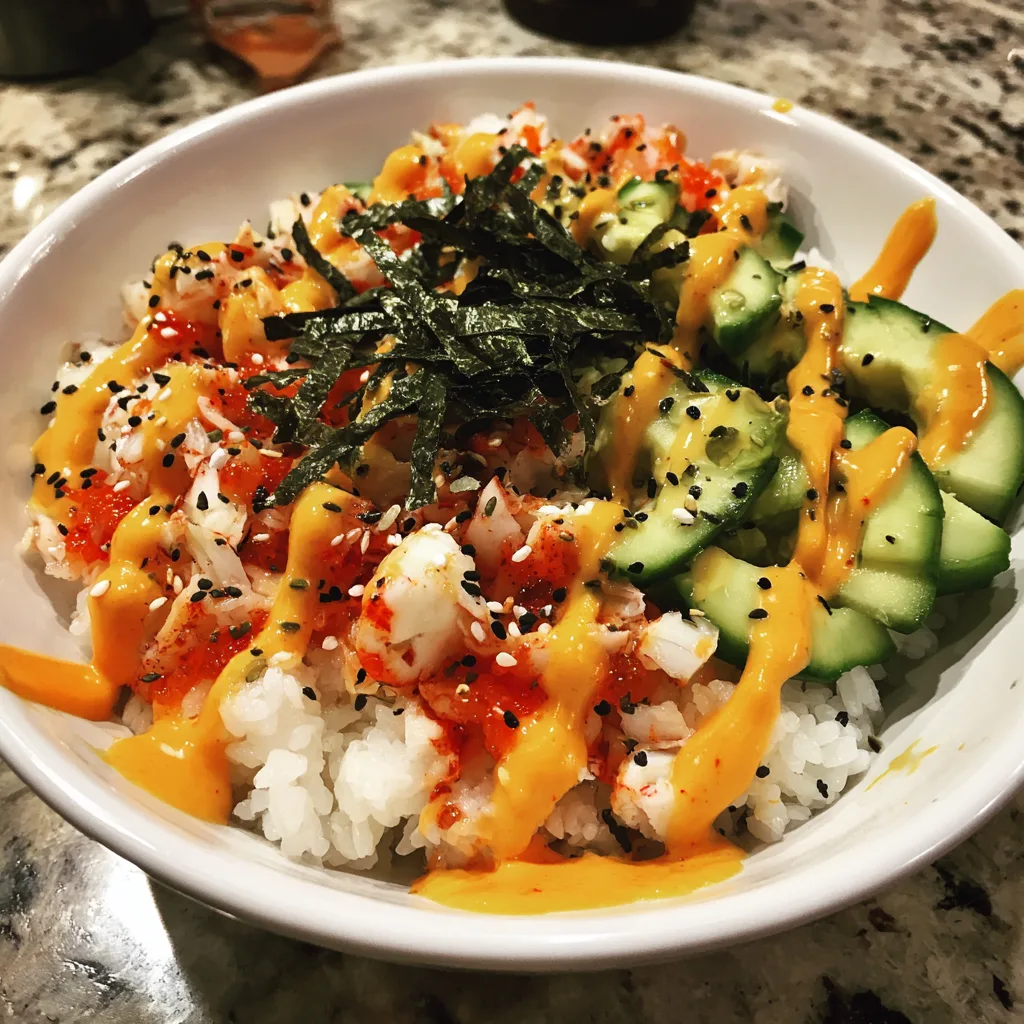
6. Assemble the Bowls: Divide the room-temperature seasoned sushi rice evenly among four wide, shallow serving bowls. Arrange the toppings neatly over the rice in distinct sections: a pile of diced crab, a pile of diced cucumber, and a fan of sliced avocado.
7. Garnish and Serve: Generously drizzle the spicy mayo over the entire bowl in a zigzag pattern. Sprinkle the strips of nori, the black sesame seeds, and a dash of furikake seasoning over the top. Serve immediately, perhaps with a side of soy sauce and pickled ginger.
Expert Tips for Sushi Bowl Success
Elevate your homemade sushi bowl from amateur to restaurant-quality with these professional techniques.
The Kewpie Difference: Do not underestimate the power of Kewpie mayonnaise. Unlike American mayonnaise, which uses whole eggs and white vinegar, Japanese Kewpie uses only egg yolks and rice or apple vinegar. This results in a much richer, creamier, and slightly sweeter profile that pairs flawlessly with sushi ingredients. It is worth seeking out at your local Asian market or online.
Room Temperature Rice is Key: Authentic sushi is never served with ice-cold rice. Cold rice becomes hard, chalky, and loses its delicate flavor. Conversely, steaming hot rice will cook the delicate fish or melt the avocado. Aim for room temperature or slightly warm body-temperature rice for the most authentic mouthfeel.
Perfect Avocado Slices: To prevent your avocado from turning brown while you assemble the bowls, wait to cut it until the very last minute. Alternatively, a light squeeze of fresh lemon or lime juice over the avocado slices will halt the oxidation process.
Exciting Variations to Try
Once you have mastered the basic California roll profile, this bowl can serve as a blank canvas for endless culinary creativity. Try these exciting twists on the classic recipe:
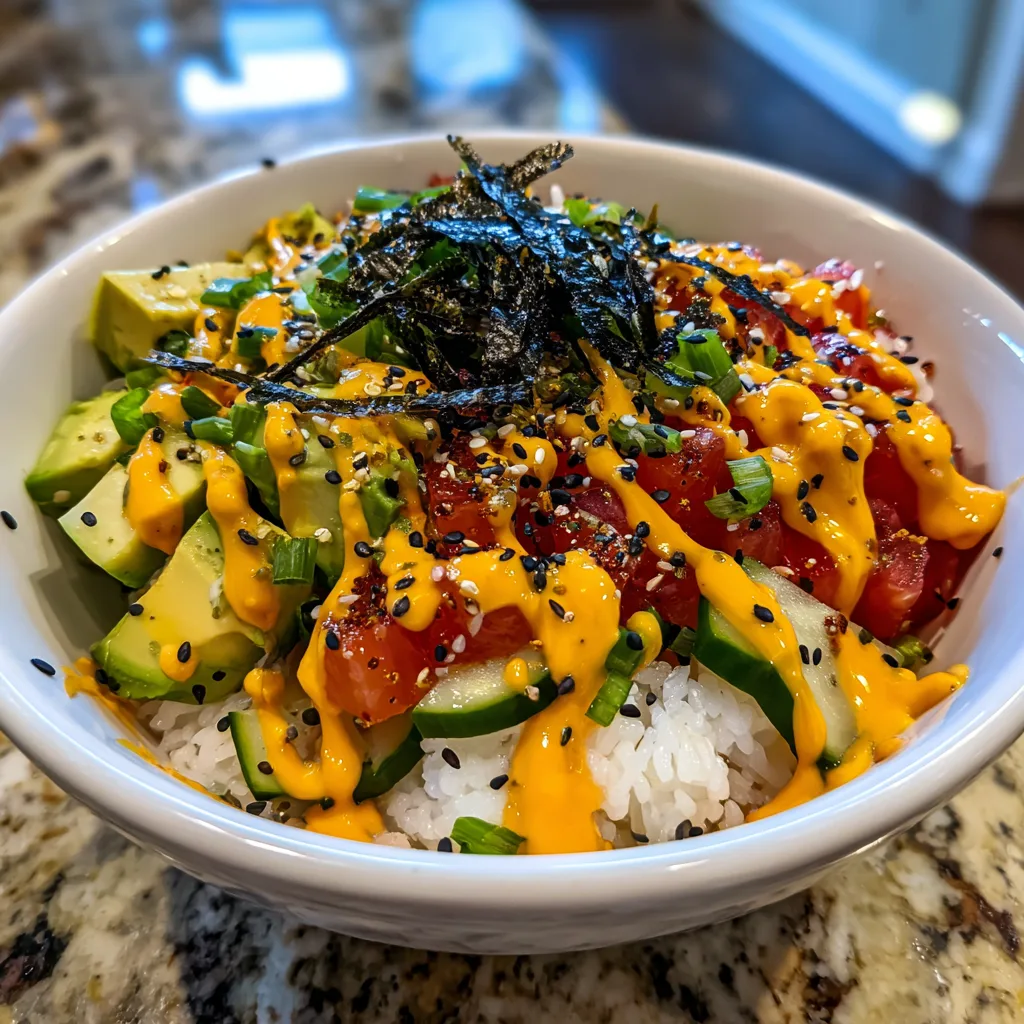
The Spicy Tuna Bowl: Swap out the imitation crab for fresh, sushi-grade Ahi tuna. Dice the raw tuna finely and toss it directly in the spicy mayo mixture before piling it onto the rice. Add some sliced jalapeños or a sprinkle of togarashi (Japanese chili powder) for an extra kick.
The Philadelphia Bowl: Pay homage to another American sushi classic by adding small cubes of full-fat cream cheese to the bowl. Swap the crab for smoked salmon, and add thinly sliced red onions and capers for a bagel-inspired sushi experience.
The Vegan California Bowl: Make this dish entirely plant-based by swapping the imitation crab for hearts of palm or extra-firm tofu that has been marinated in soy sauce and a drop of liquid smoke. Use a vegan mayonnaise base for the spicy drizzle.
The Low-Carb Option: If you are watching your carbohydrate intake, skip the seasoned sushi rice entirely. Instead, use a base of cauliflower rice that has been lightly steamed and tossed with a dash of rice vinegar, or serve the crab, cucumber, and avocado over a bed of mixed spring greens for a vibrant California salad.
Serving Suggestions and Pairings
To create a complete, immersive Japanese-inspired dining experience at home, consider pairing your sushi bowls with a few classic sides.
A hot bowl of miso soup, made with a savory dashi broth, soft tofu cubes, and sliced scallions, is the perfect starter to warm the palate. Steamed edamame pods tossed in flaky sea salt offer a fantastic, protein-rich appetizer. For a beverage pairing, a crisp, dry sake, a cold Japanese lager like Sapporo or Asahi, or a refreshing glass of iced green tea will cut through the richness of the spicy mayo and avocado beautifully.
Storage and Make-Ahead Advice
While this dish is undeniably best enjoyed fresh, you can implement some strategic make-ahead techniques for meal prep.
Prepping Ahead: You can dice the cucumber, chop the crab meat, and make the spicy mayo up to two days in advance. Store them in separate, airtight containers in the refrigerator.
Storing Leftovers: If you have fully assembled leftover bowls, they will keep in the fridge for up to 24 hours. Be aware that the avocado will likely brown, and the rice will harden significantly when cold. To revive cold sushi rice, you can sometimes microwave it for just 15-20 seconds to soften the starches, though it will never quite return to its original glory. It is best to only assemble what you plan to eat immediately.
Conclusion
The California Roll Sushi Bowl is a testament to the idea that fantastic, gourmet food does not have to be complicated, labor-intensive, or stressful. By utilizing high-quality ingredients and treating the rice with the respect it deserves, you can easily replicate the complex textures and flavors of a beloved restaurant favorite in your own kitchen. Whether you are meal prepping for a busy work week, hosting a casual dinner party, or simply treating yourself to a vibrant, healthy dinner, this deconstructed delight is guaranteed to become a regular star in your culinary rotation. Grab your chopsticks and dig in!
California Roll Sushi Bowls
Ingredients
Equipment
Method
- Rinse sushi rice under cold water until clear. Cook in a rice cooker or stovetop with 2 1/4 cups water until tender.
- In a small bowl, whisk together rice vinegar, sugar, and salt. Microwave for 30 seconds to dissolve.
- Transfer cooked rice to a large bowl. Pour vinegar mixture over the rice and gently fold to combine. Let cool to room temperature.
- In another bowl, whisk together the mayonnaise, Sriracha, and sesame oil to make the spicy mayo.
- Divide the seasoned rice among 4 bowls. Top each bowl with distinct sections of diced crab, diced cucumber, and sliced avocado.
- Drizzle generously with the spicy mayo. Garnish with nori strips and sesame seeds. Serve immediately.