Mandarin Orange Crabs
Adorable Mandarin Orange Crabs: The Ultimate Fun and Healthy Snack for Kids
Introduction: Making Healthy Eating an Undersea Adventure
As any parent or caregiver knows, getting children to eagerly eat their daily servings of fruit can sometimes feel like an uphill battle. While a plain apple or a standard peeled orange is undoubtedly nutritious, it doesn’t always spark the excitement needed to win over a picky eater. However, with just a tiny spark of creativity, you can transform everyday produce into a delightful, interactive experience. Enter the Mandarin Orange Crab—a wildly simple, incredibly cute, and 100% healthy snack that will have your kids diving into their fruit portions with absolute glee.
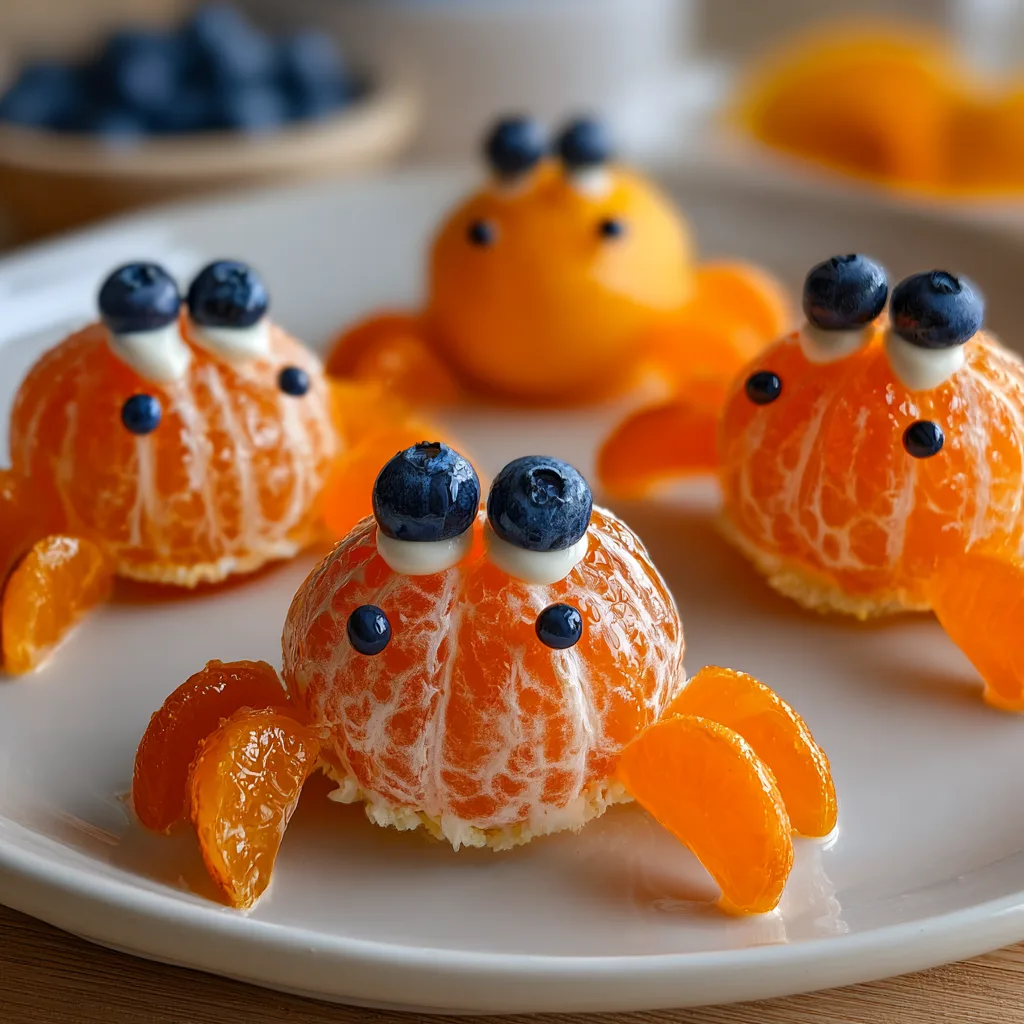
The concept of food art is a powerful tool in a parent’s arsenal. By presenting healthy ingredients in familiar, playful shapes, you instantly lower a child’s resistance to eating them. These little orange crustaceans look like they scuttled right out of a cartoon and onto the snack plate. The bright, vibrant orange color is naturally appealing, and the sweet, juicy burst of citrus is universally loved. Best of all, this “recipe” requires no cooking, no special equipment, and only takes a few minutes to assemble.
Whether you are packing a whimsical school lunch, looking for a themed snack for an ocean-party, or just want to bring a smile to your child’s face on a rainy Tuesday afternoon, these Mandarin Orange Crabs are the perfect solution. This guide will show you exactly how to craft these edible critters and offer tips on making snack time both fun and educational.
Why Mandarin Oranges are the Perfect Snack Medium
Mandarins (which include varieties like clementines and tangerines) are arguably nature’s most perfect pre-packaged snack. They come in their own protective, biodegradable wrapper, require no washing before peeling, and are generally seedless, making them incredibly safe and easy for young children to eat.
From a nutritional standpoint, these little citrus spheres pack a massive punch. They are exceptionally high in Vitamin C, which is crucial for supporting a child’s growing immune system, especially during the colder months. They also contain a healthy dose of dietary fiber to aid digestion, and are rich in antioxidants. Because they are naturally very sweet, they easily satisfy a sugar craving without the inevitable crash that follows processed candy or baked goods.
Structurally, mandarins are ideal for food art. Their segmented nature means they practically dismantle themselves into perfectly shaped building blocks. A whole segment naturally mimics the curve of a crab’s leg or a spider’s limb, while half a mandarin provides a sturdy, domed body. They are a zero-waste craft where every piece is delicious.
The Anatomy of an Edible Crab: Ingredient Breakdown
Creating this sea-faring snack requires only three basic components, all of which you likely already have in your kitchen.
The Body and Legs: Mandarin Oranges
You will want to look for mandarins that are easy to peel—commonly sold as “Cuties” or “Halos” in grocery stores. Ensure they are relatively firm, as mushy fruit will be difficult to cut cleanly and won’t hold its shape on the plate. You will need about one and a half mandarins to create a single crab (half an orange for the body, and individual segments for the legs).
The Whites of the Eyes: Yogurt or Cream Cheese
To give your crabs life, they need expressive eyes. The white base of the eye can be made from a variety of healthy, sticky ingredients. A thick Greek yogurt is a fantastic choice, as it is healthy and easy to pipe or dab onto the fruit. Alternatively, a small smear of softened cream cheese works brilliantly because its thicker texture holds its shape well at room temperature. For a dairy-free option, coconut yogurt or even a tiny slice of banana can serve the same purpose.
The Pupils: Blueberries or Chocolate Chips
To finish the eyes, you need a dark center. Tiny, fresh blueberries are the absolute best choice here, keeping the entire snack fruit-based and incredibly nutritious. Simply pick the smallest blueberries from the pint for the most proportionate look. If you don’t have blueberries on hand, a mini semi-sweet chocolate chip or even a small raisin pressed into the yogurt will work perfectly and add a tiny touch of dessert-like fun.
Ingredients You Will Need
- – 3-4 easy-peel mandarin oranges (clementines or tangerines)
- – 2 tablespoons thick Greek yogurt or softened cream cheese
- – A handful of small fresh blueberries (or mini chocolate chips)
Step-by-Step Assembly Instructions
- Prep the Fruit: Carefully peel all of your mandarin oranges, doing your best to remove as much of the stringy white pith as possible for a clean look.
- Create the Bodies: Take one whole, peeled mandarin and carefully slice it exactly in half horizontally (across the segments, not top-to-bottom). Place the two halves flat-side down on your serving plate. These domes will form the main bodies of two crabs.
- Prepare the Legs: Take your remaining peeled mandarins and gently separate them into individual segments. You will need 8 segments per crab.
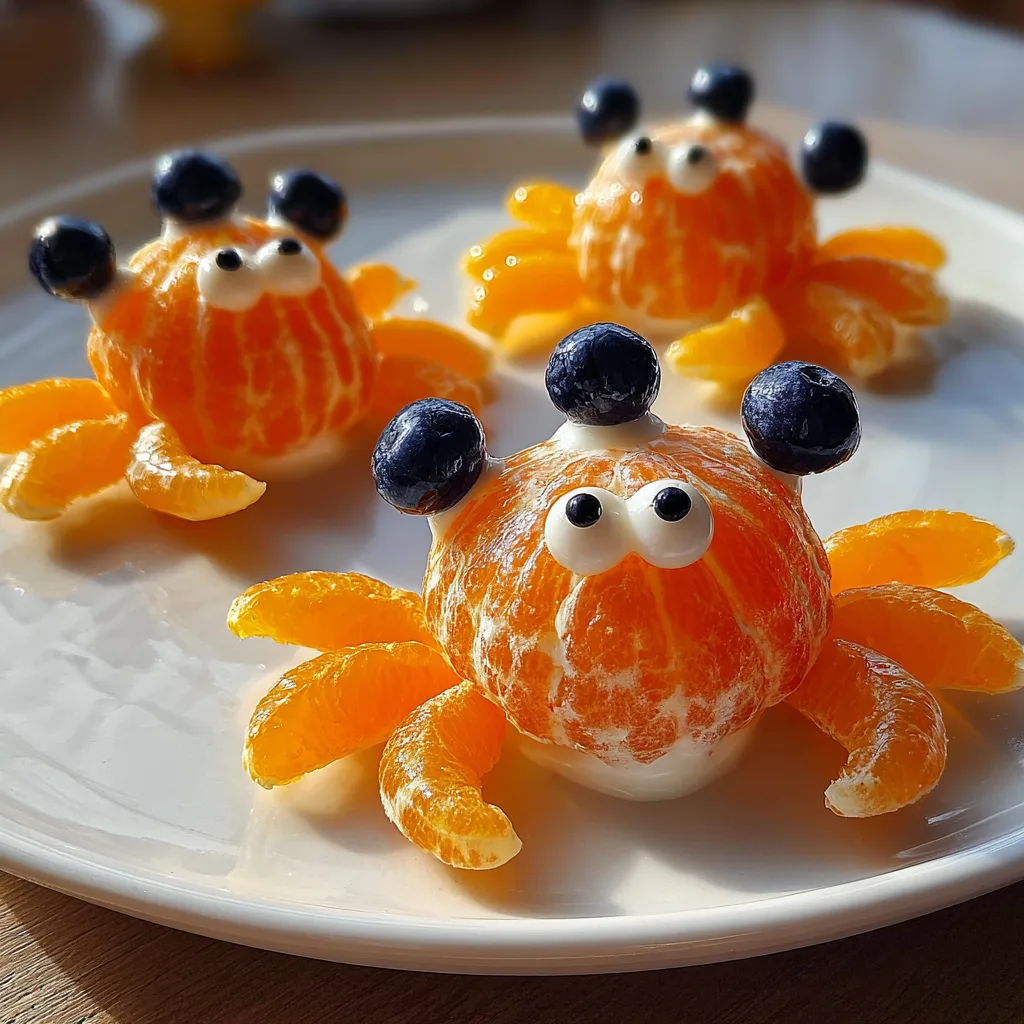
- Assemble the Crabs: Arrange 4 mandarin segments on the left side of a mandarin body, and 4 segments on the right side. Curve the segments slightly outward to mimic the look of scuttling crab legs.
- Add the Eye Whites: Using a toothpick, the back of a small spoon, or a plastic baggie with the corner snipped off, place two small, round dollops of thick yogurt or cream cheese near the top edge of the crab’s body, slightly overhanging the front.
- Complete the Face: Gently press one small blueberry (or mini chocolate chip) into the center of each white yogurt dollop to create the pupils.
- Serve: Serve immediately while the fruit is fresh and juicy!
Engaging Your Kids in the Kitchen
The magic of this recipe isn’t just in the eating; it’s in the making. This is a phenomenal activity for young children to help with, developing both their fine motor skills and their relationship with healthy food.
Toddlers and preschoolers can easily be tasked with peeling the clementines and separating the segments. This tactile experience helps them familiarize themselves with the texture and smell of the fruit. Older children can be put in charge of the “eye station,” carefully dotting the yogurt and placing the blueberries. When children are involved in creating their food, they feel a sense of pride and ownership, making them far more likely to eat the final product without hesitation.
More Fun Fruit Art Variations
Once you’ve mastered the crab, the fruit bowl is your oyster! You can easily adapt this technique to create a whole zoo of healthy snacks.
Mandarin Snails: Use a whole mandarin as the snail’s round shell, and use a thick slice of banana or apple for the long body creeping underneath. Stick two small slivered almonds into the head for antennas.
Apple Turtles: Cut a green apple in half to make the turtle shell. Carve a checkerboard pattern into the skin. Use green grape halves for the four legs and a whole grape for the head.
Banana Caterpillars: Slice a banana into thick coins and spread a tiny bit of peanut butter between each coin, sticking them together in a long, curving line. Add pretzel sticks for legs and antennae.
Storage and Prep-Ahead Tips
While food art is generally best served fresh to maintain the bright colors and juicy textures, you can certainly prep the components of this snack ahead of time to make assembly a breeze.
You can peel and segment the mandarins the night before and store them in an airtight container in the refrigerator. However, wait to add the yogurt and blueberry eyes until right before serving. If left sitting too long, the moisture from the fruit can cause the yogurt to slide off, or the fruit juice can bleed into the white cream cheese, ruining the clean, cartoony look of the eyes.
Conclusion
Healthy snacking doesn’t have to be boring. The Mandarin Orange Crab is a perfect example of how a few minutes of playful plating can entirely transform a child’s perception of healthy food. It combines the nutritional powerhouse of fresh citrus and berries with the joy of a fun, interactive craft. So the next time you’re faced with the mid-afternoon snack slump, grab a few clementines and let your imagination take the lead. It’s a guaranteed way to bring a smile to your kitchen table.
Mandarin Orange Crabs
Ingredients
Equipment
Method
- Peel the mandarin oranges and remove as much white pith as possible.
- Take one peeled mandarin and slice it cleanly in half horizontally. Place both halves flat-side down on a plate to serve as the crab bodies.
- Separate the remaining mandarins into individual segments.
- Arrange 4 segments on the left and 4 segments on the right of each mandarin half to look like curving crab legs.
- Using a toothpick or small spoon, place two small dollops of yogurt or cream cheese at the top front of each crab body for the eyes.
- Press a small blueberry into the center of each yogurt dollop to complete the eye. Serve immediately.