Hawaiian Chicken Pineapple Skewers
Sticky Hawaiian Chicken and Pineapple Skewers
There is something undeniably magical about food served on a stick. It immediately brings to mind warm summer evenings, backyard barbecues, and the comforting sizzle of a grill or the inviting aroma wafting from a hot oven. These Sticky Hawaiian Chicken and Pineapple Skewers represent the absolute pinnacle of sweet and savory flavor combinations. Packed with vibrant colors, incredible textures, and a glaze that coats every single bite like a thick, mouth-watering blanket of flavor, this recipe is guaranteed to become a staple in your meal rotation. Whether you are hosting a festive gathering, looking for a reliable weeknight dinner, or simply craving a taste of the tropics, these kabobs deliver on every front. The brilliant juxtaposition of tender, juicy chicken breast, caramelized sweet pineapple chunks, crisp red bell peppers, and slightly charred red onions creates a symphony of flavors that appeals to adults and kids alike.
The Magic of Sweet and Savory: Why This Recipe Works
To truly appreciate the brilliance of this dish, we have to delve into the science and culinary artistry of pairing sweet and savory elements. The human palate is naturally drawn to contrasting flavors that balance each other out. In this recipe, the savory, umami-rich notes of the chicken and the soy sauce-based glaze are perfectly offset by the natural fructose in the pineapple.
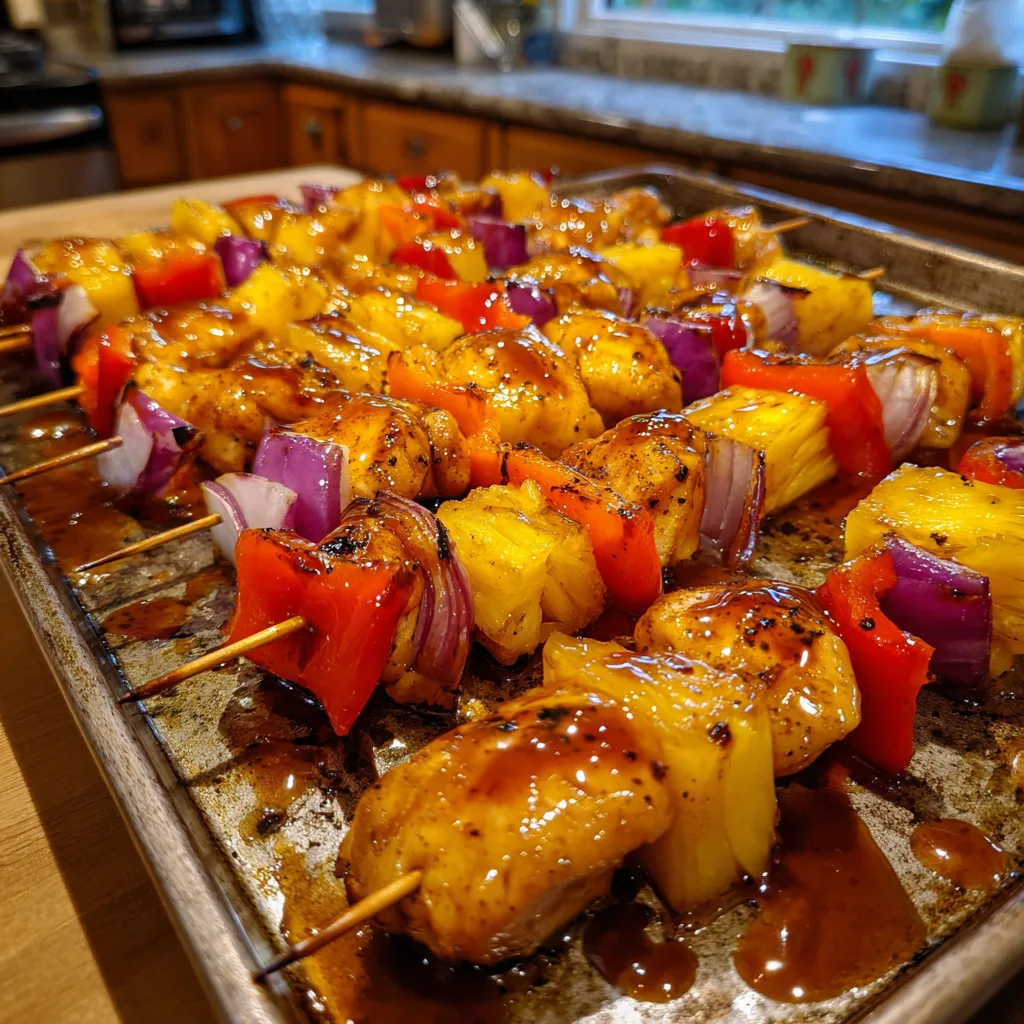
Furthermore, pineapple contains an enzyme called bromelain. When used in marinades, bromelain acts as a natural meat tenderizer, breaking down proteins to ensure your chicken remains incredibly juicy and soft. As these skewers bake in the oven, the sugars in the pineapple and the glaze begin to caramelize. This Maillard reaction—a chemical interaction between amino acids and reducing sugars—creates that coveted, slightly sticky, golden-brown crust on the edges of the meat and fruit. The red onions become mellow and sweet as they roast, losing their raw bite, while the red bell peppers retain just enough structure to provide a satisfying crunch. Every bite is a perfectly engineered mouthful of contrasting yet complementary textures and tastes.
Essential Ingredients for Perfect Chicken Kabobs
Creating restaurant-quality skewers at home requires selecting the right ingredients. Here is exactly what you will need to bring this tropical masterpiece to life:
The Skewer Components
- – 1.5 lbs boneless, skinless chicken breast (cut into 1-inch cubes)
- – 1 fresh pineapple (peeled, cored, and cut into 1-inch chunks)
- – 2 large red bell peppers (seeded and cut into 1-inch squares)
- – 1 large red onion (cut into 1-inch thick pieces, separated into layers)
- – 10-12 wooden or metal skewers
The Sticky Glaze and Marinade
- – 1/2 cup low-sodium soy sauce
- – 1/3 cup packed brown sugar
- – 1/4 cup pineapple juice (reserved from cutting the fresh pineapple)
- – 1 tablespoon rice vinegar
- – 2 cloves garlic (minced)
- – 1 teaspoon fresh ginger (grated)
- – 1 tablespoon sesame oil
- – 1 tablespoon cornstarch (mixed with 1 tablespoon cold water to form a slurry)
Step-by-Step Instructions for Glazed Perfection
Follow these exact steps to ensure your chicken is fully cooked, your vegetables are tender-crisp, and your glaze achieves that perfect glossy finish.
- Prepare the Skewers: If you are using wooden skewers, submerge them in water and let them soak for at least 30 minutes. This prevents them from burning or catching fire in the oven.
- Make the Glaze/Marinade: In a medium saucepan, combine the soy sauce, brown sugar, pineapple juice, rice vinegar, minced garlic, grated ginger, and sesame oil. Bring the mixture to a gentle simmer over medium heat, whisking constantly until the sugar dissolves.
- Thicken the Sauce: Whisk the cornstarch and cold water together in a small bowl to create a slurry. Pour the slurry into the simmering saucepan. Continue to simmer and whisk for 2 to 3 minutes until the sauce becomes thick, glossy, and coats the back of a spoon. Remove from heat and let it cool completely.
- Marinate the Chicken: Place the cubed chicken breast in a large bowl. Pour half of the cooled glaze over the chicken, tossing well to ensure every piece is coated. Reserve the other half of the glaze for later. Cover the bowl with plastic wrap and let the chicken marinate in the refrigerator for at least 30 minutes, or up to 2 hours.
- Preheat the Oven: Preheat your oven to 400°F (200°C). Line a large baking sheet with aluminum foil or parchment paper to catch the sticky drips, making cleanup a breeze.
- Assemble the Skewers: Thread the ingredients onto the soaked skewers, alternating between the marinated chicken, pineapple chunks, red bell pepper squares, and red onion pieces. Repeat this pattern until the skewer is full, leaving a little room at the ends for handling.
- First Bake: Arrange the assembled skewers in a single layer on the prepared baking sheet. Bake in the preheated oven for 15 minutes.
- Baste and Finish Baking: Remove the baking sheet from the oven. Using a pastry brush, generously baste the skewers with the reserved glaze. Return them to the oven and bake for an additional 10 to 12 minutes, or until the chicken is cooked through (reaching an internal temperature of 165°F) and the edges of the pineapple are caramelized.
- Serve: Let the skewers rest for 5 minutes before serving to allow the juices to redistribute. Enjoy!
Mastering the Teriyaki-Style Glaze
The undisputed star of this dish is the thick, glossy sauce. It acts as both a marinade to infuse the chicken with flavor from the inside out, and a finishing glaze to give the skewers their irresistible shiny appearance. Using fresh ginger and garlic is crucial here; powdered alternatives simply do not provide the same aromatic punch. The pineapple juice not only ties the sauce to the physical pineapple chunks on the skewer but also provides a bright acidity that cuts through the saltiness of the soy sauce.
When thickening your sauce with the cornstarch slurry, patience is key. You want to simmer it just long enough to cook out the starchy flavor and achieve a consistency similar to warm honey. If the sauce is too thin, it will run right off the chicken and pool at the bottom of the pan. If it is too thick, it will become gloppy and difficult to brush. Aim for that perfect middle ground where it clings luxuriously to the food.
Grilling vs. Baking: Which Method is Best?
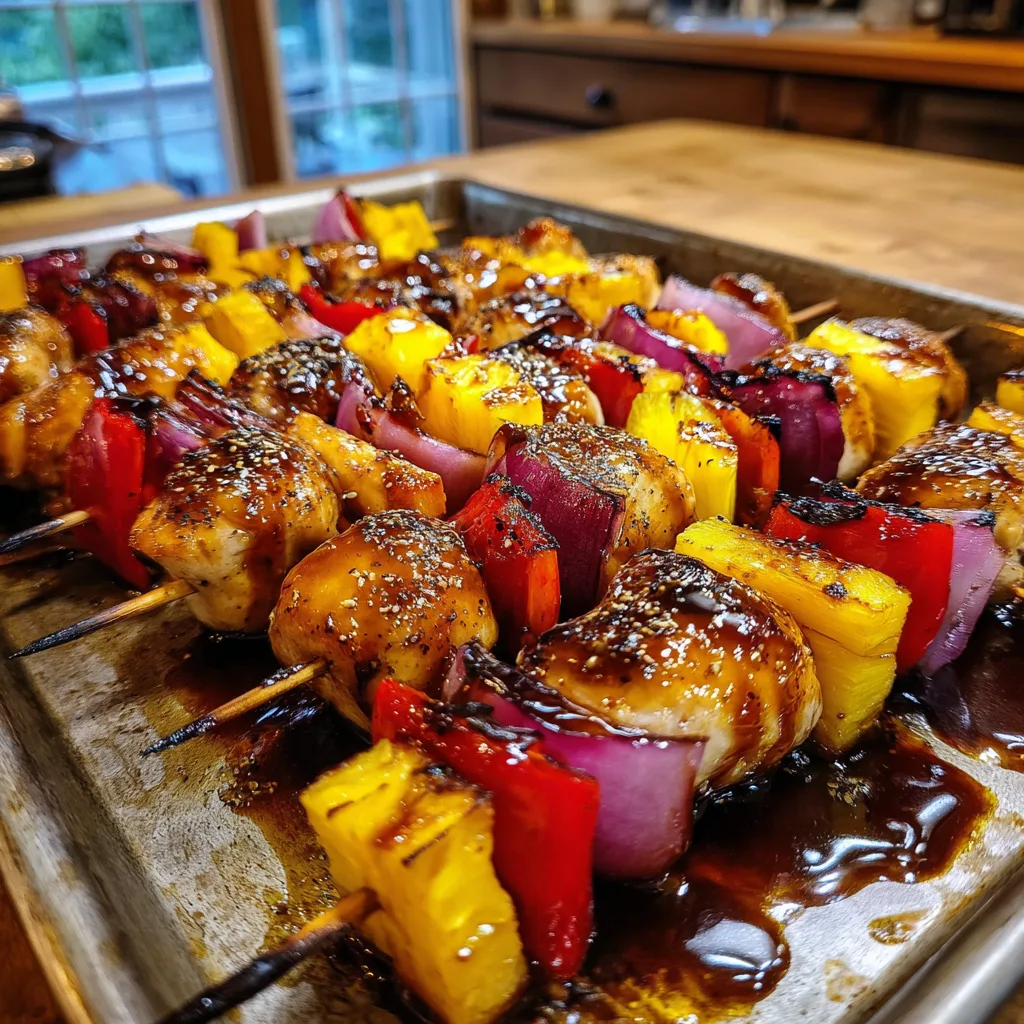
While the image features beautifully baked skewers on a sheet pan, this recipe is incredibly versatile and can be adapted for the grill.
Baking in the Oven: This method is fantastic for year-round cooking. It provides an even, consistent heat that cooks the chicken thoroughly without risking burning the sugary glaze too quickly. Using a lined baking sheet catches all the wonderful, sticky drippings, and the high heat of 400°F still allows for a decent amount of caramelization. It’s less hands-on than grilling and generally results in juicier chicken.
Grilling Outdoors: If you crave that smoky, charred flavor, firing up the grill is the way to go. You will want to grill these over medium-high heat. The key to grilling glazed skewers is constant vigilance. Because the sauce contains a high amount of sugar, it can go from beautifully caramelized to burnt in a matter of seconds. Keep turning the skewers and applying the glaze during the last few minutes of cooking rather than at the beginning.
Expert Tips for the Best Chicken Skewers
To elevate your skewers from good to spectacular, keep these expert tips in mind:
Uniform Sizing: This is arguably the most important rule of skewer making. Ensure your chicken, pineapple, peppers, and onions are all cut to roughly the same size (about 1 inch). If the chicken pieces are too large, the vegetables will burn before the meat is cooked safely. If the vegetables are too large, the chicken will dry out before the veggies are tender.
Don’t Pack Them Too Tight: While you want the ingredients touching, avoid squishing them together aggressively. Leaving a microscopic amount of space allows the heat to circulate evenly, ensuring everything cooks at the same rate rather than steaming in the center.
Fresh vs. Canned Pineapple: While canned pineapple chunks are convenient and absolutely work in a pinch, fresh pineapple is vastly superior for this recipe. Fresh pineapple holds its structure better under high heat and provides a more vibrant, complex sweetness.
Delicious Variations to Try
The beauty of the kabob is its infinite customizability. Here are a few ways to tweak this recipe to suit different tastes:
Make it Spicy: If you love a kick of heat, add a tablespoon of sriracha, a teaspoon of crushed red pepper flakes, or a dash of chili garlic sauce to the glaze mixture. The sweetness of the pineapple handles the heat beautifully.
Swap the Protein: This flavor profile works wonders with other meats. Try substituting the chicken breast with juicy chicken thighs, chunks of pork tenderloin, or even large, peeled shrimp (just drastically reduce the cooking time for shrimp!).
Vegetable Mix-ups: Don’t feel limited to red peppers and onions. Zucchini rounds, cherry tomatoes, mushroom caps, or even parboiled sweet potato cubes make excellent additions to the skewer lineup.
Serving Suggestions: What to Pair with Your Kabobs
These skewers are a flavor powerhouse, so you want side dishes that complement rather than compete with them. A bed of fluffy, steamed jasmine rice or coconut rice is the perfect vessel for soaking up any extra glaze. For a lower-carb option, cauliflower rice works brilliantly.
A crisp, refreshing side salad provides a great textural contrast. Think along the lines of a cucumber and sesame salad, a light Asian-inspired slaw with a ginger vinaigrette, or simply a platter of sliced cucumbers and tomatoes. You can also garnish the finished skewers with a sprinkle of toasted sesame seeds and thinly sliced green onions for a professional touch.
Fun Facts and Cultural Context of Skewered Foods
Cooking food on a stick is one of the oldest and most universal culinary techniques in human history. The concept of the “kebab” originated in the Middle East, with soldiers reportedly using their swords to grill meat over open fires in the field. As trade routes expanded, the concept traveled globally, adapting to local ingredients.
In Japan, skewered chicken is known as yakitori, typically grilled over binchotan charcoal and glazed with a tare sauce (similar to teriyaki). In Southeast Asia, you’ll find satay served with rich peanut sauces. This specific recipe draws heavily from Hawaiian-American cuisine, which often blends Asian flavor profiles (like soy sauce and ginger) with tropical fruits (pineapple) to create a unique fusion that has become beloved worldwide.
Storage and Reheating Guide
If you find yourself with leftovers, these skewers store surprisingly well. Remove the meat and vegetables from the wooden sticks and store them in an airtight container in the refrigerator for up to 3-4 days.
When it comes time to reheat, the microwave is an option, but it can sometimes make the chicken rubbery. For best results, reheat the chicken and vegetables in a skillet over medium heat with a splash of water or extra soy sauce until warmed through. You can also toss the ingredients into a wok with some day-old rice to create an incredible next-day pineapple chicken fried rice!
Frequently Asked Questions
Can I prepare these in advance? Yes! You can cut all the ingredients, make the sauce, and even thread the skewers up to a day in advance. Store the assembled, unbaked skewers covered tightly in the fridge. Wait to apply the marinade/glaze until about an hour before cooking so the pineapple enzymes don’t turn the chicken to mush.
Can I freeze these? It is not recommended to freeze assembled, raw skewers with pineapple, as the texture of the fruit and vegetables will degrade upon thawing. However, you can freeze the chicken in the marinade for up to 2 months.
Why did my wooden skewers still burn even after soaking? Ovens can have hot spots, and any exposed wood is liable to scorch. To prevent this entirely, you can wrap the exposed ends of the skewers in small pieces of aluminum foil before baking.
Enjoying these Sticky Hawaiian Chicken and Pineapple Skewers is an experience in vibrant colors and bold flavors. The combination of sweet, savory, sticky, and juicy is impossible to resist. So grab your skewers, fire up the oven, and bring a taste of the islands to your dining table tonight!
Sticky Hawaiian Chicken and Pineapple Skewers
Ingredients
Equipment
Method
- Soak wooden skewers in water for at least 30 minutes. Preheat oven to 400°F (200°C) and line a baking sheet with foil.
- In a saucepan, simmer soy sauce, brown sugar, pineapple juice, rice vinegar, garlic, ginger, and sesame oil.
- Whisk in cornstarch slurry and simmer for 2-3 minutes until thick and glossy. Let cool.
- Toss chicken cubes in half of the cooled glaze and marinate for at least 30 minutes in the fridge.
- Thread chicken, pineapple, bell pepper, and onion alternately onto the soaked skewers.
- Place skewers on the baking sheet and bake for 15 minutes.
- Remove from oven, baste generously with remaining glaze, and bake another 10-12 minutes until chicken is cooked through.
- Let rest for 5 minutes before serving.