Japanese Coffee Jelly
The Ultimate Japanese Coffee Jelly: A Refreshing, Creamy, Caffeinated Delight
Welcome to the comprehensive guide on making one of the most beloved, refreshing, and aesthetically pleasing desserts to ever emerge from modern Asian culinary culture: Japanese Coffee Jelly. If you are a coffee lover who is constantly looking for new ways to enjoy your daily dose of caffeine, or if you simply adore the fun, bouncy texture of gelatin desserts, this recipe will quickly become an absolute staple in your household. It is the perfect marriage of deep, dark, bitter roasted coffee and luscious, velvety, sweetened cream.
Often found in Japanese convenience stores, high-end cafes, and traditional coffee houses (known as kissaten), this seemingly simple treat is a masterclass in contrasting flavors and textures. The firm, slightly bitter bite of the dark coffee cubes gives way to an incredibly rich, sweet, milky bath that coats the palate. Today, we are taking a deep dive into the history, the science, and the exact step-by-step methodology required to recreate this iconic Japanese dessert right in your very own kitchen. Get your coffee makers ready, because we are about to elevate your dessert game to an entirely new level!
The Fascinating History of Coffee Jelly in Japan
To truly appreciate Japanese Coffee Jelly, known as “Kohii Zeri” (コーヒーゼリー) in Japan, one must understand its rich cultural background. While gelatin-based desserts have existed in Western cultures for centuries, the specific combination of coffee and gelatin was popularized in Japan during the Taisho period (1912–1926). It was a time when Western cultural influences were rapidly integrating into Japanese society, and coffee was becoming a fashionable, modern beverage.
It is widely believed that a chain of cafes in Japan began serving coffee jelly in the late 1950s as a clever way to serve a cold, refreshing coffee treat during the hot, humid Japanese summers without the ice melting and watering down the drink. It was an instant, massive hit. It perfectly appealed to the Japanese palate, which often favors desserts that are not overly cloying, but rather balance bitterness with subtle sweetness.
Today, you cannot walk into a Japanese convenience store (konbini) without seeing individual plastic cups of dark, shimmering coffee jelly resting beside little packets of sweet cream. It is served in family restaurants, fancy dessert parlors, and is a nostalgic childhood favorite for many. Making it at home, however, allows you to control the quality of the coffee and the richness of the cream, resulting in a gourmet experience that far surpasses any store-bought version.
The Science of the Perfect Coffee Jelly: Gelatin vs. Agar Agar
When crafting the perfect batch of Japanese Coffee Jelly, the setting agent you choose is critical. In traditional Western recipes, unflavored gelatin powder is the standard. Gelatin is derived from animal collagen. It creates a delightfully bouncy, elastic, and melt-in-your-mouth texture. When the gelatin hits your tongue, it literally melts at body temperature, releasing the flavor of the coffee instantly.
In many authentic Asian dessert recipes, however, a setting agent called “Agar Agar” (or kanten) is frequently used. Agar agar is a plant-based gelling agent derived from seaweed. It has a slightly different scientific profile than gelatin. It sets at room temperature and creates a much firmer, more brittle jelly that has a distinctive “snap” when you bite into it, rather than an elastic bounce. It also does not melt in your mouth the same way gelatin does.
For this specific recipe, we are using unflavored powdered gelatin to achieve that classic, luscious, melt-in-the-mouth texture that contrasts so beautifully with the liquid cream. However, it is vital to know that if you are vegetarian or vegan, you can absolutely substitute agar agar powder to make this dish accessible to your dietary needs. Just keep in mind that the texture will be slightly crisper.
Selecting the Perfect Coffee for Your Jelly
Because coffee is the absolute star of this recipe, the type of coffee you use will dictate the entire success of the dessert. This is not the time to use a weak, watery breakfast blend. The coffee flavor will be slightly diluted by the addition of the setting agent, and then heavily contrasted by the incredibly sweet, rich cream. Therefore, you need a coffee that can stand its ground.
1. Dark Roast is Key
You want to brew a coffee that is intensely flavored, deeply aromatic, and robust. French roasts, Italian roasts, or any dark roasted beans are ideal. The slight bitterness inherent in dark roasts is exactly what you want to balance the heavy cream and sweetened condensed milk.
2. Brewing Methods Matter
How you brew the coffee is just as important as the beans you choose. Here are the best methods:
- – French Press or Pour Over: These methods allow you to control the strength easily. Brew the coffee significantly stronger than you would if you were just drinking it black. Use a higher ratio of coffee grounds to water.
- – Cold Brew: If you plan ahead, cold brew concentrate is phenomenal for coffee jelly. It has a naturally sweet, incredibly smooth profile with very low acidity, making for a highly refined jelly.
- – Instant Coffee: Yes, you can use instant coffee! In fact, many Japanese home cooks prefer it for convenience. If using instant coffee, simply dissolve high-quality espresso powder or dark roast instant granules in hot water, making it quite strong.
The Magic of the Sweet Cream Sauce
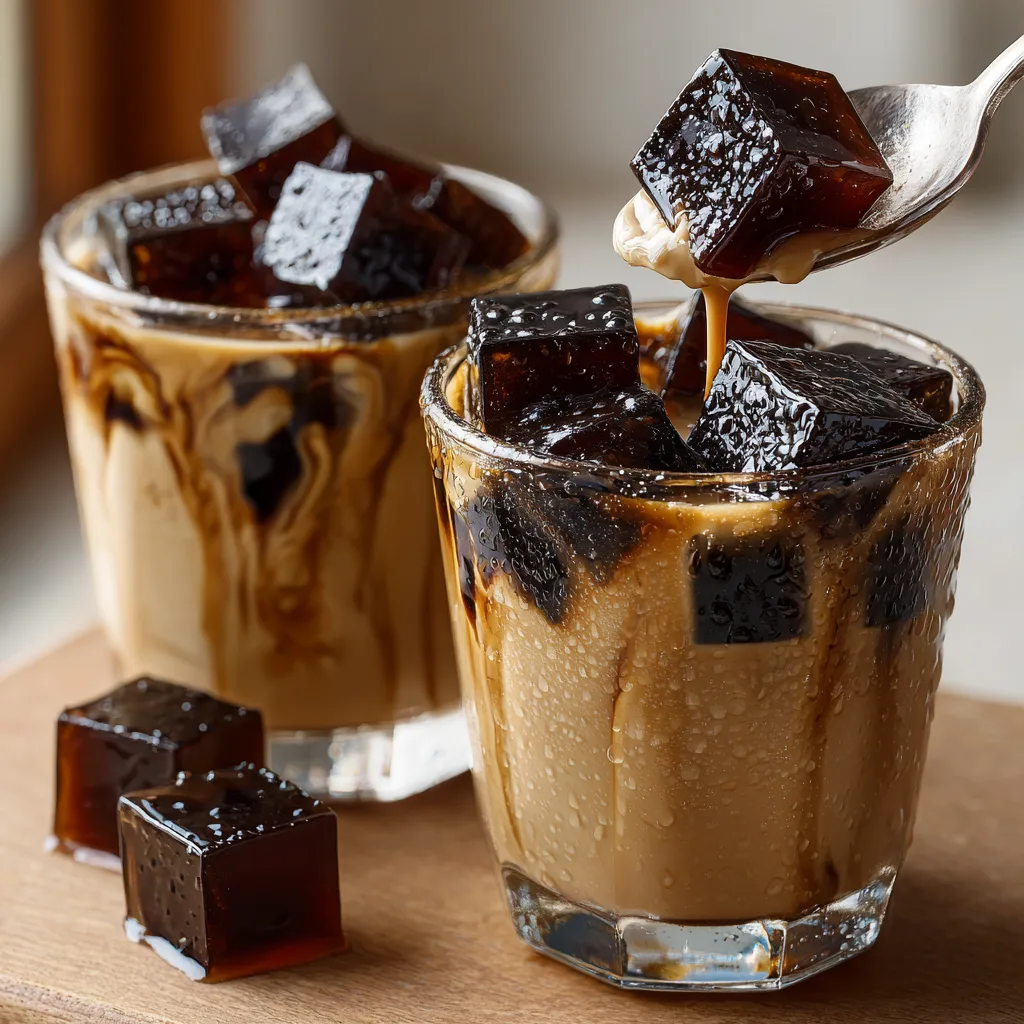
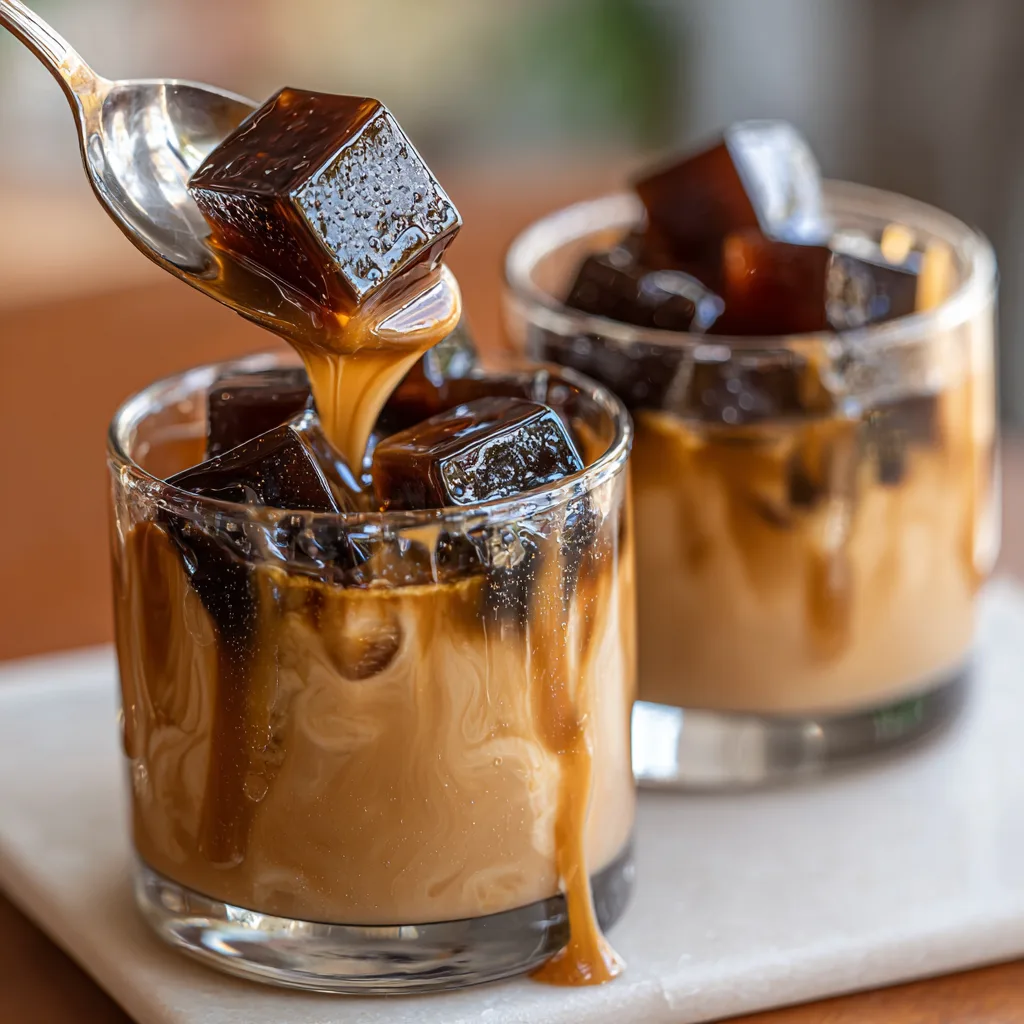
The dark, slightly bitter coffee jelly cubes are only half of the equation. The other half is the luxurious, velvety sweet cream sauce that they swim in. The visual contrast of the dark, sharp cubes tumbling in the pale, liquid cream is part of the joy of eating this dessert.
In our recipe, we use a decadent mixture of heavy whipping cream and sweetened condensed milk. The heavy cream provides a rich, buttery mouthfeel and a beautiful fluid consistency. The sweetened condensed milk is the secret ingredient; it acts as both the sweetener and a thickener, adding a deep, milky caramel undertone that regular granulated sugar simply cannot provide.
When you combine the heavy cream and the condensed milk, you get a liquid that is thick enough to coat the jelly cubes but thin enough to be slurped from a spoon or drank directly from the glass. It is pure, unadulterated indulgence.
Ingredients for Japanese Coffee Jelly
To create this spectacular dessert, you will need just a few simple, high-quality ingredients. Let’s gather what we need to make magic happen.
For the Coffee Jelly Base:
- – 1 tablespoon unflavored gelatin powder: This is roughly equivalent to one standard packet of Knox gelatin.
- – 1/4 cup cold water: Essential for blooming the gelatin properly before mixing it into the hot liquid.
- – 2 cups strongly brewed coffee: Dark roast is highly recommended. It must be piping hot when mixing.
- – 2 tablespoons granulated sugar: Just a touch to take the sharpest bitter edge off the coffee. We don’t want the jelly itself to be too sweet, as the cream will provide the bulk of the sweetness.
For the Sweet Cream Mixture:
- – 2 cups heavy cream: Also known as heavy whipping cream. Do not use half-and-half or whole milk, as it will be too watery and will not coat the jelly cubes beautifully.
- – 1 cup sweetened condensed milk: Adjust this slightly to your personal sweetness preference, but one cup provides that authentic, rich, Japanese dessert flavor profile.
Step-by-Step Instructions
Creating Japanese Coffee Jelly is wonderfully straightforward. The hardest part is simply waiting for the gelatin to set in the refrigerator! Follow these steps for flawless execution every single time.
- Bloom the Gelatin: In a small, shallow bowl, pour the 1/4 cup of cold water. Evenly sprinkle the 1 tablespoon of unflavored gelatin powder over the surface of the water. Do not stir it immediately. Let it sit undisturbed for about 5 to 10 minutes. The gelatin will absorb the water and swell, creating a thick, rubbery paste. This process is called “blooming” and prevents lumps from forming in your final dessert.
- Brew the Coffee: While the gelatin is blooming, brew 2 cups of very strong, dark roast coffee using your preferred method. Pour the hot, freshly brewed coffee into a large mixing bowl or a large liquid measuring cup.
- Dissolve the Sugar and Gelatin: While the coffee is still piping hot, add the 2 tablespoons of granulated sugar and whisk until completely dissolved. Next, scrape the bloomed gelatin paste into the hot sweet coffee. Whisk gently but continuously for about 2 to 3 minutes until the gelatin has completely melted and seamlessly incorporated into the coffee. There should be no visible granules remaining.
- Pour and Chill: Pour the hot coffee mixture into a shallow, flat-bottomed rectangular baking dish or a glass Tupperware container. The size of the container will determine how thick your cubes will be; an 8×8 inch dish works perfectly. Allow the liquid to cool to room temperature on the counter for about 20 minutes, then cover it tightly with plastic wrap and transfer to the refrigerator. Chill for at least 4 hours, or ideally overnight, until it is completely firm to the touch.
- Prepare the Sweet Cream: In a separate pitcher or large bowl, whisk together the 2 cups of heavy cream and the 1 cup of sweetened condensed milk until they are perfectly blended into a smooth, thick, sweet liquid. Store this mixture in the refrigerator so it is ice cold when you are ready to serve.
- Cube the Jelly: Once the coffee jelly has completely set, remove it from the refrigerator. Using a sharp knife, cut the jelly directly in the dish into neat, bite-sized cubes (about 1/2-inch to 3/4-inch squares). Use a small spatula or a spoon to gently scoop the cubes out of the dish.
- Assemble and Serve: Divide the dark coffee jelly cubes evenly among tall, clear serving glasses. Pour the chilled sweet cream mixture generously over the top, making sure the cubes are fully submerged and swimming in the cream. Serve immediately with a long spoon and enjoy the incredibly refreshing combination of textures!
Expert Tips for the Perfect Dessert
Want to ensure your Japanese Coffee Jelly looks and tastes like it came from a high-end Tokyo café? Keep these expert tips in your culinary arsenal:
- Do Not Boil the Gelatin: When adding the bloomed gelatin to the coffee, ensure the coffee is hot, but not actively boiling on a stove. Boiling gelatin can destroy its protein structure, preventing it from setting properly and resulting in a watery mess.
- The Perfect Cut: To get beautifully clean, sharp edges on your jelly cubes, run your knife under hot water and wipe it dry before slicing through the set gelatin in the pan. The slight heat will glide through the jelly effortlessly.
- Adjusting the Sweetness: The beauty of this dessert lies in the contrast. If you prefer a more mature, bitter dessert, completely omit the 2 tablespoons of sugar from the coffee base, and reduce the sweetened condensed milk in the cream mixture to 1/2 cup.
Creative Variations to Try
Once you master the classic recipe, you can experiment with incredibly fun flavor profiles. Here are a few ways to customize your coffee jelly:
The Mocha Jelly: When dissolving the sugar in the hot coffee, whisk in 2 tablespoons of high-quality Dutch-processed cocoa powder. This turns the coffee jelly into a rich mocha flavor that pairs beautifully with the sweet cream.
Boozy Coffee Jelly (Adults Only): For a sophisticated dinner party dessert, replace 1/4 cup of the brewed coffee with 1/4 cup of coffee liqueur (like Kahlúa) or a splash of Baileys Irish Cream. Add the alcohol after the hot coffee has cooled slightly, so it does not evaporate.
The Frappuccino Style: Instead of cubing the jelly, use a whisk to vigorously break the set jelly into tiny shards. Layer the broken jelly in the bottom of a glass, top it with iced coffee, and finish with a massive swirl of whipped cream and chocolate syrup. It is a stunning, texturally complex beverage.
Storage Suggestions
One of the best aspects of Japanese Coffee Jelly is that it is a phenomenal make-ahead dessert. You can make the jelly and the cream mixture up to 3 days in advance.
Storing the Jelly: Keep the set, uncut jelly in its container in the refrigerator, tightly covered with plastic wrap to prevent it from absorbing other fridge odors. Do not freeze gelatin, as the structure will collapse and turn to mush when thawed.
Storing the Cream: Keep the heavy cream and condensed milk mixture in a sealed glass jar or pitcher in the back of the refrigerator, where it is coldest.
Assembly: It is highly recommended to only assemble the dessert right before you plan to eat it. If you let the jelly sit in the cream mixture for more than a day, the coffee flavor may begin to leach into the white cream, turning it a muddy brown color and ruining the beautiful visual contrast.
Conclusion
Making traditional Japanese Coffee Jelly at home is a rewarding, simple, and incredibly delicious culinary endeavor. With its striking visual appeal, the sophisticated balance of bitter roasted coffee, and the luscious, comforting sweetness of heavy cream and condensed milk, it is a dessert that satisfies on every possible level. Whether you are looking to impress guests at a summer dinner party or just want to treat yourself to a luxurious afternoon pick-me-up, this recipe is guaranteed to deliver. Grab your favorite coffee beans, bloom that gelatin, and prepare to fall in love with this iconic Asian treat!
Japanese Coffee Jelly
Ingredients
Equipment
Method
- Pour 1/4 cup cold water into a small bowl. Sprinkle the gelatin evenly over the surface. Let sit for 5-10 minutes to bloom into a thick paste.
- Brew 2 cups of very strong, hot dark roast coffee. Pour into a large mixing bowl.
- Add the 2 tablespoons of sugar to the hot coffee and whisk until dissolved. Add the bloomed gelatin paste and whisk continuously for 2-3 minutes until completely melted and smooth.
- Pour the hot coffee mixture into a shallow rectangular dish. Let cool slightly, then cover tightly with plastic wrap. Refrigerate for at least 4 hours, or overnight, until completely firm.
- In a pitcher, whisk together the heavy cream and sweetened condensed milk until smooth. Store in the refrigerator until needed.
- Once the jelly is set, use a sharp knife to cut it into 1/2-inch to 3/4-inch cubes directly in the dish.
- To serve, gently scoop the coffee jelly cubes into clear glasses. Pour the chilled sweet cream mixture over the cubes until they are submerged. Serve immediately with a spoon.