Avocado Carbonara
Creamy Avocado Carbonara: A Modern Twist on an Italian Classic
There are few dishes in the culinary world as revered, debated, and universally beloved as classic Italian Carbonara. The traditional Roman recipe is a masterclass in simplicity, relying on just a handful of ingredients—pasta, cured pork (usually guanciale or pancetta), sharp Pecorino Romano cheese, black pepper, and eggs—to create a sauce that is impossibly rich, silky, and decadent. However, as the culinary landscape evolves, home cooks and chefs alike are constantly looking for innovative ways to reimagine classic flavor profiles while incorporating fresh, nutrient-dense ingredients. Enter the brilliantly vibrant, wildly delicious Avocado Carbonara.
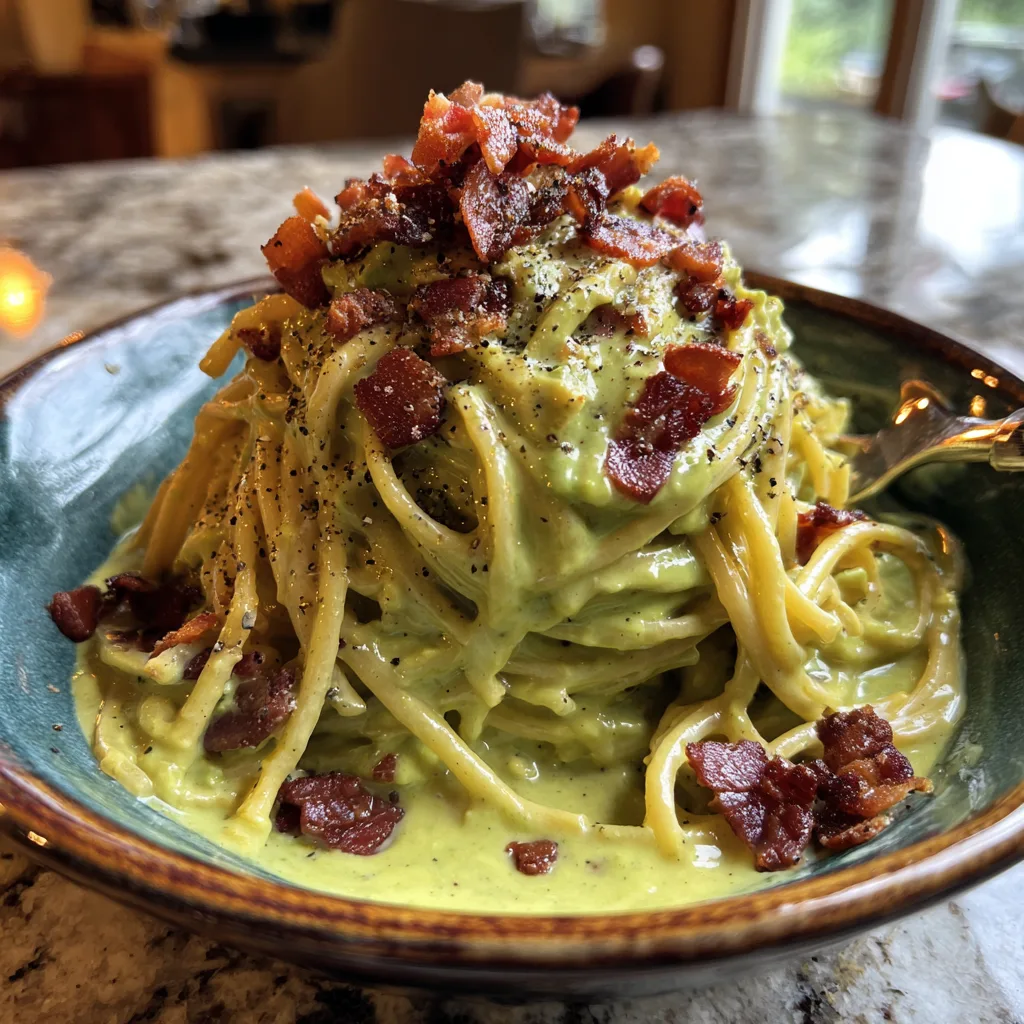
This modern fusion dish takes the soul-satisfying elements of a traditional carbonara—the salty, crispy pork and the comforting twirl of long pasta—and replaces the heavy egg and cheese emulsion with a bright, buttery, wildly creamy sauce made primarily from fresh avocados. The result is a dish that feels incredibly indulgent and luxurious on the palate, yet sits much lighter in the stomach. It is a fantastic way to sneak more healthy fats into your diet without sacrificing the comfort-food appeal of a big bowl of spaghetti. In this comprehensive guide, we will break down the techniques required to make this dish perfectly, explore the science of using avocado as a sauce base, and provide all the tips you need to master this easy, impressive weeknight dinner.
The Origins of Carbonara and the Avocado Evolution
To understand the brilliance of an avocado carbonara, it is helpful to look at the roots of the original dish. Carbonara, as we know it today, is a relatively modern Italian invention, emerging in Rome in the mid-20th century, shortly after World War II. It was born out of necessity and the availability of simple, hearty rations like eggs and bacon provided by Allied troops, combined with local pasta and cheese. The magic of traditional carbonara lies in the technique: tossing hot pasta with raw eggs and cheese away from direct heat, using the residual warmth of the noodles and a splash of starchy pasta water to gently cook the eggs into a thick, custard-like sauce without scrambling them.
The Avocado Carbonara borrows this exact methodology but changes the chemistry. Avocados are naturally high in monounsaturated fats—the same heart-healthy fats found in olive oil. When blended with a little citrus juice and garlic, the flesh of a ripe avocado transforms into a velvet-smooth puree that mimics the richness of an egg yolk and heavy cream emulsion. By tossing this room-temperature avocado puree with hot pasta and rendered bacon fat, you achieve a sauce that coats every single noodle beautifully, offering a gorgeous green hue and a remarkably similar mouthfeel to the original Roman classic.
Why Avocado Works as a Pasta Sauce Base
If you have only ever consumed avocados in the form of guacamole or sliced on top of toast, blending them into a warm pasta sauce might seem unorthodox. However, avocado is a botanical berry with a uniquely high fat content and very little sugar, making it incredibly versatile in savory culinary applications.
The creamy texture of a Hass avocado acts as a natural thickener. When pureed, it does not separate or curdle the way dairy-based sauces sometimes can when exposed to heat or acidity. Furthermore, the mild, slightly nutty flavor of the avocado provides a perfect blank canvas. It easily absorbs and amplifies the robust flavors of garlic, sharp parmesan, and salty bacon. The addition of lemon juice not only brightens the overall flavor profile, cutting through the richness, but it also prevents the avocado from oxidizing and turning an unappetizing brown color.
Deconstructing the Flavor Profile
What makes this Avocado Carbonara so downright addictive? It is all about the careful balance of contrasting flavors and textures:
Richness and Creaminess: The base of the sauce relies entirely on the buttery texture of the avocado, bolstered by a handful of grated Parmesan cheese. This coats the palate and provides deep, comforting satisfaction.
Salt and Umami: Traditional carbonara uses guanciale, but widely available thick-cut bacon or diced pancetta works perfectly here. The rendering process creates crispy, salty bites of pork that offer a necessary textural contrast to the soft noodles and creamy sauce. The rendered pork fat is also utilized to coat the noodles, adding profound savory depth.
Acidity and Brightness: Fresh lemon juice is non-negotiable in this recipe. Without it, the avocado and bacon would feel too heavy. The citrus cuts right through the fat, waking up the taste buds and keeping the dish feeling fresh.
Aromatic Spice: A heavy hand of freshly cracked black pepper is a signature of any carbonara style dish (the name “carbonara” is even theorized to come from “carbonaro,” the Italian word for charcoal burner, referencing the generous specks of black pepper). The sharp, woody heat of the pepper cuts the richness perfectly.
Essential Ingredients for Success
With a recipe this simple, ingredient quality is paramount. Here is what you need to look for when shopping for your Avocado Carbonara:
The Avocados: You must use perfectly ripe Hass avocados. They should yield to gentle pressure when squeezed in the palm of your hand, but they should not feel mushy or have hollow pockets under the skin. If your avocados are hard, the sauce will be gritty and bitter. If they are overripe and brown inside, the sauce will look muddy and taste spoiled.
The Pasta: Long pasta shapes work best for carbonara because they allow the sauce to cling to the entire length of the noodle. Spaghetti is the classic choice, but linguine, bucatini, or fettuccine are all excellent alternatives. Choose a high-quality, bronze-die extruded pasta if possible; it has a rougher surface texture that grips the avocado sauce much better than smooth, Teflon-extruded pasta.
The Pork: Thick-cut bacon is easily accessible and provides a wonderful smoky flavor. Pancetta (Italian salt-cured pork belly) is another fantastic, slightly more authentic option that offers a sweeter, less smoky pork flavor.
The Cheese: Use freshly grated Parmigiano-Reggiano or Pecorino Romano. Do not use pre-grated cheese from a plastic tub, as it is coated in anti-caking agents that will prevent it from melting smoothly into your avocado puree.
Ingredients List
Gather the following ingredients to prepare a meal that will easily feed four hungry people:
– 1 lb (16 oz) dried spaghetti or linguine
– 6 slices thick-cut bacon (or 6 oz diced pancetta), chopped into bite-sized pieces
– 2 large, perfectly ripe Hass avocados, pitted and peeled
– 2 cloves fresh garlic, peeled and smashed
– 1/2 cup freshly grated Parmesan cheese, plus extra for serving
– 2 tablespoons fresh lemon juice (about half a large lemon)
– 1/4 cup fresh basil leaves (optional, but highly recommended for brightness)
– 1 teaspoon freshly cracked black pepper, plus more for garnish
– 1/2 teaspoon kosher salt (adjust to taste depending on the saltiness of the bacon)
– 1/2 cup to 1 cup reserved starchy pasta cooking water (crucial step!)
Step-by-Step Instructions
The secret to this dish is timing. You want the sauce, the bacon, and the pasta to all finish at roughly the same time so you can combine them while everything is piping hot. Read through these steps before you begin.
1. Boil the Water: Bring a large pot of water to a rolling boil. Season the water generously with salt. It should taste like the sea. This is your only chance to flavor the pasta itself.
2. Render the Bacon: While the water is heating, place the chopped bacon in a large, cold skillet. Turn the heat to medium-low. Starting in a cold pan allows the fat to render out slowly and evenly, resulting in perfectly crispy bacon without burning the edges. Cook for 8 to 10 minutes until crisp. Use a slotted spoon to transfer the bacon bits to a plate lined with a paper towel. Leave the rendered bacon fat in the skillet and turn off the heat.
3. Cook the Pasta: Drop your spaghetti into the boiling salted water. Cook according to the package directions until it reaches “al dente”—meaning it is tender but still has a firm bite in the center. Do not overcook the pasta, as it will continue to soften slightly when tossed with the sauce.
4. Blend the Avocado Sauce: While the pasta is boiling, add the ripe avocado flesh, smashed garlic cloves, grated Parmesan cheese, fresh lemon juice, basil leaves (if using), black pepper, and salt to a food processor or a high-speed blender. Process until the mixture is completely smooth and creamy. It will be very thick at this stage.
5. Reserve the Pasta Water: This is the most critical step in the entire recipe! Right before you drain the pasta, carefully scoop out about 1 cup of the cloudy, starchy pasta cooking water and set it aside. This starchy water is the magical ingredient that will thin out the thick avocado puree and help it emulsify into a silky sauce that clings to the noodles.
6. Combine and Emulsify: Drain the pasta (or use tongs to pull it straight from the pot) and immediately add the hot noodles to the skillet with the reserved bacon fat. Turn the heat under the skillet to the lowest possible setting. Pour the blended avocado sauce over the hot pasta.
7. Toss and Thin: Begin tossing the pasta with tongs to coat the noodles in the avocado sauce and bacon fat. Gradually pour in the reserved hot pasta water, about a quarter cup at a time, tossing vigorously. Watch as the thick puree magically transforms into a luxurious, glossy sauce. Stop adding water when you reach your desired consistency.
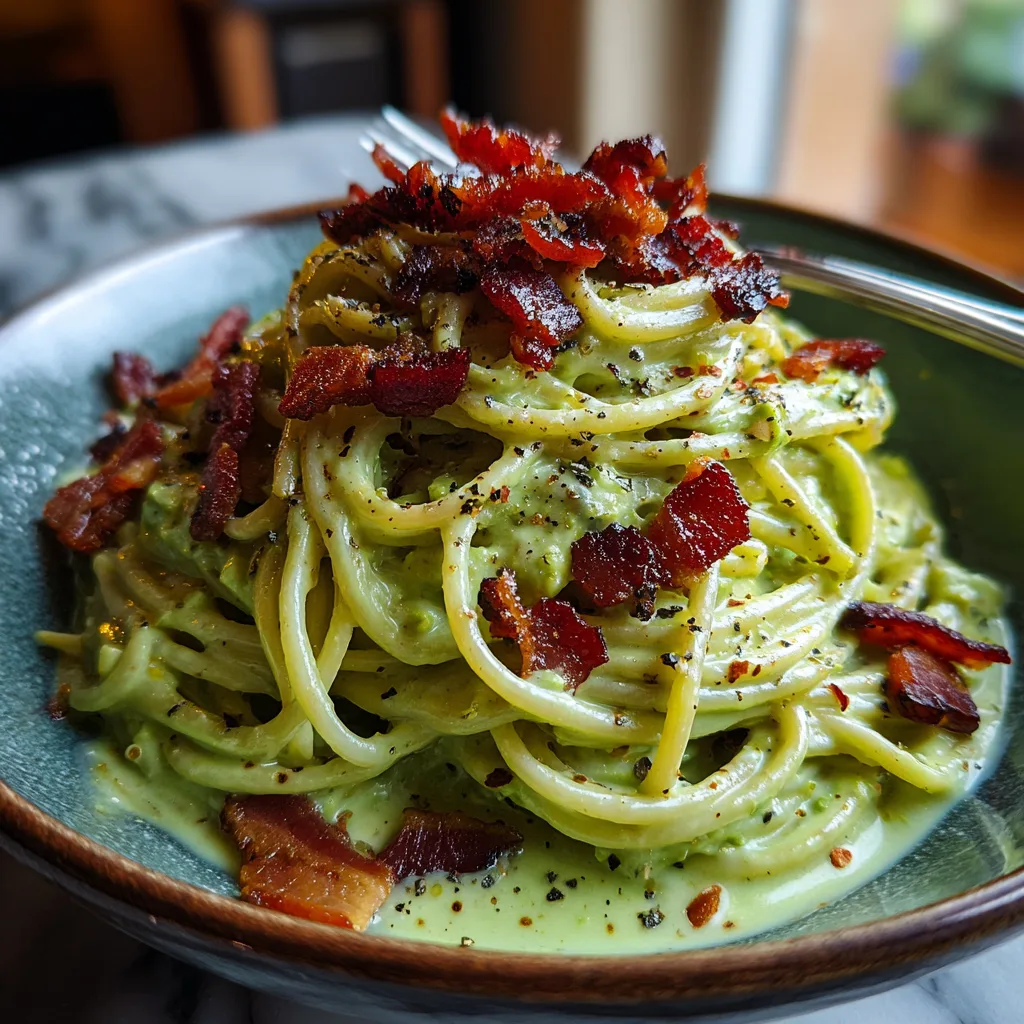
8. Garnish and Serve: Fold in the crispy bacon bits, reserving a few for the top of each plate. Serve immediately in warm bowls, garnished with an extra dusting of grated Parmesan cheese and a generous crank of fresh black pepper.
Pro Tips for the Perfect Emulsion
Do Not Cook the Avocado: Avocado becomes incredibly bitter when exposed to direct, prolonged heat. This is why we make the sauce in a blender and only toss it with the hot pasta off the direct flame (or on the lowest possible setting just to keep it warm). The ambient heat of the noodles and the boiling pasta water are enough to warm the sauce without ruining the flavor of the avocado.
Vigorous Tossing: When you add the starchy pasta water to the avocado puree and the noodles, you must toss vigorously. The mechanical action of tossing, combined with the fat from the avocado and bacon, and the starch from the water, creates an emulsion. This is what prevents the sauce from looking separated or greasy.
Customizations and Variations
This recipe is a fantastic baseline that welcomes creativity. Here are a few ways to switch it up based on your dietary preferences or what you have in the fridge:
Vegetarian/Vegan Option: To make this dish vegetarian, simply omit the bacon. You can sauté some sliced cremini mushrooms in olive oil with smoked paprika and a dash of soy sauce to create “mushroom bacon” for that necessary savory, umami crunch. To make it entirely vegan, swap the Parmesan cheese for nutritional yeast, which provides a fantastic cheesy, nutty flavor.
Protein Boost: If you want to bulk up the meal, this sauce pairs beautifully with grilled chicken breast, sautéed shrimp, or even some pan-seared scallops. Add the cooked protein right at the end when you fold in the bacon.
Spicy Kick: If you like a little heat with your creaminess, add half a teaspoon of crushed red pepper flakes to the food processor when blending the avocado sauce, or simply sprinkle some on top before serving.
What to Serve with Avocado Carbonara
Because this pasta is rich, creamy, and filling, it pairs best with light, acidic side dishes that can cleanse the palate.
A simple arugula salad dressed with olive oil, lemon juice, and a pinch of salt is the perfect accompaniment. The peppery bite of the arugula cuts through the creamy avocado sauce beautifully. For a more substantial side, roasted asparagus or blistered cherry tomatoes with garlic and balsamic glaze are fantastic choices. And of course, a slice of crusty garlic bread is always welcome for wiping the bowl clean of any leftover sauce.
Storage and Reheating Notes
We need to be honest here: Avocado Carbonara is absolutely best eaten immediately. Much like guacamole, the avocado in the sauce is prone to oxidation. If left exposed to air, it will eventually lose its vibrant green color and turn a dull brown.
If you do have leftovers, store them in an airtight container in the refrigerator for up to 2 days. To help prevent browning, you can press a piece of plastic wrap directly onto the surface of the pasta before sealing the container. When reheating, do so very gently in a skillet over low heat, adding a splash of water or milk to loosen the sauce. Do not microwave it on high, as the sauce may separate and the avocado can turn bitter.
Conclusion
Creamy Avocado Carbonara is a testament to the fact that healthy eating does not have to be boring or devoid of comfort. By utilizing the natural, buttery richness of ripe avocados, you can recreate the magic of a traditional Italian classic in a way that feels fresh, vibrant, and surprisingly simple to prepare. It is a 25-minute recipe that looks and tastes like a restaurant-quality meal, guaranteed to impress your family, your dinner guests, and your own tastebuds. So grab some avocados, render that bacon, and get ready to experience your new favorite pasta night staple.
Creamy Avocado Carbonara
Ingredients
Equipment
Method
- Bring a large pot of heavily salted water to a boil. Add the pasta and cook according to package directions until al dente.
- While water heats, place chopped bacon in a cold, large skillet over medium-low heat. Cook for 8-10 minutes until crispy. Remove bacon with a slotted spoon to a paper towel, leaving the rendered fat in the pan. Turn off heat.
- In a food processor, combine the avocado flesh, garlic, Parmesan, lemon juice, basil, salt, and black pepper. Blend until completely smooth and creamy.
- Right before draining the pasta, carefully scoop out 1 cup of the starchy pasta water and set aside.
- Drain the pasta and immediately add it to the skillet with the reserved bacon fat. Turn heat to lowest setting.
- Pour the avocado puree over the hot pasta. Toss vigorously with tongs, gradually adding the reserved pasta water a quarter cup at a time until a glossy, smooth sauce forms and coats the noodles.
- Fold in the crispy bacon bits. Serve immediately, garnished with extra black pepper and Parmesan cheese.