Pineapple Fried Rice
The Ultimate Pineapple Fried Rice: A Sweet, Savory, and Spicy Tropical Escape
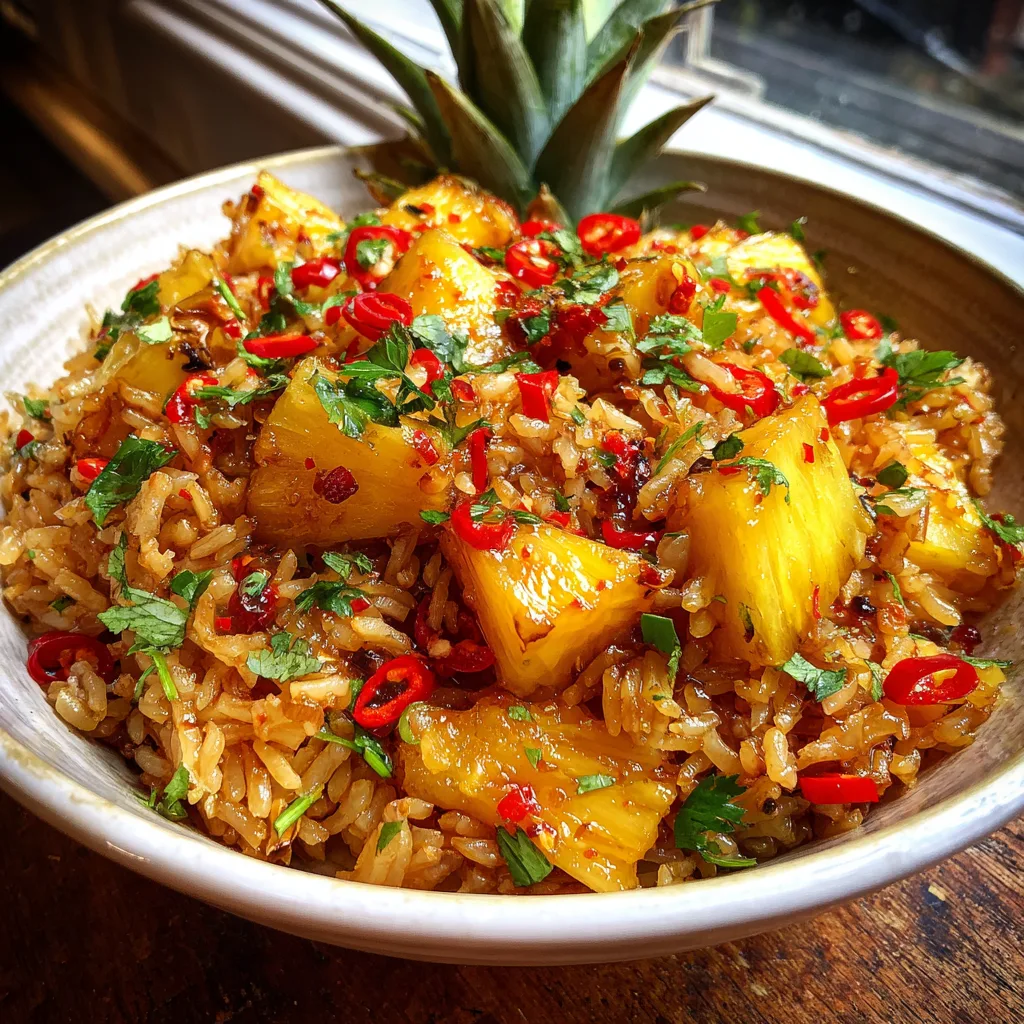
There is a certain kind of culinary magic that happens when you combine the deep, umami-rich flavors of a savory Asian-inspired stir-fry with the bright, vibrant, and unmistakable sweetness of tropical fruit. Pineapple Fried Rice is the perfect embodiment of this spectacular flavor collision. It is a dish that immediately transports you to a warm, sun-drenched beach with a single bite. Imagine a mountain of perfectly distinct, golden-brown rice grains, each one glistening and coated in a deeply savory sauce. Interspersed throughout this gorgeous landscape of carbohydrates are large, juicy, golden chunks of ripe pineapple, offering bursts of refreshing sweetness that perfectly cut through the richness of the dish. To tie it all together, a generous scattering of fiery red chili flakes and vibrant green cilantro adds a layer of complex heat and an herbaceous freshness that keeps you coming back for forkful after forkful.
While many variations of this dish exist across Southeast Asia, particularly in Thailand where it is a beloved staple, the beauty of Pineapple Rice lies in its adaptable simplicity. It can serve as a stunning, vibrant side dish to complement grilled meats or seafood, or it can be dressed up with your favorite proteins to become the undisputed star of the dinner table. In this extensive guide, we are going to dive deep into the art of crafting the ultimate Pineapple Fried Rice right in your own kitchen. We will cover the absolute necessities for achieving the perfect fried rice texture, the importance of ingredient selection, and how to balance the sweet, salty, and spicy notes to achieve restaurant-quality perfection.
The Magic of Sweet, Savory, and Spicy Flavor Profiles
The human palate is hardwired to crave complex flavor combinations. When we eat something that is entirely one-note—say, overwhelmingly salty or cloyingly sweet—our taste buds quickly become fatigued. This is a phenomenon known as sensory-specific satiety. However, when a dish successfully layers opposing flavor profiles, it creates a dynamic eating experience that keeps the palate engaged and excited. Pineapple Fried Rice is a masterclass in this culinary principle.
The foundation of the dish is deeply savory. The rice is typically seasoned with a combination of soy sauce, perhaps a touch of oyster sauce or vegetarian stir-fry sauce, and aromatics like garlic and ginger. These ingredients provide a salty, umami-heavy base that feels incredibly comforting and grounding. Then comes the sweet element: the pineapple. The natural fructose in the fruit caramelizes slightly when it hits the hot wok, intensifying its sweetness while introducing a slight, pleasant tartness. This acidity brightens the entire dish, preventing the savory elements from feeling heavy or greasy.
Finally, we introduce the heat. The liberal use of crushed red chili flakes (or fresh Thai bird’s eye chilies, if you prefer a sharper heat) provides a slow-building, exciting burn. The capsaicin in the chilies triggers pain receptors on the tongue, which in turn causes the brain to release endorphins. This is why eating spicy food can feel so exhilarating. When the heat of the chili mixes with the cooling sweetness of the pineapple and the rich saltiness of the rice, you achieve a perfect culinary trifecta.
The Golden Rules of Perfect Fried Rice
Before we even discuss the pineapple, we must address the foundation of the dish: the rice itself. Making fried rice might seem foolproof—just throw rice in a pan and fry it, right?—but achieving that signature restaurant-quality texture requires adhering to a few unbreakable rules.
Rule 1: Day-Old, Cold Rice is Mandatory. This is the single most important secret to successful fried rice. If you attempt to use freshly cooked, steaming hot rice, your dish will turn into a sticky, mushy clump. Fresh rice contains too much surface moisture. When you chill rice in the refrigerator overnight, the starches undergo a process called retrogradation. The grains firm up, dry out slightly, and separate easily. This allows each individual grain to fry in the oil and absorb the sauces without turning into a porridge. Jasmine rice is the traditional and best choice for this dish due to its subtle floral aroma and slightly sticky but distinct grain structure.
Rule 2: High Heat and “Wok Hei”. Wok hei translates to “breath of the wok,” and it refers to that complex, smoky flavor achieved by tossing food over extreme heat in a well-seasoned carbon steel wok. While you may not have a commercial jet-engine burner at home, you should still use the widest pan you have (a large cast-iron skillet or a flat-bottomed wok works well) and get it smoking hot before adding your ingredients. This intense heat sears the rice and caramelizes the sauces instantly, rather than allowing the ingredients to steam in their own juices.
Rule 3: Mise en Place is Crucial. Stir-frying is a rapid, high-speed cooking method. Once the oil hits the pan, you will not have time to chop garlic or measure out soy sauce. You must have all your ingredients prepped, chopped, measured, and positioned right next to your stove before you turn on the heat. This French culinary term, meaning “everything in its place,” is the key to stress-free and successful stir-frying.
Choosing the Right Pineapple: Fresh vs. Canned
The namesake ingredient of this dish deserves careful consideration. The choice between fresh and canned pineapple will significantly impact the final result.
Fresh Pineapple: Whenever possible, opt for a fresh, ripe pineapple. Fresh pineapple has a complex, bright, and vibrant flavor that canned versions simply cannot replicate. Furthermore, the texture of fresh pineapple is vastly superior; it holds its shape beautifully in the hot wok, providing a satisfying, slightly firm bite, whereas canned pineapple can become mushy. If you are using fresh pineapple, look for one that has a strong, sweet aroma at the base, yields slightly to gentle pressure, and has vibrant green leaves. For a show-stopping presentation, you can even hollow out the pineapple halves and use them as serving bowls!
Canned Pineapple: We live in the real world, and sometimes hacking apart a whole fresh pineapple is not feasible on a busy Tuesday night. Canned pineapple chunks are a perfectly acceptable substitute, but they require a crucial extra step. Canned pineapple is packed in juice or syrup, which means the fruit is waterlogged. You must drain the pineapple chunks thoroughly and then pat them completely dry with paper towels before adding them to the wok. If you introduce that excess liquid into your pan, your rice will steam instead of fry.
Ingredients You Will Need
This recipe focuses on a beautifully simple, highly aromatic, and slightly spicy version of Pineapple Rice that highlights the contrast between the fruit, the savory rice, and the chili.
- – 4 cups day-old cooked Jasmine rice: Must be chilled in the refrigerator.
- – 1.5 cups fresh pineapple: Cut into bite-sized chunks.
- – 3 tablespoons neutral cooking oil: Such as avocado, canola, or peanut oil.
- – 1 small yellow onion: Finely diced.
- – 3 cloves garlic: Minced.
- – 1 tablespoon fresh ginger: Grated or finely minced.
- – 2 tablespoons soy sauce: Use a high-quality brand.
- – 1 tablespoon vegetarian oyster sauce (or regular oyster sauce): Adds deep umami.
- – 1 teaspoon toasted sesame oil: For a nutty finishing flavor.
- – 1/2 teaspoon turmeric powder: Optional, but gives the rice a beautiful, vibrant golden color.
- – 1-2 teaspoons crushed red chili flakes: Adjust according to your heat preference.
- – 1/4 cup fresh cilantro or Thai basil: Chopped, for garnish.
- – Salt and white pepper: To taste.
Step-by-Step Instructions
Follow these steps carefully to achieve perfectly distinct, flavorful grains of rice laced with sweet pineapple and spicy heat.
- Prepare the Rice: Take your day-old, chilled Jasmine rice out of the refrigerator. Using wet hands, gently massage the rice to break up any large clumps. You want the grains to be as separated as possible before they hit the heat.
- Mix the Sauce: In a small bowl, whisk together the soy sauce, vegetarian oyster sauce, sesame oil, and turmeric powder (if using). Set this savory liquid mixture aside.
- Heat the Wok: Place a large wok or a heavy, wide skillet over medium-high heat. Allow the pan to get very hot. Add 1 tablespoon of the neutral cooking oil and swirl it to coat the bottom and sides of the pan.
- Sauté the Aromatics: Add the diced yellow onion to the hot oil. Stir-fry for about 2 minutes until it begins to soften and turn translucent. Add the minced garlic and grated ginger, and stir-fry for an additional 30 seconds until highly fragrant. Do not let the garlic burn.
- Caramelize the Pineapple: Push the aromatics to the side of the wok. Add the pineapple chunks to the center of the pan. Let them sit undisturbed for a minute to get a slight sear, then toss them with the onions and garlic for another minute. The natural sugars will begin to caramelize beautifully.
- Fry the Rice: Add the remaining 2 tablespoons of oil to the wok. Immediately dump in the cold, separated Jasmine rice. Use a spatula to aggressively toss the rice, pressing it into the sides of the wok to sear the grains, and then scraping it back up. Continue this tossing and pressing motion for 3-4 minutes until the rice is heated through and slightly toasty.
- Sauce and Season: Pour the prepared sauce mixture evenly over the rice. Add the crushed red chili flakes. Toss the rice vigorously to ensure every single grain is coated in the glossy, savory sauce and the beautiful golden color is evenly distributed.
- The Final Touches: Turn off the heat. Taste the rice and adjust the seasoning with a pinch of salt or a dash of white pepper if necessary. Toss in the freshly chopped cilantro or Thai basil, allowing the residual heat to release the essential oils from the herbs without cooking them to a mush. Serve immediately!
Pro Tips for the Best Pineapple Rice
To truly master this dish, keep these professional insights in mind.
The Pineapple Bowl Presentation: If you want to impress guests, cut a fresh pineapple in half lengthwise, right through the leafy crown. Use a pairing knife to score the flesh, scoop it out, and use those chunks for the recipe. You are left with two beautiful, hollowed-out pineapple “boats.” Serve your finished hot fried rice directly inside the pineapple halves.
Do Not Overcrowd the Pan: If you are making a massive batch of rice for a large family, it is better to fry it in two smaller batches. If you put too much cold rice into the wok at once, the temperature of the pan will plummet, and the rice will steam and become mushy rather than frying.
A Splash of Acidity: If you taste your finished dish and feel like it is missing a little “zing,” squeeze a wedge of fresh lime juice over the rice right before serving. The bright citrus notes beautifully complement the sweet pineapple and cut through the savory oils.
Exciting Variations to Try
This recipe is a fantastic baseline, but Pineapple Fried Rice is infinitely customizable. Here are some popular additions to make the meal even more substantial.
The Traditional Thai Version (Khao Pad Sapparod): To mimic the classic Thai restaurant version, add a handful of roasted, unsalted cashews and a handful of plump raisins during the last minute of cooking. You should also push the rice to the side, crack two eggs into the empty space, scramble them quickly, and then toss them into the rice.
Protein-Packed Powerhouse: Make it a complete meal by adding protein. Diced chicken breast, shrimp, or cubes of firm tofu are excellent choices. Simply stir-fry your chosen protein in the wok first until cooked through, remove it to a plate, proceed with the recipe as written, and add the protein back in right at the end.
The Curry Twist: Instead of turmeric, use 1 to 2 teaspoons of yellow curry powder when you add the garlic and ginger. The warm, earthy spices of the curry powder pair incredibly well with the sweet tropical fruit.
Serving Suggestions
Pineapple Fried Rice is visually stunning and bursts with flavor, making it a fantastic centerpiece. If you are serving it as a main course (perhaps with added tofu or shrimp), all you need is a simple, crisp side dish. A cucumber salad dressed with rice vinegar, or some steamed bok choy tossed with a little garlic and soy sauce, provides a wonderful, fresh contrast.
If you are serving it as a side dish, it pairs magnificently with sticky glazed chicken wings, grilled teriyaki salmon, or savory pork belly. The sweetness of the rice balances the rich, heavy flavors of barbecued or grilled meats perfectly.
Storage and Reheating
Fried rice makes for fantastic leftovers, as the flavors often meld and deepen overnight.
Store any leftover Pineapple Rice in an airtight container in the refrigerator for up to 4 days. When it comes to reheating, avoid the microwave if possible, as it can make the rice gummy. The best way to revive fried rice is to heat a little oil in a skillet over medium heat and stir-fry the leftovers for a few minutes until they are piping hot and the grains have regained their slightly crispy edges.
Fun Facts and Cultural Context
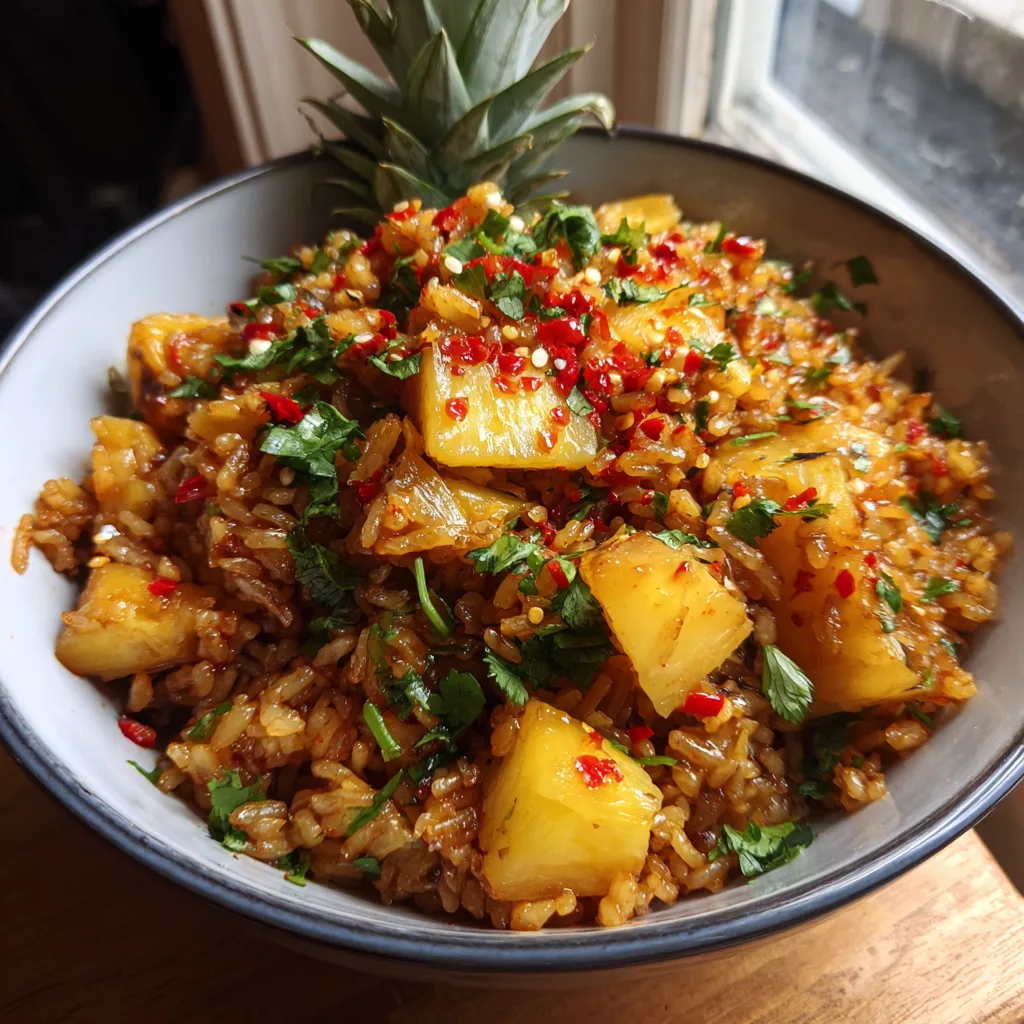
While frying rice is an ancient Chinese technique utilized to prevent leftover food from going to waste, the specific iteration of Pineapple Fried Rice (known as Khao Pad Sapparod) is deeply rooted in Thai cuisine. Thailand is one of the world’s leading producers of pineapples, so it is only natural that the sweet fruit found its way into their savory stir-fries. The dish became particularly popular with international tourists in Thailand because of its dramatic presentation (often served in the carved-out fruit) and its approachable, sweet-and-savory flavor profile that bridges the gap between Eastern techniques and Western palates.
Conclusion
Pineapple Fried Rice is a joyous, vibrant celebration of contrasting flavors and textures. It proves that with a few simple ingredients and the right technique, you can create a meal that is both deeply comforting and excitingly exotic. By honoring the golden rules of using chilled rice and high heat, and by embracing the beautiful combination of sweet tropical fruit, savory soy, and spicy chilies, you can master this spectacular dish in your own kitchen. Grab your wok, chop your pineapple, and get ready to enjoy a taste of the tropics any night of the week.
Pineapple Fried Rice
Ingredients
Equipment
Method
- Take the cold, day-old rice and break up any large clumps with wet hands.
- In a small bowl, whisk together the soy sauce, vegetarian oyster sauce, sesame oil, and turmeric powder.
- Heat a large wok over medium-high heat. Add 1 tablespoon of oil, then add the diced onion and cook for 2 minutes.
- Add minced garlic and ginger, stir-frying for 30 seconds until fragrant.
- Add the pineapple chunks and cook for 1-2 minutes until slightly caramelized.
- Add the remaining 2 tablespoons of oil and immediately add the cold rice. Toss and press the rice against the wok for 3-4 minutes to sear the grains.
- Pour the sauce mixture over the rice, add the chili flakes, and toss vigorously until every grain is evenly coated and heated through.
- Remove from heat, garnish with fresh chopped cilantro, and serve immediately.