Ultimate Street-Style Thai Drunken Noodles (Pad Kee Mao)
Ultimate Street-Style Thai Drunken Noodles (Pad Kee Mao): A Spicy, Savory Explosion
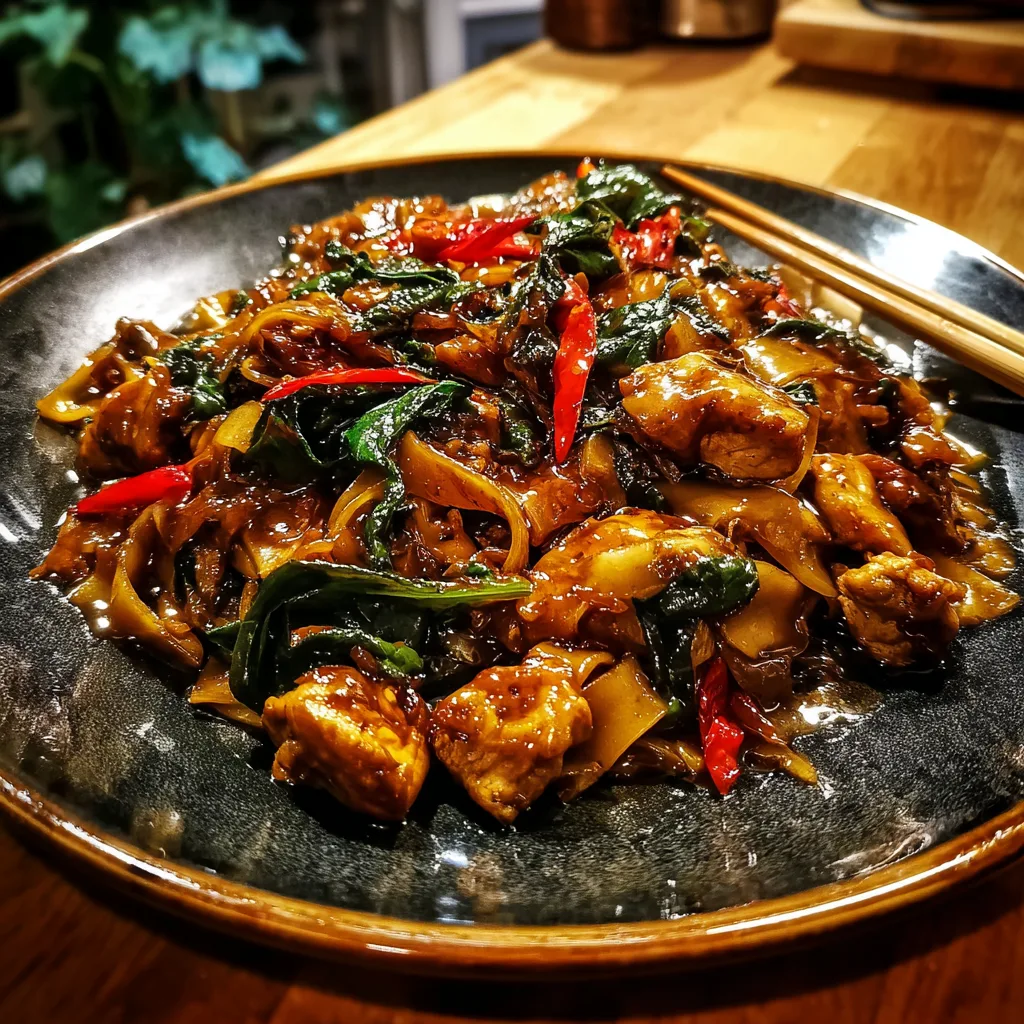
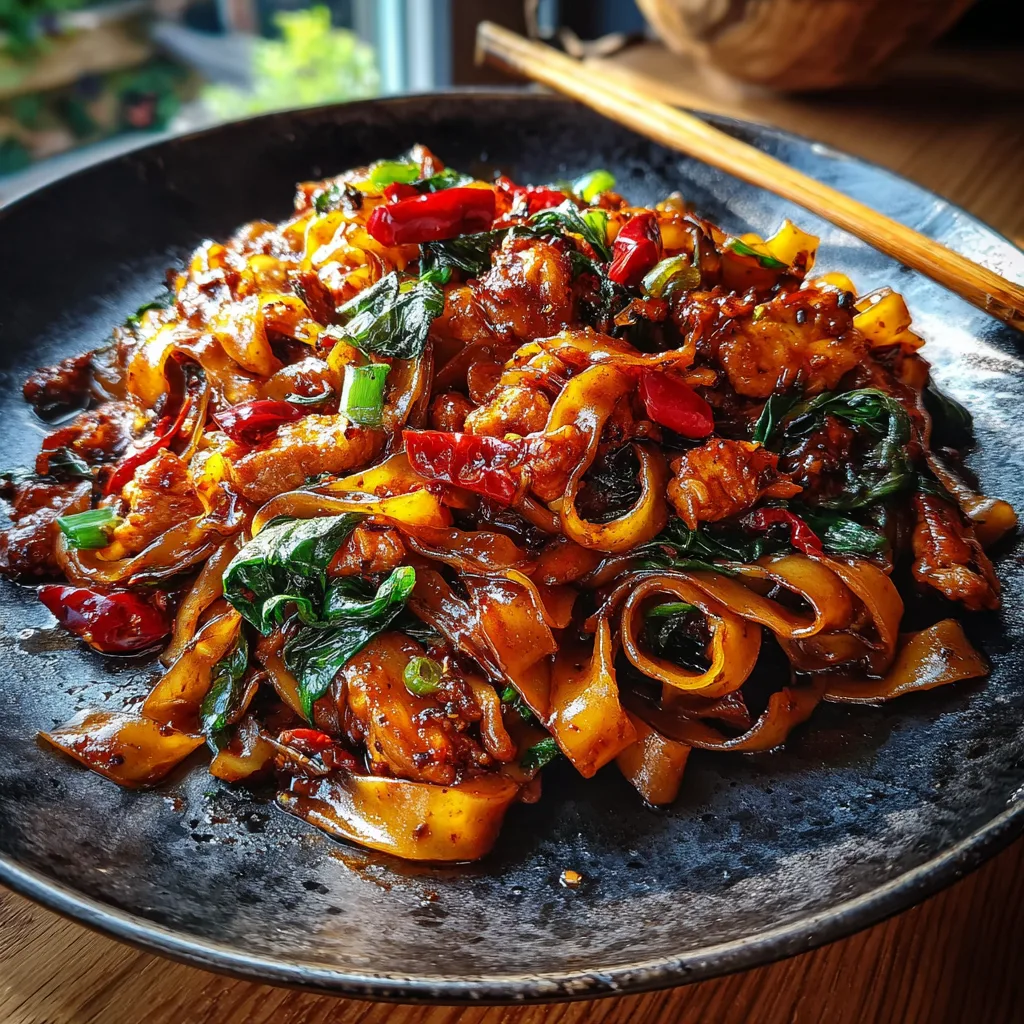
There are few dishes in the world that command as much respect and immediate craving as Thai Drunken Noodles, or Pad Kee Mao. If you have ever walked the bustling night markets of Bangkok or ordered takeout late at night after a long evening out, you likely know the intoxicating aroma of this dish: the scent of searing garlic, the sharp punch of bird’s eye chilies, and the unmistakable, licorice-like fragrance of holy basil. It is a dish that hits every single flavor receptor on your tongue—salty, spicy, sweet, and savory—all wrapped up in chewy, caramelized wide rice noodles.
But here is the best news: you do not need a plane ticket to Thailand or a favorite takeout menu to enjoy this. Making restaurant-quality Pad Kee Mao at home is surprisingly fast and easy. In fact, it is often faster than waiting for delivery. This guide is your comprehensive masterclass in creating the perfect plate of Drunken Noodles, packed with tips on sourcing ingredients, achieving that elusive “wok hei” (breath of the wok) flavor, and customizing the heat to your liking.
What Exactly Are Drunken Noodles (Pad Kee Mao)?
Before we fire up the wok, let’s clear up the name. Why are they called “Drunken Noodles”? No, there is no alcohol in the recipe (usually). The origins are debated in Thai culinary folklore, but there are three prevailing theories:
- The Late-Night Cure: The dish is so spicy and flavorful that it is the perfect food to wake you up or settle your stomach after a night of heavy drinking.
- The Drunk Cook: One story suggests a drunk person came home and tossed whatever ingredients they had left in the fridge—chicken, chilies, basil, and old noodles—into a wok, creating a masterpiece.
- So Spicy You Get Drunk: Some say the chili heat is so intense it makes you feel dizzy, similar to being intoxicated!
Regardless of the origin, the profile of the dish is distinct. Unlike Pad See Ew, which is sweet and soy-heavy, or Pad Thai, which is tangy and peanut-forward, Pad Kee Mao is defined by its savory depth and the aromatic power of Thai Holy Basil.
The Holy Trinity of Pad Kee Mao Ingredients
To make the best noodles, you need to understand your toolkit. This recipe relies on a few powerhouse ingredients.
1. The Noodles: Sen Yai
The soul of this dish is the wide, flat rice noodle known as Sen Yai.
- Fresh Rice Noodles: These are best. They are usually found in the refrigerated section of Asian grocery stores. They are soft, pliable, and absorb sauce instantly.
- Dried Rice Noodles: If you cannot find fresh, dried wide rice noodles (often labeled as “XL” or “flakes”) work well. Soak them in warm water until they are pliable but not fully soft before stir-frying.
2. The Basil: Holy vs. Sweet
This is the most crucial distinction.
- Thai Holy Basil (Tulsi): This has a peppery, clove-like, almost medicinal flavor. It is the traditional choice for Pad Kee Mao. When it hits the hot oil, it releases a distinct aroma that defines the dish.
- Thai Sweet Basil: Used in Green Curry. It is sweeter and more anise-forward.
- Italian Basil: If you absolutely cannot find Holy Basil, regular Italian basil is a better substitute than Thai Sweet Basil because it lacks the intense licorice flavor that clashes with the chilies.
3. The Sauce Blend
You cannot use just one soy sauce. The magic color and flavor come from a mix:
- Oyster Sauce: For body, umami, and a glossy sheen.
- Light Soy Sauce: For the salty kick.
- Dark Soy Sauce: This is less salty but thick and molasses-like. It gives the noodles that appetizing dark brown color.
- Fish Sauce: For that essential funk and saltiness.
Ingredients
Gather your mise en place before you start cooking! Stir-frying happens fast.
The Sauce
- 2 tablespoons – Oyster sauce
- 1.5 tablespoons – Light soy sauce
- 1 tablespoon – Dark soy sauce (or sweet soy sauce)
- 1 teaspoon – Fish sauce
- 1 tablespoon – Brown sugar (or palm sugar)
- 1 tablespoon – Water
The Stir-Fry
- 8 oz (225g) – Wide flat rice noodles (fresh or dried/soaked)
- 1 cup – Chicken breast or thighs, thinly sliced (can substitute pork, shrimp, or tofu)
- 2 tablespoons – Vegetable oil (or any neutral high-heat oil)
- 4-5 cloves – Garlic, minced
- 3-5 – Thai bird’s eye chilies, smashed or chopped (adjust for heat)
- 1 cup – Thai Holy Basil leaves (packed tightly)
- 1 small – Onion, sliced into wedges
- 1/2 cup – Bell peppers, sliced (red or green)
- 1/2 cup – Chinese broccoli (Gai Lan), stems and leaves chopped (optional, but adds crunch)
Instructions
Step 1: Prep the Sauce
- In a small bowl, whisk together the oyster sauce, light soy sauce, dark soy sauce, fish sauce, brown sugar, and water. Stir until the sugar is mostly dissolved. Set this aside. This is your “flavor bomb.”
Step 2: Prepare the Noodles
- If using fresh noodles, they likely come in a compressed block. Microwave them for 30-60 seconds or soak them in warm water briefly just to loosen them so you can separate the strands without breaking them.
- If using dried noodles, soak them in hot water according to package instructions until they are flexible but still firm (al dente). Do not boil them! They will finish cooking in the sauce.
Step 3: Searing the Aromatics and Meat
- Heat a wok or large heavy skillet over high heat. Add the oil.
- Once the oil is shimmering hot, toss in the garlic and smashed chilies. Stir-fry for just 10-15 seconds until the garlic is golden and the chili fumes make you cough slightly (that’s how you know it’s working!).
- Add the chicken (or protein of choice). Spread it out in the pan to get a sear. Stir-fry for 2-3 minutes until the chicken is cooked through and slightly browned.
Step 4: The Veggies
- Add the onion wedges and bell peppers (and Chinese broccoli stems if using). Stir-fry for 1 minute. You want the vegetables to retain a bit of crunch, not turn mushy.
Step 5: Noodle Time
- Push the meat and veggies to the side of the wok. Add the noodles to the center.
- Pour the sauce mixture directly over the noodles.
- This is the crucial moment: Gently toss the noodles with the sauce and other ingredients. Let the noodles sit for 15-20 seconds without moving them to allow the dark soy sauce to caramelize and char slightly against the hot pan. This mimics the “wok hei” flavor.
Step 6: The Holy Basil Finish
- Once the noodles are dark, glossy, and coated in sauce, turn off the heat (or reduce to very low).
- Immediately throw in the generous handful of Holy Basil leaves.
- Toss everything together. The residual heat of the noodles will wilt the basil instantly, releasing that signature peppery fragrance.
- Serve immediately while steaming hot.
Tips for the Perfect Drunken Noodles
Creating that restaurant-style texture can be tricky, but these tips will ensure success:
- Don’t Crowd the Pan: If you are cooking for more than two people, cook in batches. If you crowd the pan, the temperature drops, and the noodles will steam and get soggy instead of frying and getting chewy.
- High Heat is Key: You need heat to caramelize the sugar and soy sauce. Be brave with the flame!
- Handling Fresh Noodles: Fresh rice noodles are delicate. Peel them apart gently. If they are cold, they will break. Always warm them slightly before separating.
- Customize the Spice: If you want the flavor of chilies without the nuclear heat, remove the seeds from the bird’s eye chilies, or use a milder red chili like Fresno peppers.
Variations to Try
While chicken is traditional for many Western adaptations, in Thailand, this dish is versatile.
- Seafood Drunken Noodles (Pad Kee Mao Talay): Use shrimp, squid, and mussels. The seafood pairs beautifully with the peppercorn notes of the basil.
- Vegetarian/Vegan: Substitute the fish sauce with extra soy sauce or a vegan mushroom sauce. Use firm tofu cubes fried until golden for protein. Load up on baby corn and mushrooms for texture.
- The “Spaghetti” Version: Believe it or not, a popular variation in Thailand uses spaghetti pasta instead of rice noodles! It offers a fun, chewy texture that holds up well to the heavy sauce.
Serving Suggestions
Pad Kee Mao is a complete meal on its own, but you can elevate the experience with simple sides:
- Fried Egg: A crispy Thai-style fried egg (Kai Jeow) on top adds richness, with the runny yolk mixing into the spicy sauce.
- Cucumber Slices: The cool crunch of fresh cucumber helps cut through the heat and oiliness of the dish.
- Lime Wedges: A squeeze of fresh lime juice right before eating adds a necessary brightness to balance the salty soy sauce.
- Thai Iced Tea: If the spice is too much, nothing cools the burn better than a sweet, creamy glass of Thai Iced Tea.
This dish is the definition of comfort food—messy, spicy, savory, and incredibly satisfying. Whether you are nursing a hangover or just craving a flavor explosion, these Drunken Noodles will deliver every time.
Thai Drunken Noodles (Pad Kee Mao)
Ingredients
Equipment
Method
- Whisk together oyster sauce, light soy sauce, dark soy sauce, fish sauce, sugar, and water in a small bowl.
- Prepare noodles: If fresh, separate strands gently. If dried, soak in warm water until pliable but not soft.
- Heat oil in a wok over high heat. Add garlic and chilies; stir-fry for 15 seconds until fragrant.
- Add chicken slices and sear for 2-3 minutes until cooked through.
- Toss in onions and peppers, stir-frying for 1 minute to keep them crisp.
- Push ingredients to the side, add noodles to the center, and pour the sauce over the noodles.
- Toss everything to combine. Let sit for 15 seconds to allow sauce to caramelize on the noodles.
- Remove from heat and immediately stir in the holy basil leaves until wilted. Serve hot.