Garlic Parmesan Monkey Bread
Garlic Parmesan Monkey Bread: The Ultimate Savory Pull-Apart Appetizer
Imagine walking into a kitchen filled with the intoxicating aroma of roasted garlic, melting butter, baking bread, and sharp, nutty parmesan cheese. There are few scents more universally beloved and comforting. If you are looking for a side dish or appetizer that will instantly steal the show at your next family dinner, potluck, or holiday gathering, look no further than this incredibly delicious, highly addictive Garlic Parmesan Monkey Bread. It is soft, pillowy, buttery, and packed with robust savory flavors that pair perfectly with almost any main course.
In this comprehensive guide, we are going to dive deep into the world of savory monkey bread. We will cover the fascinating history of this pull-apart classic, break down the science of why these specific flavor profiles work perfectly together, and guide you through a foolproof, step-by-step process to achieve the ultimate golden-brown, buttery masterpiece. Whether you are a seasoned home baker or a complete novice looking for a quick and impressive culinary win, this recipe is designed to guarantee success.
The Magic and History of Monkey Bread
Before we dive into the garlic and cheese, it is worth exploring what exactly monkey bread is and where it comes from. Traditionally, monkey bread is known as a sweet, sticky, gooey breakfast or dessert pastry. It consists of small balls of yeast dough that are dipped in melted butter, rolled in cinnamon sugar, and baked in a bundt pan until they puff up and fuse together. The result is a ring of sweet bread that you eat by pulling it apart with your fingers—hence the name “monkey” bread, mimicking the way monkeys might pick apart their food.
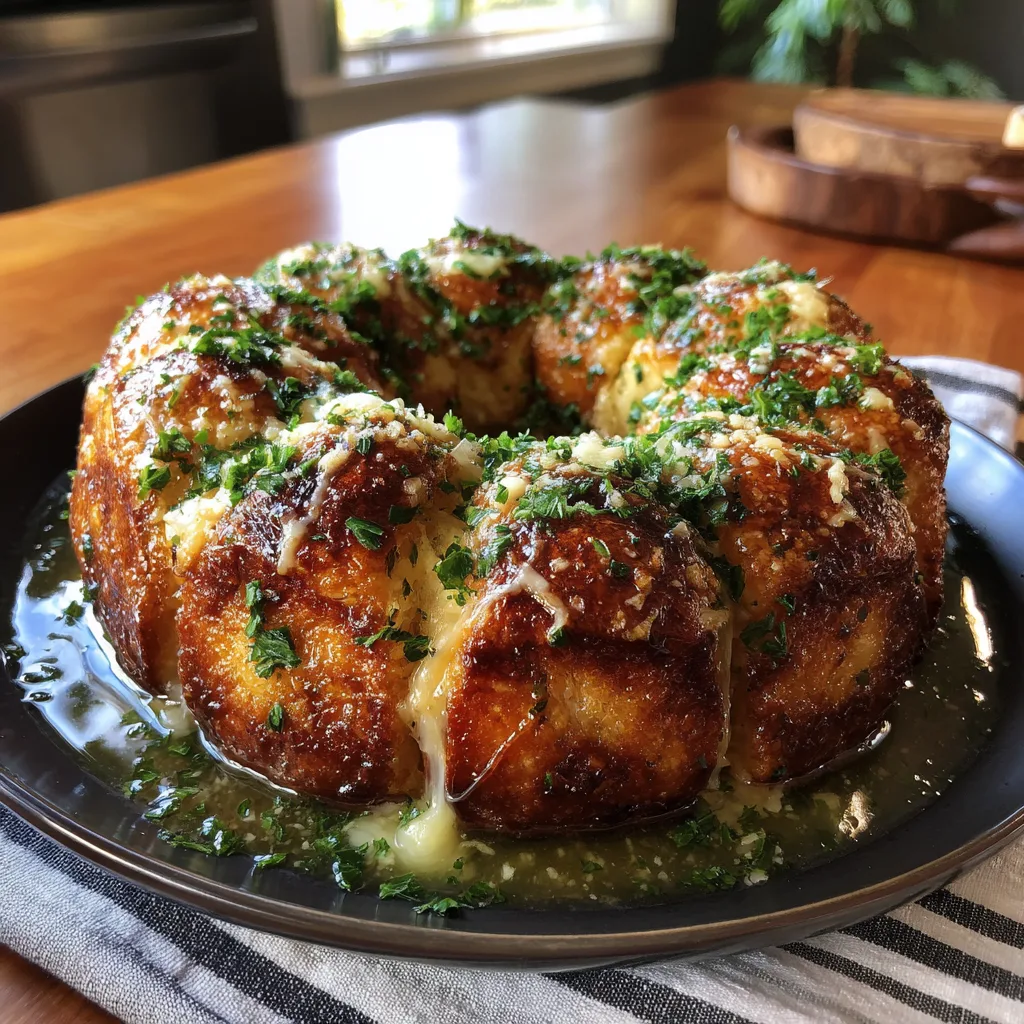
The origins of this dish can be traced back to a Hungarian dessert known as arany galuska (golden dumplings), which was introduced to the United States by Eastern European immigrants in the late 19th and early 20th centuries. It gained massive popularity in America during the 1950s and became a staple of suburban baking. However, the true beauty of monkey bread lies in its structural concept: individual pieces of dough bound together by a flavorful coating. This structure is incredibly versatile, making it the perfect canvas for savory adaptations. By swapping cinnamon and sugar for garlic, herbs, and cheese, you transform a breakfast treat into an elegant, irresistible dinner companion.
Why This Flavor Combination Works So Well
The success of this Garlic Parmesan Monkey Bread lies in the harmonious balance of its core ingredients. It is a masterclass in combining rich, savory, and aromatic profiles to create something greater than the sum of its parts.
The Foundation (The Bread): The bread acts as the perfect neutral canvas. It is soft, slightly chewy, and highly absorbent. When baked, it creates a sponge-like texture that eagerly drinks up the melted butter and garlic juices, ensuring that every single bite is saturated with flavor.
The Fat (The Butter): Butter is essential here, not just for flavor, but for functionality. It creates steam in the oven, helping the dough puff up, and it promotes browning, resulting in those irresistible crispy edges. More importantly, fat is a flavor carrier. It captures the essential oils from the garlic and herbs and distributes them evenly across the dough.
The Aromatics (Garlic and Parsley): Garlic provides a sharp, pungent bite that mellows and sweetens as it bakes. Using a combination of fresh minced garlic and garlic powder ensures a multi-dimensional garlic flavor—the fresh garlic provides a bright, aromatic punch, while the powder provides a deep, savory background note. Fresh parsley adds a necessary pop of color and a mild, clean, earthy flavor that cuts through the richness of the butter and cheese.
The Umami (Parmesan Cheese): Parmesan is the crowning jewel of this recipe. It is naturally high in glutamates, the compounds responsible for the “umami” flavor profile. It adds a salty, nutty, complex depth that elevates the bread from a simple side dish to an addictive snack. When grated finely, it melts slightly into the butter, creating a cohesive, flavorful paste that clings to the dough.
Choosing Your Dough: Convenience vs. From-Scratch
One of the best things about this recipe is its flexibility regarding the dough. You have two main options, each with its own set of benefits:
Option 1: The Convenience Route (Refrigerated Biscuit Dough)
For most busy home cooks, utilizing canned, refrigerated biscuit dough is the way to go. It reduces the prep time from a few hours to a mere 15 minutes. The key is to buy “flaky layers” or “homestyle” buttermilk biscuits. These biscuits are rich and buttery on their own, and when cut into quarters, they puff up beautifully in the bundt pan. This method is virtually foolproof and yields a soft, tender interior with crisp edges.
Option 2: The Artisanal Route (Homemade Pizza or Bread Dough)
If you have the time and enjoy working with yeast, making your own dough from scratch takes this recipe to the next level. A basic pizza dough or a slightly enriched dinner roll dough works perfectly. Making it from scratch allows you to control the exact texture (chewier vs. softer) and the salt content. You will need to mix, knead, and let the dough rise until doubled before punching it down and rolling it into small balls. While time-consuming, the artisanal chew and distinct yeast flavor are highly rewarding.
For the sake of accessibility and the guarantee of a quick, crowd-pleasing result, the recipe below utilizes the convenient refrigerated biscuit dough method.
Essential Equipment You Will Need
You do not need a professional kitchen to make perfect monkey bread, but a few specific tools will make the process smooth and enjoyable:
- A 10-to-12-Cup Bundt Pan: This is crucial for the signature ring shape. The hole in the middle allows heat to circulate evenly, ensuring the center cooks through without the outside burning. If you do not have a bundt pan, you can use a 9×13 inch baking dish, but you will need to adjust the baking time (it usually bakes faster in a flat dish).
- Non-Stick Cooking Spray: Do not skimp on this. You must generously grease the pan, getting into all the crevices, so the bread releases cleanly after baking.
- A Large Mixing Bowl: You need a bowl large enough to hold all the dough pieces, the melted butter, and the cheese mixture, giving you enough room to toss everything together vigorously without spilling.
- Kitchen Shears or a Sharp Knife: For quickly cutting the biscuit dough into quarters.
Step-by-Step Success: Coating Techniques
How you apply the garlic butter and cheese to the dough determines the final texture of the bread. There are two primary schools of thought here:
The Dipping Method: This involves taking each individual dough ball, dipping it fully into a bowl of melted garlic butter, and then rolling it in a separate bowl of the parmesan-herb mixture before placing it in the pan. This method ensures maximum coverage and a very distinct crust on every single piece. It is meticulous and time-consuming but yields incredible results.
The Toss and Pour Method (The Easier Way): This is the method outlined in our recipe. You place all the cut dough pieces into a large bowl, pour the seasoned garlic butter over them, add the cheese and herbs, and use your hands to gently toss everything until each piece is coated. You then dump the entire mixture into the bundt pan. This method is significantly faster and creates a more rustic, interconnected loaf where the butter pools in the crevices, creating incredibly gooey, savory pockets.
What to Serve with Garlic Parmesan Monkey Bread
This bread is a star player, but it is technically a side dish. Here are the best ways to incorporate it into your meal planning:
Italian Dinners: This is the most natural pairing. Serve it alongside a giant pot of spaghetti and meatballs, baked ziti, lasagna, or chicken parmesan. The bread is perfect for mopping up leftover marinara sauce on your plate.
Soups and Stews: There is nothing cozier than dipping a buttery piece of this bread into a hot bowl of creamy tomato basil soup, minestrone, or a hearty beef stew. It adds a wonderful textural contrast.
Salad Course: If you are serving a large, robust salad—like an Italian chopped salad, a Caesar salad with grilled chicken, or a Greek salad—this bread turns a light meal into a satisfying, filling dinner.
Game Day Appetizer: Do not limit this to formal dinners. Place the bundt ring in the center of the coffee table during a football game with a bowl of warm marinara sauce or ranch dressing in the center for dipping. It will disappear in minutes.
Pro Tips for the Best Savory Monkey Bread
To ensure your Garlic Parmesan Monkey Bread turns out perfectly every single time, keep these professional tips in mind:
– Grease the Pan Generously: Even if your bundt pan claims to be non-stick, use butter or cooking spray. The melted cheese can easily fuse to the pan, causing the bread to tear when you invert it.
– Do Not Pack the Dough: When you transfer the coated dough balls into the pan, drop them in loosely. Do not press them down. They need room to expand as they bake. Packing them too tightly will result in a dense, gummy center that doesn’t cook through.
– Use Real Parmesan: Avoid the shelf-stable, powdery “parmesan” that comes in a green shaker can. It contains anti-caking agents that prevent it from melting properly. Buy a block of real Parmigiano-Reggiano and grate it yourself, or buy high-quality pre-grated cheese from the deli section.
– The Cooling Time is Crucial: When you take the bread out of the oven, it will be tempting to turn it out immediately. Do not do this. The structural integrity is fragile when piping hot. Let it rest in the pan for exactly 5 to 10 minutes. This allows the bread to firm up slightly and absorb any butter pooling at the bottom. But don’t wait longer than 15 minutes, or the cheese will act like glue and stick to the pan.
Creative Variations to Try
Once you master the basic recipe, you can customize this monkey bread to suit any craving:
– Bacon and Cheddar: Swap the parmesan for sharp cheddar cheese and add half a cup of crispy, crumbled bacon to the butter mixture.
– Stuffed Monkey Bread: Before coating the dough, flatten each quarter, place a mini mozzarella pearl (bocconcini) or a cube of pepper jack inside, and roll it back into a ball. You will get a gooey cheese pull with every bite.
– Spicy Jalapeño: Add a tablespoon of finely diced fresh jalapeños and a pinch of red pepper flakes to the garlic butter for a kick.
– Everything Bagel Seasoning: Toss the dough balls in melted butter and a generous amount of Everything Bagel seasoning instead of the parmesan and herbs.
Storing and Reheating Instructions
Monkey bread is undoubtedly best served fresh and warm from the oven, but leftovers are still delicious if handled correctly.
Storage: Wrap any leftover bread tightly in aluminum foil or place it in an airtight container. Store it at room temperature for up to 2 days, or in the refrigerator for up to 4 days.
Reheating: To restore the soft interior and slightly crisp exterior, the oven is your best friend. Preheat your oven to 350°F (175°C). Wrap the bread in foil (to prevent it from drying out) and bake for 10-15 minutes until warmed through. Alternatively, you can reheat individual portions in an air fryer at 320°F for 3-4 minutes. Avoid the microwave if possible, as it tends to make the bread tough and chewy.
Ingredients List
– 2 cans (16 oz each) refrigerated buttermilk biscuit dough (like Pillsbury Grands)
– 1/2 cup (1 stick) unsalted butter, melted
– 3 cloves fresh garlic, finely minced
– 1 teaspoon garlic powder
– 1/2 cup grated Parmesan cheese
– 1/4 cup fresh parsley, finely chopped
– 1/2 teaspoon kosher salt
– 1/4 teaspoon freshly cracked black pepper
– Non-stick cooking spray (for the pan)
Step-by-Step Instructions
1. Prepare the Oven and Pan: Preheat your oven to 350°F (175°C). Generously spray a 10 or 12-cup bundt pan with non-stick cooking spray, making sure to coat all the intricate grooves and the center tube.
2. Prepare the Garlic Butter: In a microwave-safe bowl, melt the unsalted butter. Whisk in the finely minced fresh garlic, garlic powder, kosher salt, and black pepper. Let the mixture sit for a few minutes so the hot butter can extract the flavors from the fresh garlic.
3. Prep the Dough: Open the cans of biscuit dough. Using a sharp knife or kitchen shears, cut each individual biscuit into quarters (4 pieces per biscuit). Place all the cut dough pieces into a large mixing bowl.
4. Combine Ingredients: Pour the melted garlic butter mixture over the dough pieces in the bowl. Sprinkle the grated Parmesan cheese and chopped fresh parsley over the top. Use your hands or a large rubber spatula to gently toss everything together until every single piece of dough is thoroughly coated in butter, cheese, and herbs.
5. Transfer to Pan: Gently transfer the coated dough pieces into the prepared bundt pan. Arrange them evenly, but do not press them down or pack them tightly. Scrape any remaining butter, cheese, and herbs from the mixing bowl and drizzle it over the top of the dough in the pan.
6. Bake: Bake in the preheated oven for 30 to 35 minutes, or until the top is deep golden brown and the bread sounds slightly hollow when tapped. If the top is browning too quickly during the last 10 minutes of baking, you can loosely tent a piece of aluminum foil over the top of the pan.
7. Rest: Remove the pan from the oven and place it on a wire cooling rack. Let the bread rest in the pan for exactly 5 to 10 minutes. This allows the bread to set and absorb the excess butter.
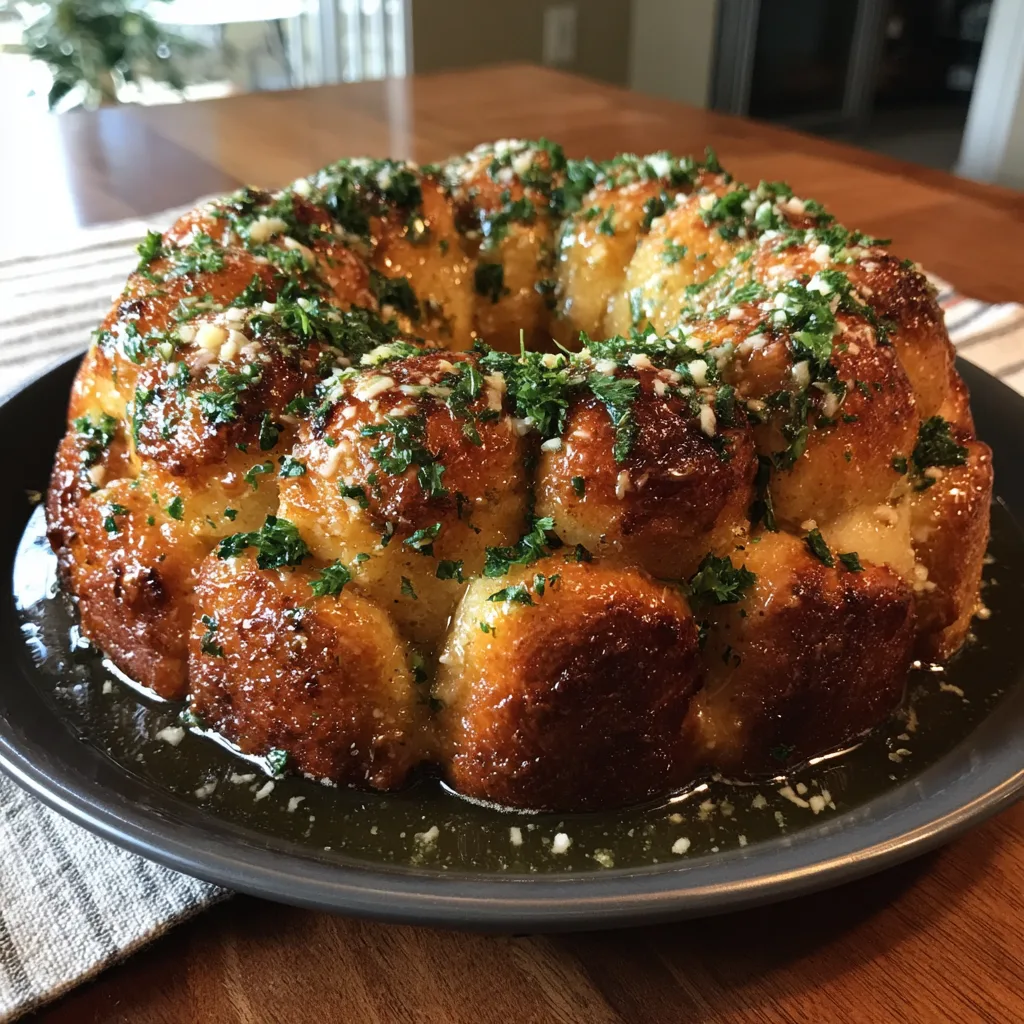
8. Invert and Serve: Place a large serving plate or platter upside down over the top of the bundt pan. Using oven mitts, carefully hold the plate and the pan together and quickly flip them over. Gently lift the bundt pan straight up to reveal the monkey bread. Serve immediately while warm and pull-apart soft!
Conclusion
Garlic Parmesan Monkey Bread is more than just a side dish; it is a communal eating experience that brings people together. The act of tearing off a warm, buttery, cheesy piece of bread and sharing it with family and friends is what makes food so comforting. With its minimal prep time, accessible ingredients, and spectacular visual presentation, this recipe is guaranteed to become a permanent fixture in your culinary repertoire. Whether paired with a comforting soup, a rich pasta dish, or enjoyed on its own as a decadent snack, this savory pull-apart bread is truly unforgettable.
Garlic Parmesan Monkey Bread
Ingredients
Equipment
Method
- Preheat oven to 350°F (175°C). Generously grease a 10-12 cup bundt pan with non-stick cooking spray.
- In a bowl, melt the butter and whisk in minced garlic, garlic powder, salt, and pepper.
- Cut each refrigerated biscuit into quarters and place all pieces into a large mixing bowl.
- Pour the melted garlic butter over the biscuit pieces. Sprinkle with grated Parmesan and chopped parsley. Toss gently to coat every piece.
- Transfer the coated dough pieces to the prepared bundt pan, arranging loosely. Pour any remaining butter and cheese from the bowl over the top.
- Bake for 30-35 minutes until deep golden brown and cooked through.
- Let the bread rest in the pan for 5-10 minutes before carefully inverting onto a serving platter. Serve warm.