Jammy Ramen Eggs
The Ultimate Guide to Perfect Spicy Ramen Eggs (Ajitsuke Tamago)
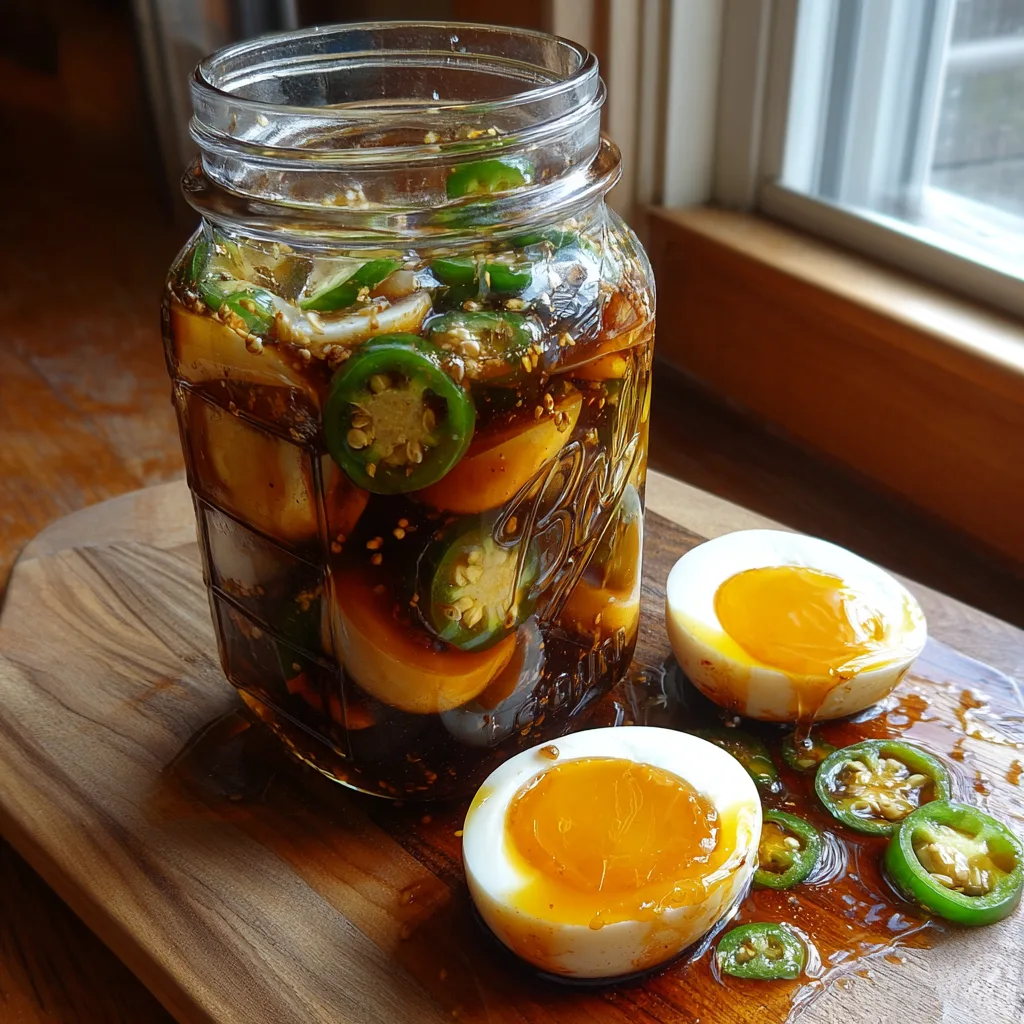
If you have ever been to an authentic ramen shop, you know that the true star of the bowl isn’t just the rich, collagen-heavy broth or the perfectly chewy noodles. It is the egg. Specifically, the Ajitsuke Tamago, a perfectly soft-boiled egg with a dark, savory, umami-rich exterior and a deeply orange, luscious, jammy yolk that oozes into the broth. These ramen eggs, also commonly known as soy sauce eggs, are a culinary masterpiece that balances texture, salt, sweetness, and rich fat in one perfect bite.
But what if you could recreate that magic at home? Better yet, what if you could take the traditional soy sauce egg and give it a modern, spicy, highly aromatic twist that makes it perfect not just for ramen, but for meal prep, rice bowls, and late-night snacking? This highly detailed recipe guide will walk you through everything you need to know to make the ultimate batch of spicy marinated ramen eggs, utilizing an incredible blend of soy sauce, rice wine vinegar, fresh jalapeños, garlic, and sriracha.
Understanding the Magic of Ajitsuke Tamago
To truly appreciate the ramen egg, we have to look at its foundation. Ajitsuke Tamago translates directly to “flavored egg” or “seasoned egg.” In traditional Japanese cooking, these eggs are marinated in a base called tare (often the same base used to flavor the ramen broth), which typically consists of soy sauce, mirin (a sweet rice wine), water, and sometimes sugar or dashi.
The magic happens through the process of osmosis. As the peeled, soft-boiled egg sits in the dark liquid, the salt and flavor molecules from the soy sauce slowly penetrate the semi-permeable egg white. Over time, the egg white turns a beautiful amber color and becomes slightly firmer, curing in the salty liquid. Meanwhile, the rich, high-fat yolk remains protected in the center, staying soft, gooey, and jam-like.
This specific recipe takes that traditional concept and turns the volume up to ten. By introducing elements like fresh jalapeño, sharp raw yellow onion, intense fresh garlic, and spicy sriracha, this marinade becomes a powerhouse of flavor. It transforms a simple egg into a fiery, tangy, sweet, and savory flavor bomb that demands attention.
The Science of the Perfect Jammy Yolk
Before we can even talk about the marinade, we must master the boil. The difference between a disappointing, chalky hard-boiled egg and a luxurious, jammy ramen egg comes down to literal minutes and the strict control of temperature.
When you boil an egg, you are denaturing the proteins in the egg white and the yolk. The egg white sets at a lower temperature than the yolk. Therefore, to get a firm white and a runny yolk, you need high heat for a short, precise amount of time. Dropping cold eggs into rapidly boiling water ensures the whites cook quickly while the center remains untouched.
For the perfect jammy yolk, the golden window is exactly 6 minutes to 6.5 minutes for large eggs. At exactly 6 minutes, the yolk will be liquid and runny. At 6.5 minutes, the yolk will be thick, sticky, and jam-like—which is the ideal texture for marinating, as the salt in the soy sauce will slightly cure the yolk over time, thickening it even further.
Equally as important as the boil is the ice bath. The second your timer goes off, those eggs must be immediately plunged into a bowl heavily packed with ice and cold water. This halts the cooking process instantly. If you simply drain the hot water, the residual heat inside the egg will continue to cook the yolk, turning your beautiful jammy center into a pale yellow, crumbly disappointment.
Ingredient Breakdown and Flavor Profile
The marinade for these specific spicy ramen eggs is a beautiful balancing act of salty, sour, sweet, and spicy. Here is a deep dive into what goes into the mason jar:
- – Eggs (6 Large): The canvas for your masterpiece. Older eggs actually peel much easier than farm-fresh eggs, so try to buy them a week before you plan to boil them.
- – Soy Sauce (1/4 cup): This provides the primary salt content and the deep, rich umami flavor that cures the egg whites and gives them their signature brown color. Use a high-quality regular or light soy sauce. Dark soy sauce can be too overpowering and coloring.
- – Rice Wine Vinegar (3 Tbs): This adds crucial acidity. The tanginess of the vinegar cuts through the richness of the egg yolk and balances the heavy saltiness of the soy sauce, bringing a bright, fresh note to the marinade.
- – Yellow Onion (1/2 onion, sliced): Raw onions provide a sharp, pungent bite. As they sit in the salty marinade, they soften slightly and release their juices, creating a deeper, more savory liquid base.
- – Jalapeño (1 pepper, sliced): This is where the modern twist comes in. The fresh, grassy heat of a jalapeño infuses the soy sauce with a distinct, lingering warmth that makes these eggs highly addictive. Keep the seeds in for maximum heat.
- – Fresh Garlic (2 Tbs, minced or crushed): Garlic is an absolute non-negotiable. Two tablespoons is a generous amount, ensuring that every bite of the egg carries that unmistakable, sharp, aromatic garlic punch.
- – Ground Ginger (1/2 tsp): Ginger adds a subtle, earthy warmth and a slight floral note that rounds out the sharp edges of the garlic and onion.
- – Teriyaki Marinade (2 Tbs): Rather than using straight sugar or mirin, a pre-made teriyaki marinade adds a complex sweetness. It brings notes of molasses, caramelized sugar, and extra umami to help balance the aggressive heat of the jalapeño and sriracha.
- – Sriracha (1 Tbs): A final hit of heat and garlic. Sriracha blends beautifully into the liquid, giving it a slight reddish tint and a very distinct, tangy chili flavor.
Step-by-Step Instructions
- Prepare the Ice Bath: Before you even touch the stove, fill a large bowl with cold water and a generous amount of ice cubes. Set this aside near your cooking station. You must be ready to act quickly.
- Boil the Water: Bring a large pot of water to a rolling, aggressive boil over high heat. You want enough water to completely submerge all 6 eggs. Add a splash of white vinegar to the water; this helps coagulate the egg white quickly if any eggs happen to crack during the boil.
- Lower the Eggs: Using a slotted spoon or a wire spider, gently and carefully lower the cold eggs straight from the fridge into the boiling water one by one. Do not drop them, or the shells will fracture.
- Set the Timer: The absolute second the last egg hits the water, set your timer for exactly 6 minutes and 30 seconds for the perfect sticky, jammy yolk. If you prefer a runnier, liquid yolk, set it for exactly 6 minutes. Maintain a steady boil.
- The Shock: When the timer sounds, immediately use your slotted spoon to remove the eggs and plunge them directly into the prepared ice water bath. Let them sit in the ice water for a minimum of 10 minutes until they are completely cold to the touch.
- Peel with Care: Gently tap the wide end of the egg on the counter to crack the air pocket, then roll the egg gently to crack the shell all over. Peel the eggs while submerged in a bowl of water; the water slips under the membrane, making the shell slide off effortlessly.
- Prepare the Marinade: While the eggs are cooling, take a large mason jar or a deep, airtight container. Add the soy sauce, rice wine vinegar, teriyaki marinade, ground ginger, and sriracha. Stir well to combine. Add the sliced yellow onion, sliced jalapeño, and fresh garlic.
- Submerge and Marinate: Gently drop the peeled soft-boiled eggs into the mason jar with the marinade. If the liquid does not completely cover the eggs, you can add a tiny splash of water until they are submerged. Seal the jar tightly.
- The Waiting Game: Place the jar in the refrigerator. Let the eggs marinate for at least 4 hours for a mild flavor, but ideally 12 to 24 hours for a deep, rich, fully penetrated flavor and color.
Pro Tips for Flawless Execution
The Thumb Tack Trick: Before boiling your eggs, take a clean push pin or thumb tack and carefully poke a tiny hole in the wide bottom of the egg. This allows the trapped air pocket to escape during boiling. It prevents the egg from cracking due to pressure and results in a perfectly oval egg without a flat bottom, making them look professionally crafted.
The Paper Towel Method: Sometimes, eggs like to float in the marinade, meaning the tops won’t get that beautiful brown color. To fix this, fold a piece of paper towel and push it down into the jar right on top of the liquid. The paper towel absorbs the marinade and acts like a weighted blanket, keeping the eggs submerged and ensuring an even color all around.
Beware of Over-Marinating: More time does not always mean better. Because this marinade is highly concentrated with soy sauce and salt, leaving the eggs in the liquid for more than 24 hours will cause the egg whites to cure too much. They will become rubbery, extremely salty, and unpalatable. Once they have reached your desired flavor (usually around the 18-hour mark), remove the eggs from the liquid and store them in a separate dry container in the fridge.
Incredible Ways to Serve Soy Sauce Eggs
While the obvious destination for these spicy, umami-packed eggs is nestled on top of a steaming bowl of Tonkotsu or Shoyu ramen, their utility extends far beyond soups.
The Ultimate Rice Bowl: Keep it incredibly simple. Scoop a generous portion of hot, freshly steamed short-grain white rice into a bowl. Cut two of your spicy ramen eggs in half and place them on top. Spoon a little bit of the chunky marinade—making sure to grab some of those pickled jalapeños and onions—right over the rice. Garnish with sesame seeds and chopped green onions. The hot rice slightly warms the runny yolk, creating a rich, self-saucing meal that is incredibly comforting.
Avocado Toast Upgrade: Forget standard poached eggs. Smash half an avocado on a thick slice of toasted sourdough bread. Squeeze a little lime juice over it, then top it with a sliced spicy ramen egg. The rich, fatty avocado pairs perfectly with the salty, tangy, spicy bite of the egg.
Salad Protein: Slice these eggs and throw them over a robust salad, perhaps an Asian-inspired slaw with cabbage, carrots, edamame, and a sesame-ginger vinaigrette. The intense flavor of the egg acts almost like an additional dressing.
Straight Out of the Fridge: Let’s be honest, half the time these eggs won’t make it to a dish. They are the ultimate high-protein, flavor-packed snack to eat standing in front of the open refrigerator at midnight.
Storage and Shelf Life
Proper storage is key to food safety and maintaining perfect texture. As mentioned above, do not leave the eggs in the highly salty marinade indefinitely. After 12 to 24 hours, fish the eggs out.
Once removed from the liquid, place the eggs in an airtight container in the refrigerator. They will stay fresh and delicious for up to 3 to 4 days. Do not freeze them; the texture of the cooked egg white becomes terribly rubbery and spongy when frozen and thawed.
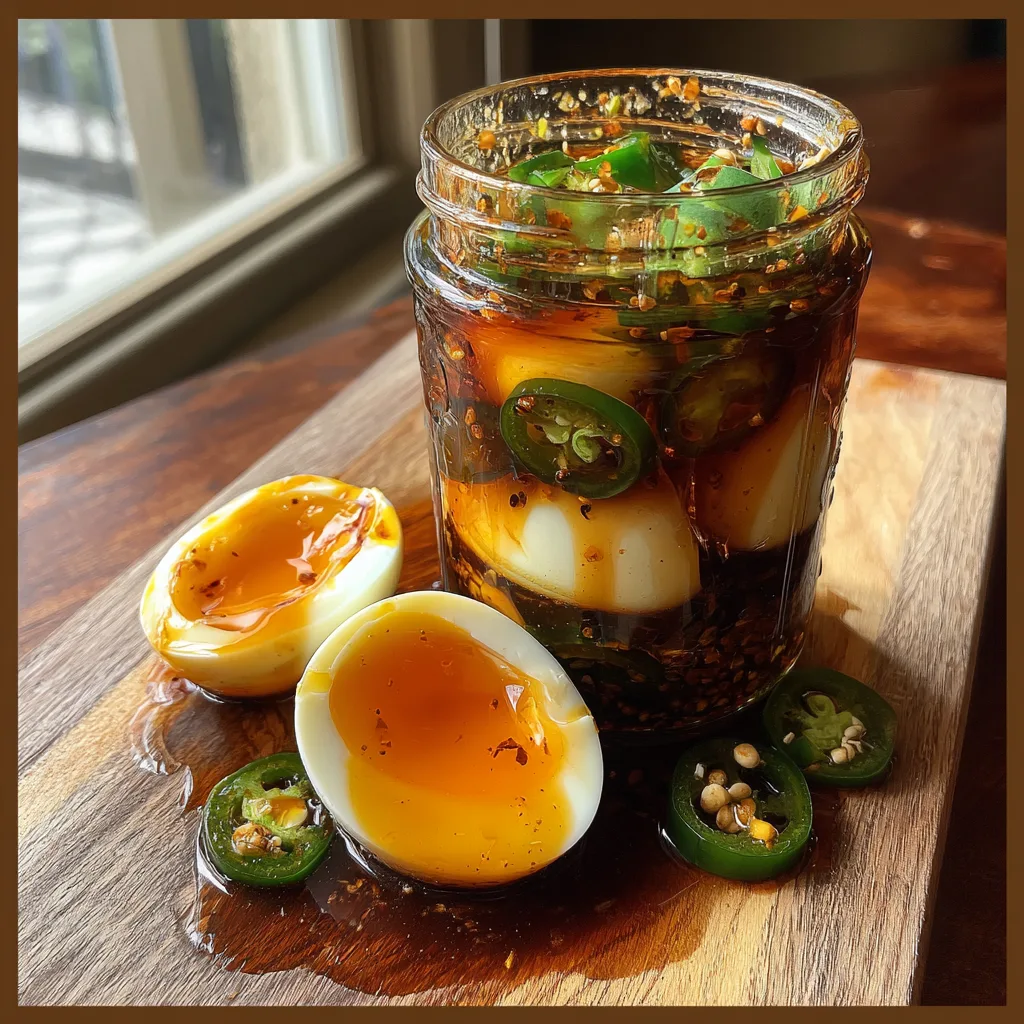
As for the leftover marinade, don’t throw it away! While you shouldn’t reuse it for another batch of eggs (as the raw egg exteriors have been sitting in it), you can bring it to a vigorous boil in a saucepan to kill any potential bacteria, and then use it as a fantastic stir-fry sauce for noodles or vegetables.
Conclusion
Making your own spicy ramen eggs at home is a culinary rite of passage that bridges the gap between simple meal prep and gourmet cooking. With just a carton of eggs, a handful of bold aromatics like jalapeño and garlic, and a few pantry staples, you can transform a basic ingredient into a show-stopping flavor bomb. By mastering the 6.5-minute boil, the ice bath shock, and the delicate balance of a savory, spicy marinade, your home-cooked ramen bowls, rice dishes, and midnight snacks will never be the same again. Get your mason jar ready, watch the clock closely, and prepare to be obsessed.
Spicy Jammy Ramen Eggs (Soy Sauce Eggs)
Ingredients
Equipment
Method
- Prepare a large ice bath by filling a bowl with cold water and ice cubes. Set aside.
- Bring a large pot of water to a rolling boil. Add a splash of white vinegar to the water.
- Using a slotted spoon, gently lower the cold eggs one by one into the boiling water.
- Set a timer for exactly 6 minutes and 30 seconds for a jammy yolk (or exactly 6 minutes for a runny yolk).
- Immediately remove the eggs when the timer goes off and submerge them in the ice bath. Let them cool completely for at least 10 minutes.
- Gently crack the shells all over and peel the eggs underwater in a bowl to help the shells slide off easily.
- In a large mason jar, combine the soy sauce, rice wine vinegar, sliced onion, sliced jalapeño, fresh garlic, ground ginger, teriyaki marinade, and sriracha. Stir well.
- Place the peeled soft-boiled eggs into the marinade, ensuring they are completely submerged.
- Seal the jar and refrigerate. Marinate for at least 4 hours, ideally 12-24 hours for the best flavor. Remove eggs from liquid after 24 hours to prevent over-salting.