Lemon Meltaway Cookies
The Ultimate Lemon Meltaways Recipe: A Citrus Dream Come True
There is something undeniably magical about the combination of bright, zesty lemon and a buttery, tender crumb that practically dissolves the moment it hits your tongue. Welcome to the wonderful world of Lemon Meltaways. If you are a fan of citrus desserts, or if you simply appreciate a cookie that balances sweetness with a refreshing tang, you have just stumbled upon your new favorite recipe. These Lemon Meltaways are not your average cookie; they are a textural masterpiece, featuring a delicate, snowy exterior of powdered sugar that gives way to a soft, rich cookie, hiding a vibrant, gooey lemon center. In this comprehensive guide, we are going to dive deep into everything you need to know to create the perfect batch of these irresistible treats.
Why You Will Fall in Love with Lemon Meltaways
When it comes to baking, finding a recipe that yields bakery-quality results with minimal fuss is the ultimate goal. Lemon Meltaways deliver on all fronts. First and foremost, the texture is unparalleled. The secret lies in the ratio of butter to flour, often accompanied by a touch of cornstarch, which tenderizes the dough and creates that signature “meltaway” experience. Unlike chewy chocolate chip cookies or crunchy biscotti, these cookies offer a delicate crumb that falls apart beautifully in your mouth.
Secondly, the flavor profile is incredibly vibrant. Lemon desserts often walk a fine line between being overly sweet or too tart. This recipe strikes the perfect harmony. The cookie dough itself is infused with fresh lemon zest, providing a fragrant, aromatic backdrop. But the real star of the show is the gooey lemon center—a burst of intense citrus flavor that contrasts magnificently with the sweet, powdery coating on the outside. It is a multi-layered tasting experience that leaves you reaching for just one more.
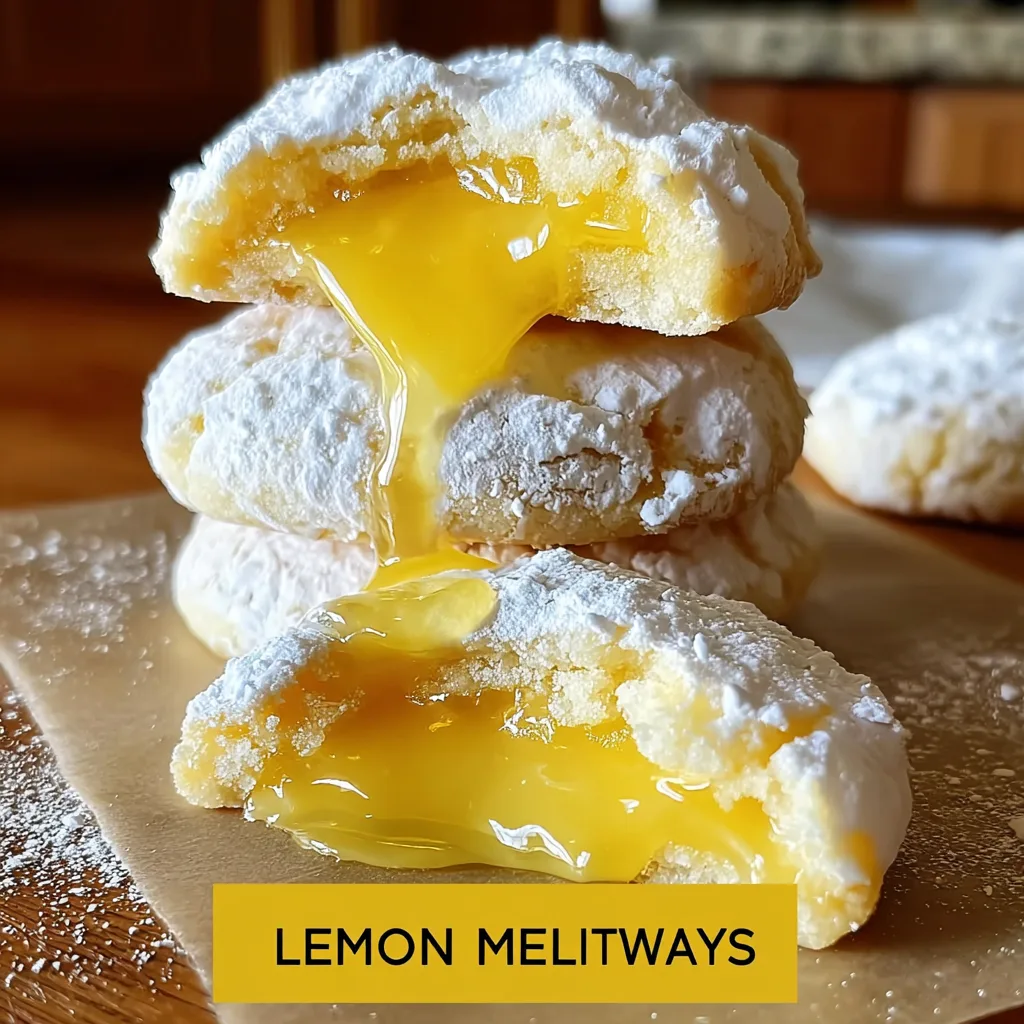
Furthermore, these cookies are stunning to look at. Their cracked, snow-white surfaces revealing a peek of the sunny yellow filling make them an elegant addition to any dessert table, holiday platter, or afternoon tea spread. They look like they took hours of meticulous work, but as you will soon see in our step-by-step guide, they are surprisingly straightforward to prepare.
The Science Behind the “Meltaway” Texture
Before we get to the ingredients, it is helpful to understand the science of baking that makes a meltaway cookie so unique. Traditional cookies rely heavily on the gluten development from all-purpose flour and the binding properties of whole eggs. Meltaways, on the other hand, intentionally minimize gluten development. This is achieved by using a high proportion of fat (usually butter) and sometimes swapping a portion of the flour for cornstarch or powdered sugar in the dough itself.

Cornstarch is a fantastic tenderizer. Because it contains no gluten, it dilutes the gluten-forming proteins in the wheat flour. When you bite into a cookie made with a touch of cornstarch, it lacks the chewy structure of a standard drop cookie, resulting in a crumbly, delicate texture that quite literally melts away. Additionally, using powdered sugar instead of granulated sugar in the dough can contribute to this fine texture, as the sugar crystals are already ground down to a microscopic size, preventing them from aerating the butter too aggressively or creating large, crunchy pockets.
Choosing the Right Ingredients for the Best Flavor
The success of any simple recipe relies heavily on the quality of its ingredients. For Lemon Meltaways, a few key components demand your attention:
The Lemons: This is not the time to reach for bottled lemon juice. Bottled juice lacks the bright, floral notes of fresh citrus and often contains preservatives that can alter the taste. You want fresh, heavy-for-their-size lemons. You will be using both the zest (where the essential oils and aromatic flavors live) and the juice (for that sharp, acidic bite). When zesting, be careful to only remove the yellow outer layer; the white pith underneath is bitter and can ruin the flavor of your cookies.
The Butter: Since butter is the primary fat and flavor carrier in the cookie dough, use a high-quality unsalted butter. Unsalted butter allows you to control the exact amount of sodium in your recipe. Make sure it is properly softened to room temperature before you begin creaming it with the sugar. It should yield slightly to a gentle press but not be greasy or melted.
The Filling: The gooey center pictured in these perfect Lemon Meltaways is essentially a thick lemon curd. You can absolutely use a high-quality, store-bought lemon curd to save time. However, making a quick homemade lemon curd will elevate the cookies to a whole new level of gourmet goodness.
Ingredients List
Gather the following ingredients to begin your baking adventure. Make sure your dairy ingredients are at room temperature for the best emulsion.
For the Cookie Dough:
- – 1 cup (2 sticks) unsalted butter, softened to room temperature
- – 1/2 cup powdered sugar (confectioners’ sugar), plus extra for coating
- – 1 tablespoon fresh lemon zest (about 1-2 lemons worth)
- – 1 tablespoon fresh lemon juice
- – 1 teaspoon pure vanilla extract
- – 2 cups all-purpose flour, spooned and leveled
- – 2 tablespoons cornstarch
- – 1/4 teaspoon salt
For the Gooey Lemon Filling:
- – 1/2 cup high-quality lemon curd (store-bought or homemade)
Step-by-Step Instructions
Follow these numbered steps carefully to ensure your Lemon Meltaways turn out perfectly tender and packed with citrus flavor.
- Prepare for Baking: Preheat your oven to 350°F (175°C). Line two large baking sheets with parchment paper or silicone baking mats. This prevents sticking and ensures even browning on the bottom of the cookies.
- Cream the Butter and Sugar: In the bowl of a stand mixer fitted with the paddle attachment, or in a large mixing bowl using a hand mixer, beat the softened butter and the 1/2 cup of powdered sugar together on medium speed until light, fluffy, and pale in color. This should take about 2 to 3 minutes. Scrape down the sides and bottom of the bowl with a rubber spatula as needed.
- Add the Flavorings: To the creamed butter mixture, add the fresh lemon zest, fresh lemon juice, and vanilla extract. Beat on low speed just until combined. The mixture might look slightly curdled due to the acid in the lemon juice hitting the fat, but do not worry; it will come together once the dry ingredients are added.
- Whisk the Dry Ingredients: In a separate, medium-sized bowl, whisk together the all-purpose flour, cornstarch, and salt. Whisking ensures the cornstarch and salt are evenly distributed throughout the flour, preventing any lumps in your dough.
- Combine Wet and Dry: With the mixer on the lowest speed, gradually add the dry flour mixture to the wet butter mixture. Mix just until the flour disappears and a soft dough forms. Be incredibly careful not to overmix at this stage, as overmixing will develop the gluten and result in tough cookies rather than tender meltaways.
- Form the Cookies: Scoop out about 1 tablespoon of dough per cookie and roll it into a smooth ball between the palms of your hands. Place the dough balls onto the prepared baking sheets, leaving about 2 inches of space between each one.
- Create the Indentation: Using the back of a small measuring spoon (like a 1/2 teaspoon measure) or your thumb, gently press an indentation into the center of each dough ball. The edges of the cookies will naturally crack slightly, which adds to their rustic, bakery-style charm.
- Chill the Dough (Crucial Step): Place the baking sheets with the indented cookies into the refrigerator for at least 30 minutes. Chilling firms up the butter in the dough, which prevents the cookies from spreading out too thin and flat while they bake. It helps them retain their shape and deep indentations.
- Bake the Cookies: Once chilled, transfer the baking sheets directly to the preheated oven. Bake for 12 to 14 minutes, or until the edges are just barely beginning to turn a pale golden brown. The centers should still look slightly soft and pale.
- Cool Slightly and Fill: Remove the cookies from the oven and let them cool on the baking sheet for 5 minutes. While they are still warm, carefully spoon about 1/2 teaspoon of lemon curd into the indentation of each cookie.
- The Powdered Sugar Coating: Allow the filled cookies to cool almost completely. Then, using a fine-mesh sieve, generously dust the tops of the cookies with extra powdered sugar. The sugar will cling to the cookie and settle beautifully around the glossy yellow lemon center.
- Set and Serve: Let the cookies cool completely on wire racks so the lemon curd can set slightly before serving.
Pro Tips for the Perfect Meltaway
Baking is both an art and a science. Here are a few professional tips to ensure your Lemon Meltaways are consistently spectacular:
Measure Flour Correctly: The most common mistake in cookie baking is adding too much flour, which leads to dry, crumbly dough that won’t hold together. Always use the “spoon and level” method: use a spoon to fluff the flour in its container, scoop it lightly into your measuring cup, and level it off with the straight edge of a knife. Never pack the flour down.
Do Not Skip the Chill: It can be tempting to rush the process and put the cookies straight into the oven, but chilling the dough is absolutely non-negotiable for meltaways. If the butter is too warm when it hits the hot oven, the cookies will spread into flat puddles, losing the well meant for your delicious lemon filling.
Timing the Powdered Sugar: Dusting the cookies while they are too hot will cause the powdered sugar to melt and disappear into the cookie, creating a sticky glaze rather than a powdery finish. Wait until they are mostly cool. However, doing it before they are 100% cold helps a tiny bit of the sugar adhere to the surface better.
Exciting Variations to Try
Once you have mastered the classic Lemon Meltaway, the basic dough serves as a wonderful canvas for other flavor profiles. Here are a few creative variations:
Lime and Coconut Meltaways: Swap the lemon zest and juice for fresh lime zest and juice. After baking and filling with lime curd, dust the cookies with a mixture of powdered sugar and very finely shredded, toasted coconut.
Orange Cranberry Meltaways: Use orange zest and juice in the dough. Instead of a curd filling, finely chop dried cranberries and fold them directly into the dough before chilling. Dust with powdered sugar as usual.
Lavender Lemon Meltaways: Add 1 teaspoon of culinary-grade, finely crushed dried lavender buds to the dry ingredients. The floral notes of the lavender pair beautifully with the sharp citrus, creating a sophisticated, grown-up cookie perfect for tea parties.
Serving Suggestions for Every Occasion
Lemon Meltaways are incredibly versatile. Here are some of the best ways to enjoy them:
Afternoon Tea: These cookies were practically invented for tea time. Their delicate texture and bright flavor cut through the richness of black teas like Earl Grey or complement the herbal notes of a chamomile or green tea.
Spring and Summer Picnics: Because they are relatively sturdy once cooled and don’t feature chocolate that will melt in the sun, they are an excellent addition to a picnic basket. Pack them carefully in a rigid container.
With Ice Cream: Serve a couple of warm Lemon Meltaways alongside a scoop of high-quality vanilla bean or strawberry ice cream for an effortless yet elegant dessert presentation.
Storage and Freezing Instructions
If you manage to have leftovers (which is a rarity!), proper storage is key to maintaining that delicate meltaway texture.
Room Temperature: Store the fully cooled, powdered sugar-dusted cookies in an airtight container at room temperature for up to 3 days. To prevent the moisture from the lemon curd from making the cookies soggy, place a sheet of wax paper or parchment paper between layers.
Refrigeration: Because of the lemon curd filling, you can extend their shelf life by storing them in the refrigerator for up to a week. They are actually quite delicious when eaten slightly chilled!
Freezing the Dough: You can freeze the unbaked, indented dough balls. Place them on a baking sheet in the freezer until solid, then transfer to a freezer-safe bag for up to 2 months. Bake directly from frozen, adding 1-2 extra minutes to the baking time. Fill with curd after baking.
Freezing Baked Cookies: It is generally better to freeze the cookies without the powdered sugar coating and lemon curd filling, as the curd can alter in texture and the sugar will dissolve when thawing. Freeze the baked, bare cookies in an airtight container for up to a month. Thaw at room temperature, then fill and dust with sugar before serving.
Fun Facts About Lemon Desserts and Meltaways
To fully appreciate these delightful treats, let’s explore a little bit of baking trivia.
Did you know that the “meltaway” cookie style has roots in several different cultures? Traditional Mexican Wedding Cookies, Russian Tea Cakes, and Greek Kourabiedes all share a similar structural DNA: high butter content, low liquid, and a generous coating of powdered sugar. The Lemon Meltaway is an American adaptation of these classic butter cookies, bringing the bright, sunny flavors of citrus into the mix.
Lemons themselves have a fascinating history in baking. Originally native to Asia, lemons were introduced to the Mediterranean region in ancient times. However, it wasn’t until the 18th and 19th centuries that lemons became widely accessible enough in Europe and the Americas to become a staple in everyday baking. The invention of lemon curd—the luscious filling in our cookies—dates back to late 19th-century England, where it was traditionally served with bread or scones at afternoon tea as an alternative to jam.
Conclusion: Your New Baking Go-To
There you have it—a complete, in-depth guide to creating the most spectacular Lemon Meltaways. From understanding the science of the crumbly dough to mastering the perfect glossy lemon center, you are now equipped with all the knowledge you need. These cookies offer an incredible return on investment: they require basic ingredients and straightforward techniques, yet they yield a sophisticated, bakery-worthy dessert that is guaranteed to impress your friends and family. So, grab your citrus zester, soften that butter, and get ready to enjoy the ultimate bright, buttery, melt-in-your-mouth experience. Happy baking!
Lemon Meltaways
Ingredients
Equipment
Method
- Preheat oven to 350°F (175°C). Line baking sheets with parchment paper.
- Cream the softened butter and powdered sugar together until light and fluffy (about 2-3 minutes).
- Beat in the lemon zest, lemon juice, and vanilla extract until just combined.
- In a separate bowl, whisk together the flour, cornstarch, and salt.
- Gradually add the dry ingredients to the butter mixture, mixing on low speed just until a soft dough forms. Do not overmix.
- Roll the dough into 1-inch balls and place 2 inches apart on the baking sheets.
- Use your thumb or the back of a small spoon to gently press an indentation into the center of each dough ball.
- Chill the baking sheets with the cookies in the refrigerator for at least 30 minutes.
- Bake for 12-14 minutes until edges are barely golden. Let cool on the pan for 5 minutes.
- Spoon a small amount of lemon curd into the indentation of each warm cookie.
- Once cookies are mostly cool, generously dust the tops with extra powdered sugar. Let cool completely before storing.