Mango Coconut Sticky Rice
Authentic Mango Coconut Sticky Rice: A Taste of Tropical Paradise
If you have ever had the pleasure of traveling to Thailand, or simply visiting a fantastic authentic Thai restaurant in your hometown, chances are you have encountered the absolute masterpiece that is Mango Sticky Rice (known traditionally as Khao Niao Mamuang). It is a dessert that defies the typical Western conventions of post-dinner sweets, bypassing heavy chocolates or baked pastries in favor of something beautifully simple, naturally vibrant, and remarkably refreshing. The magic lies in the contrast: warm, chewy, slightly salty-sweet coconut rice paired with cold, buttery, incredibly sweet fresh mango. It is a harmonious marriage of flavors and textures that feels like a tropical vacation in every single bite.
For many home cooks, the idea of making this iconic street food dessert at home seems daunting. Sticky rice can be notoriously tricky to get right if you aren’t familiar with it, and achieving that perfectly balanced coconut sauce takes a little bit of know-how. But fear not! In this comprehensive guide, we are going to demystify the entire process. We will walk you through exactly what type of rice to buy, why soaking is non-negotiable, the secret to the ultimate coconut cream topping, and how to pick the perfect mango. By the end of this article, you will be equipped to whip up restaurant-quality Mango Coconut Rice right in your own kitchen.
The Heart of the Dish: Understanding Glutinous Rice
The biggest mistake beginners make when attempting this recipe is using the wrong type of rice. You cannot use standard long-grain white rice, jasmine rice, or basmati rice. To get that iconic chewy, slightly tacky texture that absorbs the coconut milk without turning to mush, you absolutely must use Glutinous Rice (also commonly sold as “Sweet Rice” or “Sticky Rice”).
Despite the name “glutinous,” this rice is completely gluten-free. The name actually refers to its glue-like, sticky characteristic when cooked. This specific type of rice has a very low amylose content and a high amylopectin content, which is the starch responsible for the sticky texture. When shopping, look for Thai Sweet Rice; the grains are opaque and milky white, unlike the translucent grains of standard jasmine rice.
The Golden Rule: You Must Soak the Rice. Because glutinous rice has a hard outer shell, it needs time to hydrate before it cooks. If you try to cook it straight out of the bag, you will end up with hard, crunchy grains. You must soak the rice in plenty of cold water for a minimum of 4 hours, though overnight (8-12 hours) is highly recommended for the best texture. Furthermore, sticky rice is traditionally steamed, not boiled in water like standard rice. Steaming cooks the grains gently, preserving their distinct shape while allowing them to become perfectly tender and sticky.
The Secret is in the Sauce (and the Salt!)
The coconut sauce used in this dessert is a masterclass in flavor balancing. It is not simply sweet; it relies heavily on a distinct, savory salty note to cut through the richness of the coconut and the sugar.
You will actually be creating the coconut mixture in two stages. The first stage is the soaking liquid: a mixture of full-fat coconut milk, sugar, and salt that is heated just until the sugar dissolves. This warm liquid is poured directly over the freshly steamed, hot rice. The rice is then covered and left to sit. Over the course of 15 to 20 minutes, the thirsty grains of hot rice will drink up all that sweet, salty coconut goodness, plumping up and becoming incredibly flavorful.
The second stage is the topping sauce. This is a slightly thickened, saltier version of the coconut milk that is spooned over the finished dish right before serving. This extra drizzle of rich, slightly savory cream contrasts brilliantly with the bright, acidic sweetness of the fresh mango.
Choosing the Perfect Mango
Because there are so few ingredients in this dessert, the quality of your mango will make or break the dish. You want a mango that is smooth, completely fiberless, and drippingly sweet.
The traditional mangoes used in Thailand (like the Nam Dok Mai) can be hard to find in Western supermarkets. Your best substitutes are Ataulfo mangoes (often sold as Champagne or Honey mangoes). These are smaller, yellow-skinned, kidney-shaped mangoes. When fully ripe, their skin becomes deep golden yellow and slightly wrinkled, and the flesh inside is incredibly buttery, sweet, and devoid of those stringy fibers that get stuck in your teeth. Standard large red/green Tommy Atkins mangoes can work in a pinch, but they are often too fibrous and not sweet enough for this delicate dessert.
Ingredients
For the Sticky Rice:
- – 1 cup Thai glutinous rice (sweet rice/sticky rice)
- – 1 cup full-fat coconut milk (canned, stirred well)
- – ⅓ cup granulated sugar
- – ½ teaspoon salt
For the Coconut Topping Sauce:
- – ½ cup full-fat coconut milk
- – 1 tablespoon granulated sugar
- – ¼ teaspoon salt
- – 1 teaspoon cornstarch or tapioca starch (mixed with 1 tbsp cold water)
For Serving:
- – 2 large, ripe Ataulfo (Champagne/Honey) mangoes
- – 1 tablespoon toasted black sesame seeds (or toasted yellow mung beans)
Instructions
Follow these steps to achieve dessert perfection:
- Soak the Rice: Place the glutinous rice in a bowl and cover it with several inches of cold water. Let it soak at room temperature for at least 4 hours, or overnight for best results.
- Rinse and Prep for Steaming: Drain the soaked rice into a fine-mesh sieve and rinse it gently under cold water until the water runs clear. Line a bamboo steamer basket (or a standard metal steamer insert) with a piece of cheesecloth or parchment paper poked with holes. Place the rice on the cloth in an even layer.
- Steam the Rice: Place the steamer over a pot of boiling water (ensure the water does not touch the bottom of the steamer basket). Cover tightly and steam for 20-25 minutes, or until the rice is completely tender and translucent, but still retains a slight chew.
- Prepare the Sweet Coconut Liquid: While the rice is in its final minutes of steaming, combine 1 cup of coconut milk, ⅓ cup sugar, and ½ teaspoon salt in a small saucepan over medium heat. Stir constantly until the mixture is hot and the sugar has completely dissolved. Do not let it boil. Remove from heat.
- Combine Rice and Liquid: Transfer the hot, freshly steamed rice into a mixing bowl. Immediately pour the warm sweet coconut liquid over the rice. Gently fold it together with a spatula. It will look like a very wet soup—this is normal! Cover the bowl tightly with a lid or plastic wrap and let it sit undisturbed for 15-20 minutes. The rice will absorb all the liquid and become beautifully plump and glossy.
- Make the Topping Sauce: In a small saucepan, combine the remaining ½ cup of coconut milk, 1 tablespoon sugar, and ¼ teaspoon salt. Bring to a gentle simmer. Stir in the cornstarch slurry (cornstarch mixed with water) and cook for about 1 minute until the sauce thickens slightly. Remove from heat and transfer to a small serving pitcher.
- Prepare the Mango: Peel the mangoes and carefully slice the cheeks off the flat pit. Slice the mango cheeks thinly, keeping the slices together so you can fan them out on the plate.
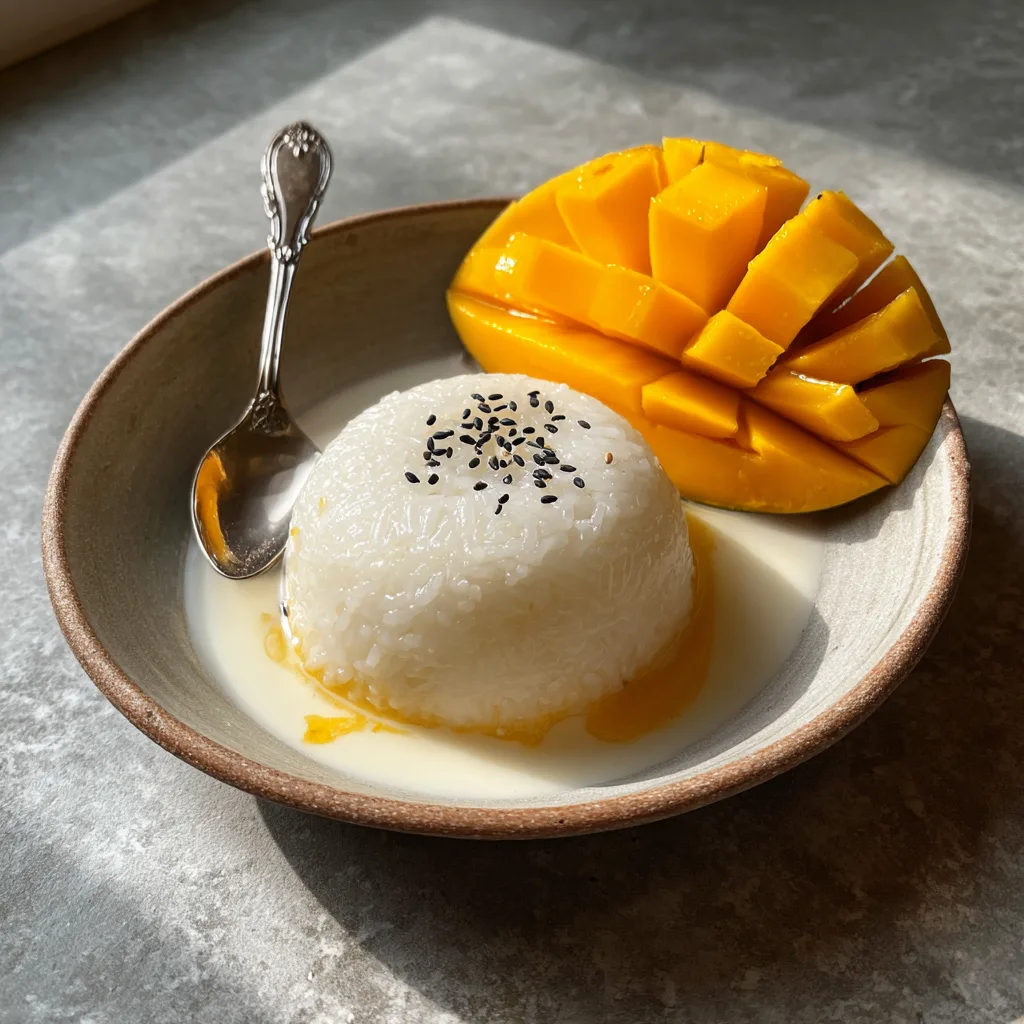
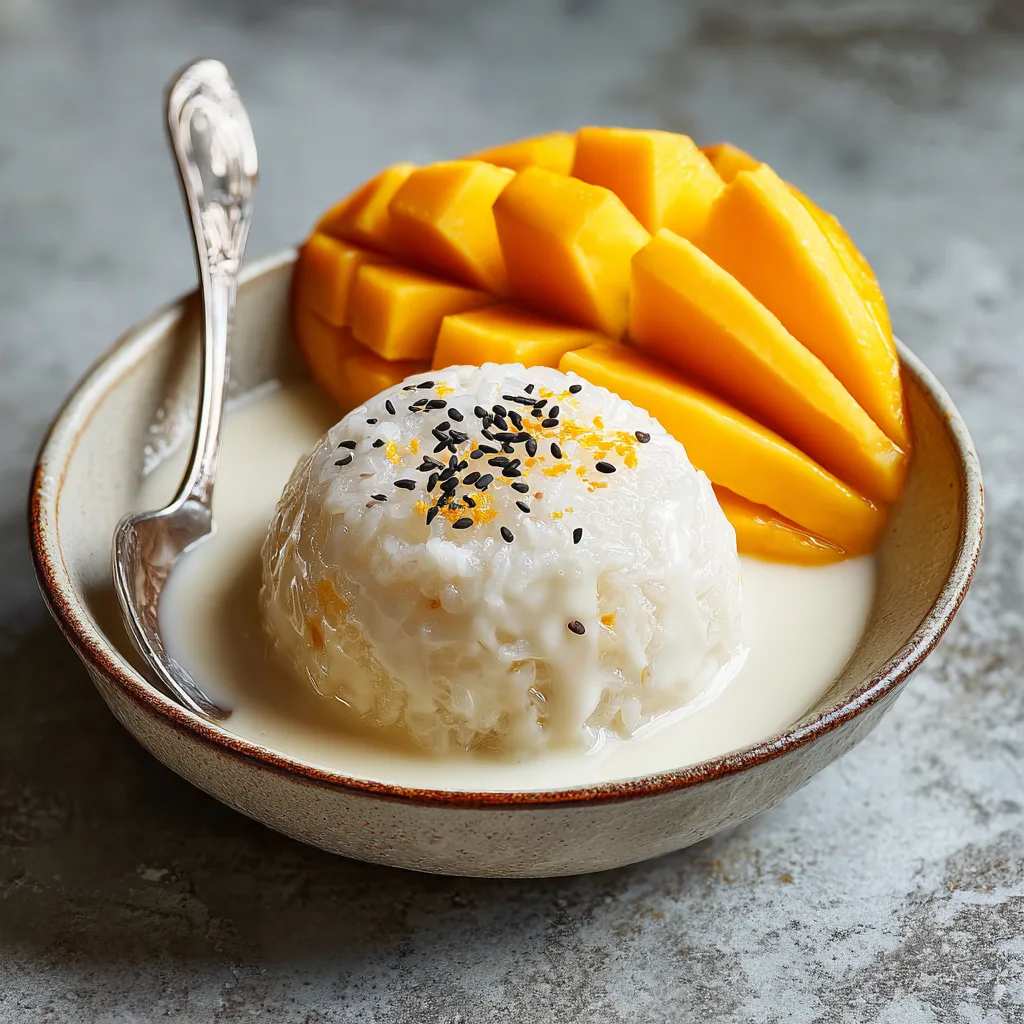
- Assemble and Serve: Scoop a mound of the warm, sweet sticky rice onto a serving plate or into a shallow bowl (you can pack it into a small bowl and invert it for a perfect dome shape). Fan the sliced mango next to the rice. Drizzle the thickened coconut topping sauce generously over the rice (and the mango, if desired). Garnish with a sprinkle of toasted black sesame seeds. Serve immediately while the rice is still warm!
Tips for Perfection and Troubleshooting
Can I make this in a rice cooker? Yes, but it requires a workaround, as traditional sticky rice must be steamed, not boiled. Some modern rice cookers have a “sweet rice” setting. If yours doesn’t, you can place a heatproof plate or small steamer basket inside your rice cooker over a little water, essentially using the cooker as an electric steamer.
My rice is hard and crunchy! This happens for two reasons: either you didn’t soak the rice long enough, or you didn’t steam it long enough. Always err on the side of soaking overnight to guarantee perfectly tender grains.
Storage: Mango sticky rice is absolutely best eaten fresh, while the rice is still slightly warm. If you refrigerate leftovers, the glutinous rice will harden significantly. To revive it, you must gently reheat the rice in the microwave with a splash of water until it softens again. Keep the mango separate until ready to eat.
Creative Variations
Pandan Sticky Rice: To give your rice a beautiful natural green hue and a subtle vanilla-like flavor, tie a knot of fresh pandan leaves and steep it in the coconut milk mixture while it heats. You can also add a drop of pandan extract.
Black Sticky Rice: You can substitute black glutinous rice for a more robust, slightly nutty flavor and a striking deep purple color. Note that black sticky rice takes significantly longer to soak and steam than white sweet rice.
Mango Coconut Sticky Rice
Ingredients
Equipment
Method
- Soak the glutinous rice in plenty of cold water for at least 4 hours, or preferably overnight.
- Drain and rinse the soaked rice. Steam the rice in a lined steamer basket over boiling water for 20-25 minutes until tender and translucent.
- While rice steams, heat 1 cup coconut milk, 1/3 cup sugar, and 1/2 tsp salt in a saucepan until sugar dissolves. Do not boil.
- Transfer the hot, steamed rice to a bowl. Immediately pour the warm coconut liquid over it, fold gently, cover, and let sit for 15-20 minutes to absorb.
- To make the topping sauce: heat 1/2 cup coconut milk, 1 tbsp sugar, and 1/4 tsp salt. Whisk in the cornstarch slurry and simmer for 1 minute until slightly thickened.
- Peel and thinly slice the mangoes.
- Serve a portion of the warm sticky rice with the sliced mango. Drizzle generously with the thickened coconut topping sauce and garnish with toasted black sesame seeds.