Rosemary Sea Salt Bread
Rustic Rosemary Sea Salt Dutch Oven Bread
There is nothing quite like the scent of fresh bread baking in the oven, especially when it is infused with the piney, earthy aroma of fresh rosemary. If you have ever walked past a bakery window and marveled at those golden, crackling loaves with the perfect ear and rustic flour dusting, I have a secret for you: you can make that exact bread at home. And the best part? You don’t even need a stand mixer or years of kneading experience.
This Rosemary Sea Salt Dutch Oven Bread is the ultimate “low effort, high reward” recipe. By utilizing a Dutch oven, we mimic a professional steam-injected oven right in our home kitchen. The heavy lid traps steam released from the dough as it bakes, keeping the crust soft initially so the bread can rise to its full potential (this is called “oven spring”). Then, once the lid is removed, the dry heat creates that shatteringly crisp, deep golden crust that we all crave.
Whether you are a seasoned baker or a complete novice, this recipe is designed to be foolproof. The combination of fragrant rosemary and the sharp, crunchy bite of coarse sea salt makes this loaf perfect for dipping into olive oil, serving alongside a hearty stew, or simply slathering with high-quality butter while it’s still warm.
Why This Recipe Works
The magic of this recipe lies in two things: time and the baking vessel. This is a “no-knead” style bread, which means we let biology do the work for us. By allowing the dough to sit for a longer period (usually overnight), the gluten strands develop naturally without you breaking a sweat.
Furthermore, the high hydration (water content) of the dough creates those beautiful, large air pockets inside the crumb, giving it that airy, artisan texture. The addition of fresh rosemary inside the dough ensures the flavor permeates every bite, while the sea salt on top adds texture and a savory contrast that elevates the bread from simple to gourmet.
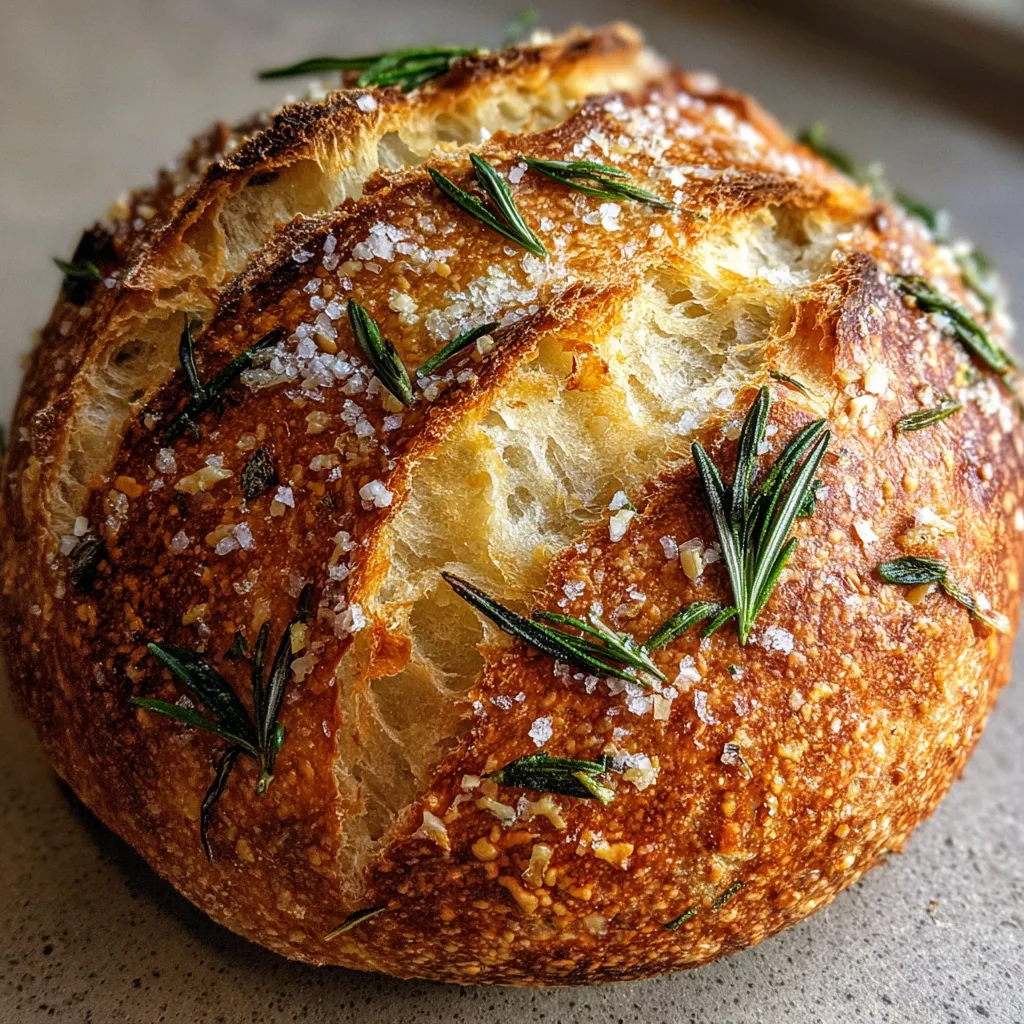
Ingredients Needed
To make this bakery-quality loaf, you only need a handful of pantry staples. Here is what you will need:
- All-Purpose Flour – You can also use bread flour for a slightly chewier texture, but standard all-purpose works beautifully.
- Warm Water – Not too hot, or you will kill the yeast. Aim for lukewarm (around 100°F/38°C).
- Instant Yeast – This works faster and doesn’t need to be proofed in water first. If using active dry, dissolve it in the water for 5 minutes first.
- Salt – Fine sea salt for the dough itself is crucial for flavor and controlling the yeast.
- Fresh Rosemary – Dried rosemary can be used in a pinch, but fresh chopped rosemary provides a superior texture and aroma.
- Coarse Sea Salt or Flaky Salt – For sprinkling on top. This is the “jewel” of the crust.
- Cornmeal or Parchment Paper – To prevent the bread from sticking to the pot.
Step-by-Step Instructions
1. Mix the Dough
In a large mixing bowl, whisk together the flour, instant yeast, fine salt, and chopped fresh rosemary. Pour in the warm water. Using a wooden spoon or a rubber spatula, mix until a shaggy, sticky dough forms. You do not need to knead it; just ensure there are no pockets of dry flour. The dough will look rough, and that is perfectly normal.
2. The Rise (Fermentation)
Cover the bowl tightly with plastic wrap or a damp kitchen towel. Let the dough sit at room temperature for 12 to 18 hours. During this time, the dough will bubble up, flatten out, and develop a wonderful yeasty smell. If you are in a rush, you can let it rise in a warm spot for 3-4 hours, but the flavor is best with the long rise.
3. Shape the Loaf
When you are ready to bake, preheat your oven to 450°F (230°C). Place your empty Dutch oven (with the lid on) inside the oven to heat up for at least 30 minutes. While the pot heats, turn your dough out onto a well-floured surface. Gently fold the corners of the dough inward to create a ball shape. Flip it over so the seam is on the bottom. Place it on a piece of parchment paper.
4. Score and Garnish
Brush the top of the dough lightly with water or olive oil. Sprinkle generously with the coarse sea salt and press a few extra sprigs of rosemary into the top if desired. Using a sharp knife or a razor blade (lame), make a slash or an “X” across the top of the dough. This allows the steam to escape and helps the bread expand.
5. Bake
Carefully remove the hot Dutch oven from the oven. Lift the dough using the parchment paper and drop it into the hot pot. Cover with the lid immediately and bake for 30 minutes. The steam trapped inside creates the crust.
6. Finish and Cool
After 30 minutes, remove the lid. The bread should be pale and puffed. Continue baking uncovered for another 10-15 minutes, or until the crust is a deep, dark golden brown. Remove the bread from the pot and let it cool on a wire rack for at least 20 minutes before slicing. Cutting into hot bread can make the texture gummy!
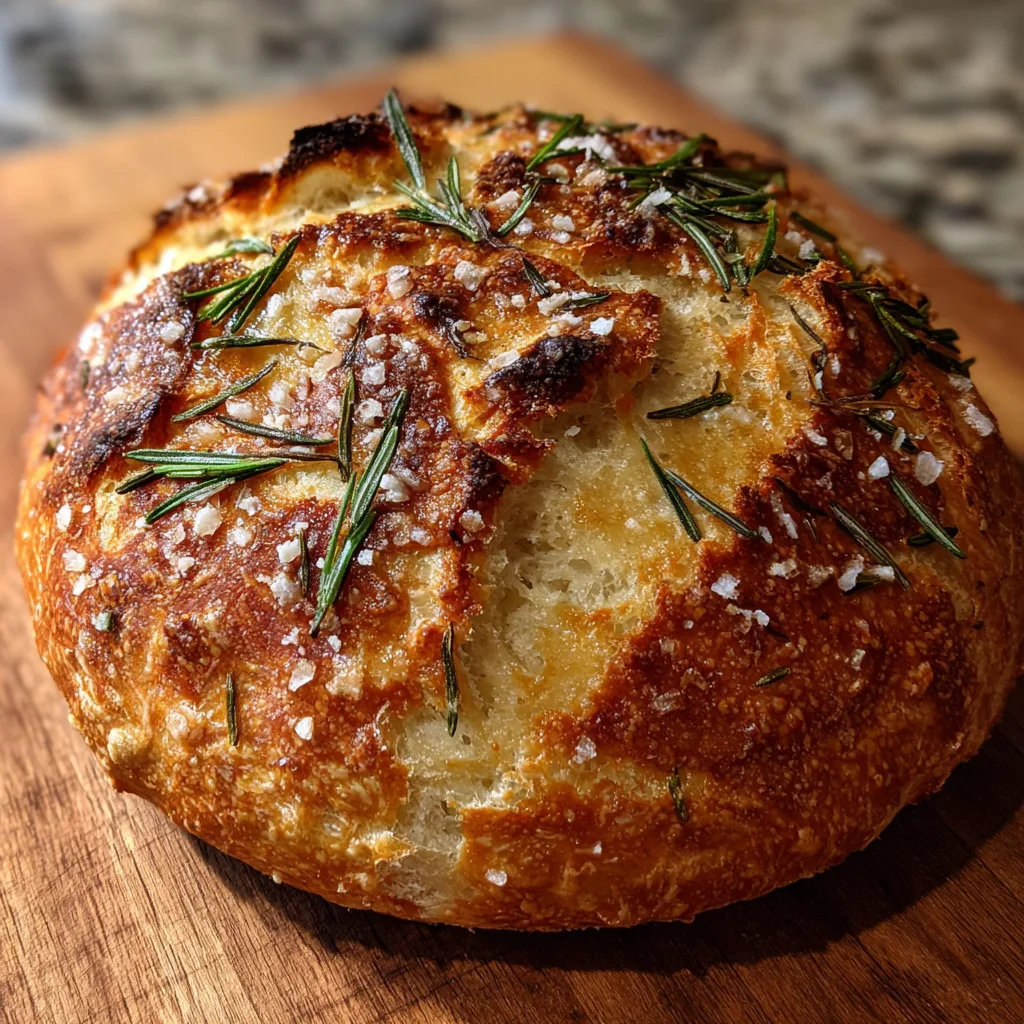
Tips for Success
Don’t Fear the Dark Crust: Many home bakers take their bread out too early. A deep brown crust means flavor (caramelization). If it looks golden, give it 5 more minutes for that true artisan crunch.
The “Poke” Test: Not sure if your dough has risen enough? Poke it gently with a floured finger. If it springs back slowly and leaves a small indentation, it is ready. If it springs back immediately, it needs more time.
Customize It: This base recipe is incredibly versatile. Try adding roasted garlic cloves, chopped olives, or grated Parmesan cheese into the dough during the initial mix for different flavor profiles.
Storing and Freezing
Fresh homemade bread contains no preservatives, so it is best eaten within 2 days. Store it at room temperature in a paper bag or a bread box. Avoid plastic bags, as they will soften the crust and encourage mold.
To freeze, slice the cooled loaf entirely. Place slices in a freezer-safe bag with pieces of parchment paper between them. This way, you can toast individual slices directly from the freezer whenever a craving strikes!
This Rosemary Sea Salt Bread is a testament to the fact that great food doesn’t have to be complicated. With just flour, water, time, and a hot pot, you can create something truly spectacular that brings the warmth of the bakery into your own home.
Rosemary Sea Salt Dutch Oven Bread
Ingredients
Equipment
Method
- In a large bowl, whisk together flour, fine salt, instant yeast, and chopped rosemary.
- Add warm water and stir with a spatula until a sticky, shaggy dough forms. Do not knead.
- Cover bowl with plastic wrap and let sit at room temperature for 12-18 hours until bubbly.
- Preheat oven to 450°F (230°C). Place a Dutch oven with lid inside to heat for 30 minutes.
- Turn dough onto a floured surface. Gently fold corners in to form a ball. Place on parchment paper.
- Score the top with a sharp knife, brush lightly with water, and sprinkle with coarse sea salt.
- Carefully place dough (on parchment) into the hot Dutch oven. Cover and bake for 30 minutes.
- Remove lid and bake for another 10-15 minutes until crust is deep golden brown.
- Cool completely on a wire rack before slicing to preserve texture.