Bread Dipping Oil
Restaurant-Style Bread Dipping Oil: The Ultimate Italian Appetizer
There is a specific, universal joy that occurs when you sit down at a rustic Italian restaurant and the server places a small plate of seasoned olive oil and a basket of warm, crusty bread on the table. It is the perfect preamble to a meal—a savory, aromatic, and deeply satisfying combination of fat, acid, herbs, and carbohydrates. The beautiful thing about this beloved restaurant staple is that it is incredibly simple to replicate in your own kitchen. With just a handful of high-quality ingredients and about five minutes of your time, you can create a magnificent Bread Dipping Oil that will elevate your dinner parties, pasta nights, or even a casual Tuesday evening snack.
This comprehensive guide will delve deep into the art and science of the perfect bread dipping oil. We will explore the critical importance of selecting the right olive oil, the nuances of balsamic vinegar, the balance of herbs and aromatics, and, of course, the definitive guide to choosing the perfect bread to serve alongside it. Prepare to transform simple pantry staples into an unforgettable culinary experience.
The Foundation: Choosing the Perfect Olive Oil
When making a dipping oil, the olive oil is not just a cooking medium; it is the star of the show. The flavor profile of your oil will dictate the entire character of your dip. Because you are consuming it raw, this is the time to reach for the highest quality oil in your pantry. Do not use light olive oil, refined olive oil, or blended oils for this recipe.
Extra Virgin Olive Oil (EVOO): You absolutely must use cold-pressed Extra Virgin Olive Oil. EVOO is essentially fresh olive juice, pressed without the use of heat or chemicals, preserving the delicate flavors, antioxidants, and peppery finish of the olives. When shopping for EVOO, look for dark glass bottles or tins, as light degrades the oil rapidly. Check the label for a “harvest date” rather than just a “best by” date; the fresher the oil, the better.
Flavor Profiles: Olive oils range in flavor from mild and buttery to robust, grassy, and peppery. For a bread dip, a robust or medium-robust oil is ideal. You want an oil that can stand up to the strong flavors of raw garlic, pungent vinegar, and sharp Parmesan cheese. An oil from Tuscany, Sicily, or a robust Californian blend will offer the pleasant, slightly bitter, and peppery notes that make a dipping oil complex and addictive.
The Acidic Counterpart: Balsamic Vinegar
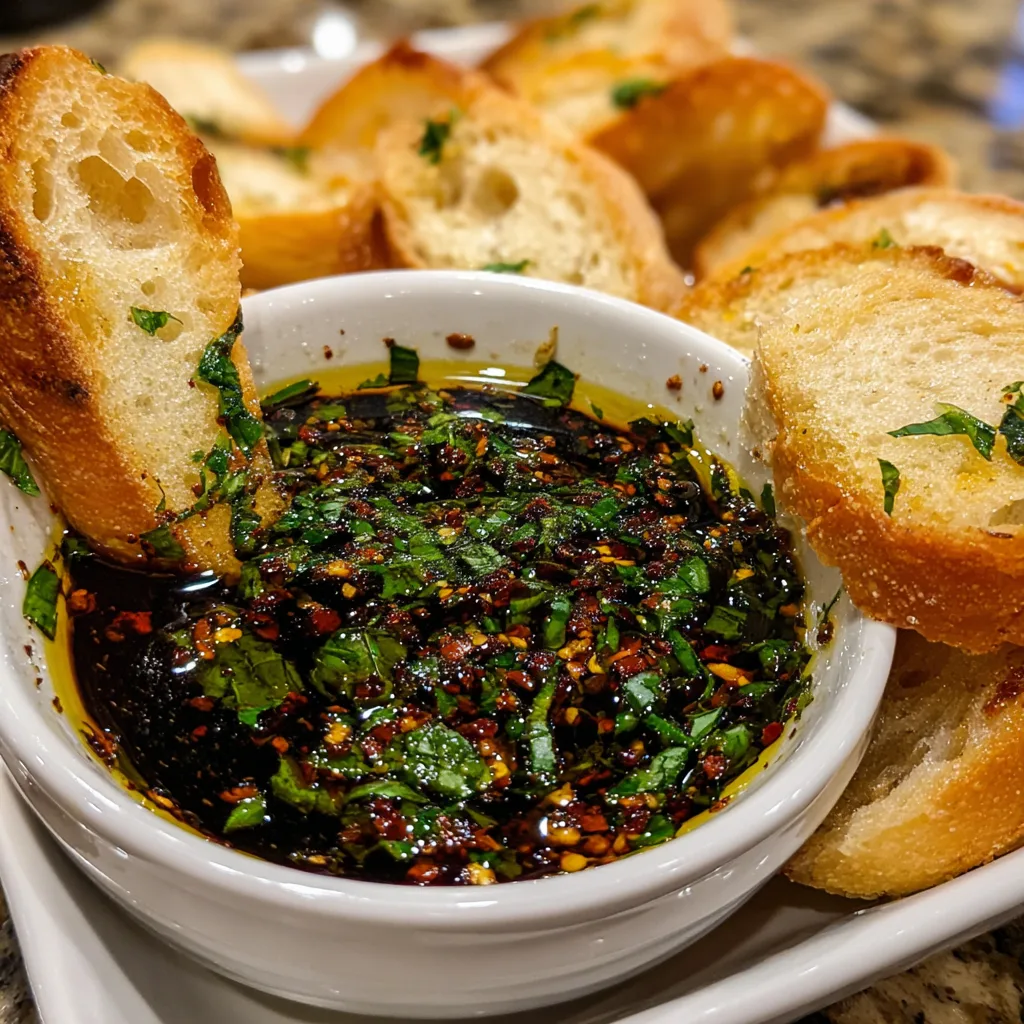
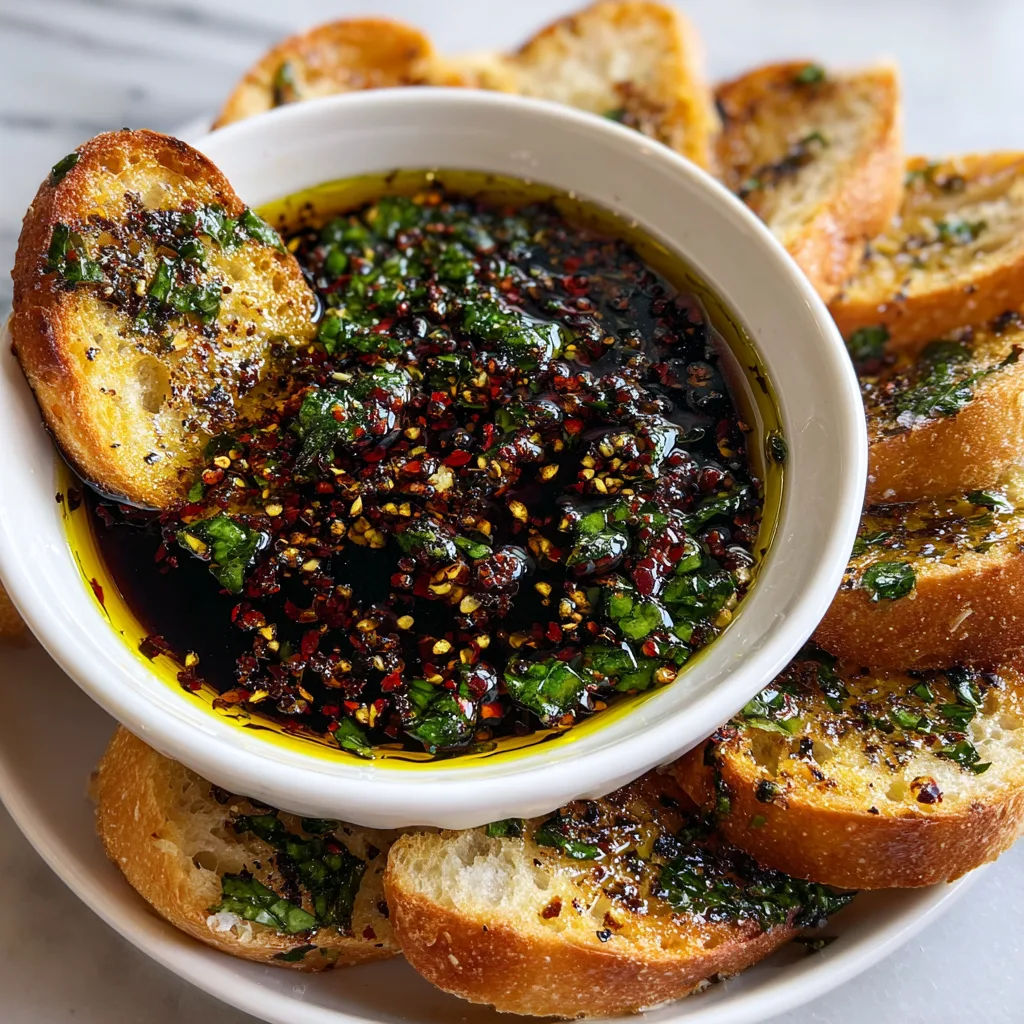
If olive oil provides the luxurious, fatty base, balsamic vinegar provides the crucial sweet and tangy contrast that keeps your palate engaged. The dark pools of balsamic swirling within the golden olive oil are visually stunning and gastronomically essential.
Aceto Balsamico di Modena (IGP): For everyday dipping oils, a good quality Balsamic Vinegar of Modena IGP is perfect. This is a commercially produced balsamic that balances sweet grape must with sharp wine vinegar. It has enough acidity to cut through the oil and enough sweetness to complement the salty cheese.
Balsamic Glaze vs. Traditional Balsamic: Do not use a balsamic glaze (which is often thickened with cornstarch or reduced with added sugars) for this recipe unless you prefer a very sweet, syrupy dip. You want the fluid consistency of standard balsamic vinegar so it can emulsify slightly with the oil when you drag your bread through it. If you happen to possess a bottle of Aceto Balsamico Tradizionale (the incredibly expensive, deeply aged balsamic), you can use a few drops here, but a mid-tier IGP vinegar is more than sufficient for a magnificent result.
The Flavor Builders: Garlic, Herbs, and Spices
The magic of this recipe lies in the aromatics. The interplay of fresh and dried ingredients creates a layered flavor profile that mimics the complexity of slow-cooked sauces, achieved in mere minutes.
Garlic: Freshly minced garlic provides a sharp, spicy bite that is synonymous with Italian-American cuisine. The key is to mince it as finely as possible. Large chunks of raw garlic can be overwhelming, but finely minced garlic will infuse its volatile oils into the surrounding olive oil. If you find raw garlic too aggressive, you can substitute it with a teaspoon of high-quality garlic powder, or for a gourmet twist, use a tablespoon of mashed roasted garlic.
Italian Seasoning: A classic blend of dried herbs—typically oregano, basil, thyme, rosemary, and marjoram. Dried herbs are actually excellent here because they release their concentrated flavors quickly when introduced to the fat of the olive oil.
Fresh Basil: While dried herbs provide the baseline, fresh basil brings a bright, sweet, anisette-like freshness that enlivens the entire bowl. It provides a burst of color and a flavor that dried basil simply cannot replicate.
Red Pepper Flakes: A touch of heat is essential. Crushed red pepper flakes bloom beautifully in the oil, providing a gentle background warmth that lingers on the palate without overpowering the other ingredients. Adjust the quantity to suit your heat tolerance.
The Umami Factor: Parmesan Cheese
Adding cheese directly to the dipping oil might seem unconventional to some purists, but it is the secret ingredient that takes this dip from good to phenomenal. You need a hard, aged, salty cheese.
Parmigiano-Reggiano: This is the gold standard. Freshly grated Parmigiano-Reggiano offers deep umami, nuttiness, and a granular texture that gives the dip body. Please avoid the pre-grated cheese in the plastic shaker canisters; it contains anti-caking agents that will make your oil cloudy and texturally unpleasant. Grate your cheese fresh from a block on a microplane or the finest side of a box grater so it practically melts into the oil.
Choosing the Perfect Bread
Your dipping oil is only half of the equation; the vehicle you use to deliver it to your mouth is equally critical. You need a bread with a sturdy crust to handle being dunked, and a porous, open crumb interior (lots of air holes) to act as a sponge for the oil and vinegar.
Baguette: The classic French baguette, with its shatteringly crisp crust and chewy interior, is a phenomenal choice. Slicing it on a bias gives you more surface area for dipping.
Ciabatta: Meaning “slipper” in Italian, ciabatta is renowned for its large, irregular holes and high hydration. It is practically designed to soak up olive oil. Warm it slightly in the oven before serving for the ultimate experience.
Focaccia: A slightly unconventional but brilliant pairing. Focaccia is already enriched with olive oil, so dipping it into more flavored oil is an exercise in pure decadence.
Sourdough Boule: A rustic, tangy sourdough provides a wonderful flavor contrast to the rich oil and sweet balsamic. A thick slice, lightly toasted, can hold an immense amount of the garlic and herb mixture.
Ingredients
Gather these ingredients to create your restaurant-style dipping oil. This recipe yields enough for a small gathering.
- – 1/2 cup high-quality extra virgin olive oil
- – 1/3 cup balsamic vinegar
- – 1 tablespoon fresh garlic, very finely minced
- – 1 tablespoon dried Italian seasoning
- – 1 tablespoon fresh basil, finely chopped
- – 1 teaspoon crushed red pepper flakes (adjust to taste)
- – 1/3 cup freshly grated Parmesan cheese (Parmigiano-Reggiano preferred)
- – Salt and freshly cracked black pepper to taste
- – 1 loaf of crusty bread (Baguette, Ciabatta, or Sourdough), sliced for serving
Step-by-Step Instructions
- Prepare the Aromatics: Begin by very finely mincing your fresh garlic. The finer the mince, the better the flavor distribution. Chop your fresh basil leaves, and freshly grate the Parmesan cheese.
- Combine the Dry Ingredients and Garlic: In a shallow serving bowl or a small rimmed plate, add the minced garlic, dried Italian seasoning, chopped fresh basil, red pepper flakes, freshly grated Parmesan cheese, a pinch of salt, and a generous crack of black pepper.
- Add the Liquids: Pour the extra virgin olive oil over the herb and cheese mixture. Then, pour the balsamic vinegar into the center of the oil. Do not vigorously whisk them together; allowing the vinegar to pool and swirl within the oil creates a beautiful presentation and ensures you get distinct flavor bursts when dipping.
- Let it Bloom: For the absolute best flavor, let the mixture sit at room temperature for 10 to 15 minutes before serving. This allows the dried herbs to soften and the volatile oils from the fresh garlic to infuse into the olive oil.
- Serve and Enjoy: Serve the dipping oil immediately alongside a basket of freshly sliced, slightly warmed crusty bread. Encourage guests to drag their bread across the bottom of the plate to scoop up the garlic, herbs, and cheese.
Pro Tips for the Ultimate Experience
Warm the Bread: Always serve your bread slightly warmed. Wrap your sliced bread in aluminum foil and place it in a 350°F (175°C) oven for about 5-10 minutes. Warm bread is more porous and absorbs the oil much better than cold or room-temperature bread.
The “Drag and Scoop”: Teach your guests the proper dipping technique. Don’t just dunk the bread into the liquid; use the crust of the bread to scrape the bottom of the bowl, scooping up the settled garlic, cheese, and herbs for the perfect bite.
Adjusting the Ratio: The oil-to-vinegar ratio is highly subjective. The 1/2 cup to 1/3 cup ratio provided leans slightly toward a tangier dip. If you prefer a milder, oil-forward dip, reduce the balsamic vinegar to 2 or 3 tablespoons.
Safety and Storage Guidelines
It is incredibly important to note that raw garlic submerged in oil presents a risk for botulism if stored improperly at room temperature for extended periods. Because of this, bread dipping oil containing fresh, raw garlic should be consumed immediately or within a few hours of making it.
If you have leftovers, you must store the mixture in an airtight container in the refrigerator. The olive oil will solidify in the fridge; simply let it sit at room temperature for about 20-30 minutes before serving again until it returns to a liquid state. Consume refrigerated leftover dipping oil within 3 to 4 days.
Creative Variations
Once you have mastered the basic recipe, this dipping oil is highly customizable.
Lemon and Herb: Swap the balsamic vinegar for the fresh juice and zest of one lemon. Omit the red pepper flakes and add fresh thyme and a pinch of flaky sea salt. This creates a bright, summery dip perfect for pairing with seafood or lighter meals.
The Mediterranean: Add a tablespoon of finely chopped Kalamata olives and a teaspoon of capers to the mix. The briny saltiness pairs beautifully with the olive oil.
Roasted Garlic: As mentioned earlier, swapping the sharp raw garlic for a whole head of sweet, mashed roasted garlic changes the entire profile of the dip, making it incredibly mellow, rich, and slightly sweet.
Conclusion
This simple Bread Dipping Oil proves that you do not need hours in the kitchen to create a memorable, gourmet experience. By prioritizing high-quality olive oil and fresh aromatics, you can bring the charm and flavor of a rustic Italian trattoria right to your own dining table. It is the perfect, effortless appetizer that will leave your family and guests fighting over the last piece of bread.
Restaurant-Style Bread Dipping Oil
Ingredients
Equipment
Method
- Finely mince the fresh garlic, chop the fresh basil, and grate the Parmesan cheese.
- In a small, shallow serving bowl, combine the minced garlic, dried Italian seasoning, fresh basil, red pepper flakes, grated Parmesan cheese, salt, and pepper.
- Pour the extra virgin olive oil over the dry ingredients.
- Pour the balsamic vinegar into the center of the oil. Do not stir completely, allowing the vinegar to pool beautifully.
- Let the mixture sit for 5-10 minutes to allow the flavors to bloom.
- Serve immediately with sliced, warm crusty bread for dipping.